


Here's a stat that shouldn't make sense. Wyatt Langford has played in roughly half of Texas' games this year. Missed nearly all of May. Missed most of June. And somehow the version of him that keeps showing up is better than the one you drafted in March. Not hotter. Better. There's a difference.
Two separate trips to the IL usually mean two separate excuses. A guy misses time, comes back rusty, needs a couple weeks to find his timing again. That's not what happened here. Langford came back from injury number one hitting like he'd been possessed by the ghost of peak Ronald Acuna. Then he got hurt again, on something completely unrelated, and the trend line didn't reset. It just kept climbing. That's the part worth your attention, not the batting average, the mechanism underneath it.
Two Absences, One Trend Line
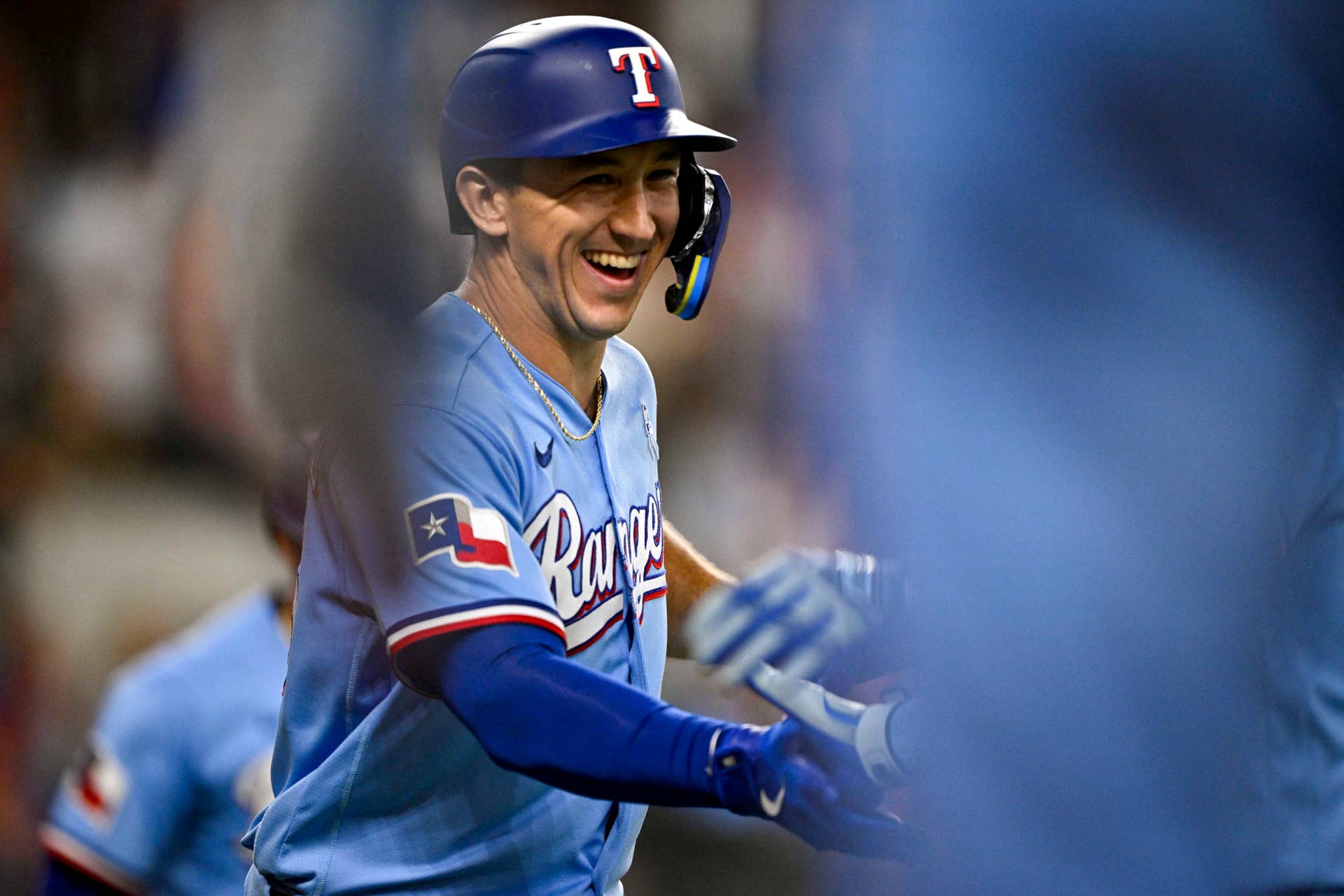
Jerome Miron-Imagn Images
Quick timeline, because you've probably lost track and that's kind of the point. Langford missed almost all of May with a right forearm strain, didn't return until June 5. Then he did this: .414/.452/.793 over his first seven games back, three homers, nine RBI, the kind of stretch that gets a guy's name typed into every waiver wire column in the business. He didn't stop there. Over his next fifteen games he hit .359 with a .703 slugging percentage. Then, on June 26, running to second base, nothing to do with the forearm, nothing to do with fatigue, he strained his left hamstring. Back on the IL June 28. Activated July 9, played one series, and now the whole sport is sitting on its hands for the All-Star break.
Two IL stints. One All-Star break sandwiched in between. If you haven't thought about Wyatt Langford in three weeks, that's not a knock on you, that's just what happens when a guy disappears from the box score this often. The problem is the numbers didn't disappear with him.
The Swing Looks Different Than It Did in April
Here's the actual case for buying in, and it's not the batting average. Langford's attack angle, the up or down tilt of his bat path through the zone, climbed from around 8.7 degrees in April to 14.3 degrees in June, with his rate of swings landing in the ideal launch window climbing right alongside it.
| Window | PA* | Attack Angle | Ideal-Angle% | wOBA / xwOBA* | Gap |
|---|---|---|---|---|---|
April |
60 |
8.7° |
49.5% |
.319 / .289 |
30 pts |
June |
89 |
14.3° |
55.4% |
.428 / .323 |
105 pts |
Langford’s barrel rate climbed from 6.7 percent to 8 percent, real movement in the right direction, that’s the good news. But his wOBA-to-xwOBA gap widening over that same stretch, not closing. That's live data, and it points the same direction the unconfirmed internal split does: the results are outrunning the expected stats, and the gap is getting wider while they do it.
What Athlon Said Three Weeks Ago, and What's Changed
Full disclosure, because you deserve it: Athlon called Langford a sell-high candidate three weeks ago, pointing at BABIP variance and a theory that the forearm strain was temporarily juicing his numbers before fatigue caught up with him. That call hasn't been proven wrong, exactly. It just never got a fair trial. You can't grade a prediction on a test that got canceled.
The One Number Still Holding This Back
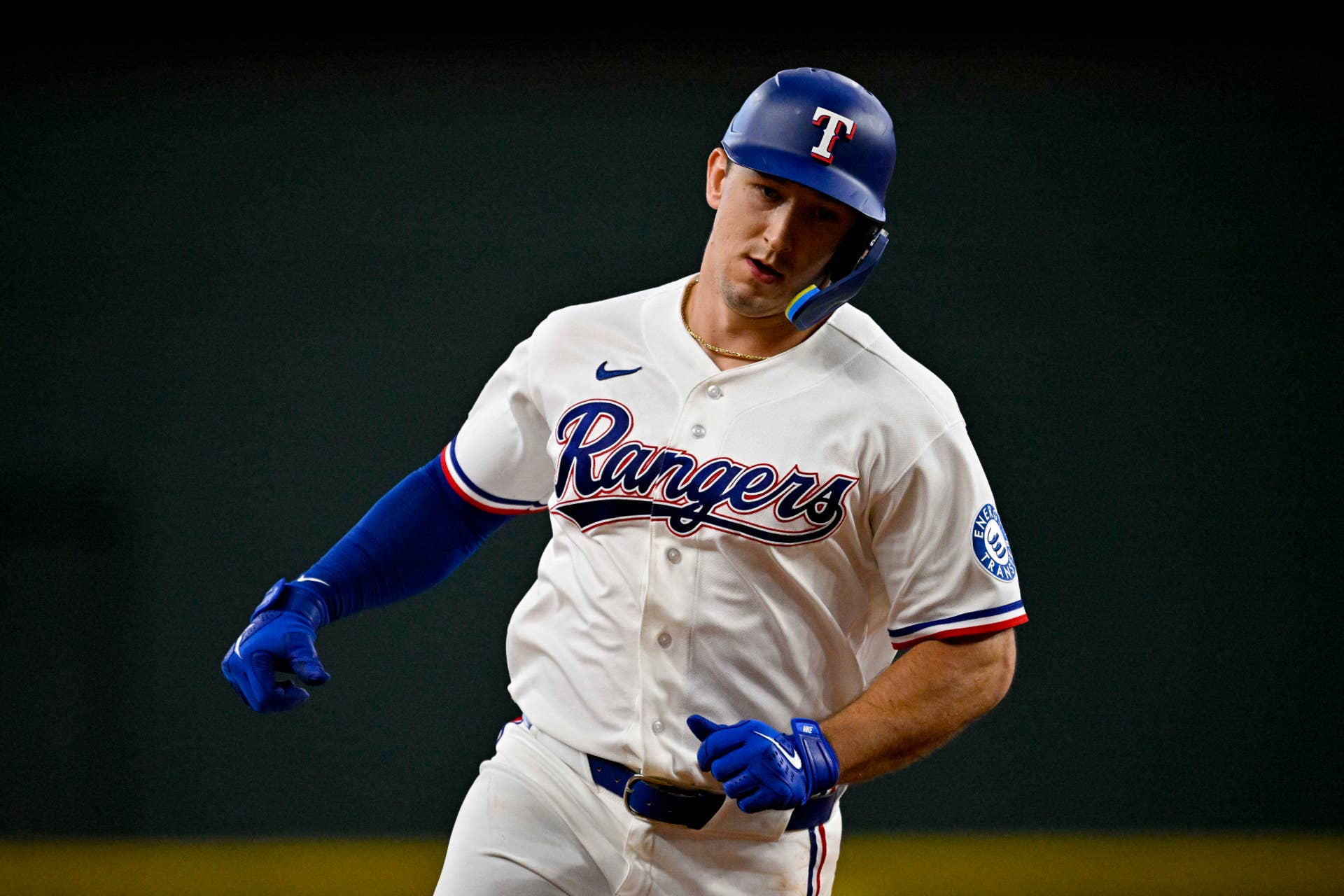
Jerome Miron-Imagn Images
Here's the number worth sitting with. On the isolated April-to-June split, the gap between Langford's wOBA and his xwOBA didn't shrink, it more than tripled, from 30 points in April to 105 in June. However you slice it, the results are pulling further away from the expected stats, not closer to confirming them.
That doesn't automatically kill the swing-change case. A hitter overhauling his swing plane in real time can outrun a small-sample expected-stats model for a while before the model catches up, 89 plate appearances in June isn't much runway for xwOBA to fully trust a brand new swing. But it does mean this stays a watch, more firmly than a first pass at this suggested, not a pure buy. If the gap is still this wide once he's strung together a full healthy month in the second half, then we’ll need to talk again.
The Actual Read
Two IL stints and a poorly timed All-Star break have done more to bury Wyatt Langford's value than any bad swing ever could. The underlying metrics haven't just held up, they've improved, in April, in June, and apparently on the days he wasn't hurt in between. If your league mate is discounting him because he can't remember the last time Langford played, that's your window. I would take advantage now, during the All-Star break. Langford has the talent, is working on his swing, and will be available for cheap. If you want to wait three or four weeks to be safe, do that, but know his price will likely climb after that time and it might cost you more than you’d like. Either way, pay attention to Langford in the second half.
Questions About Wyatt Langford, Answered
Is Wyatt Langford actually getting better in 2026?
The swing mechanics point that way. Attack angle and barrel rate have both climbed across the season even with two separate IL stints interrupting his playing time, but his wOBA has climbed much faster than his xwOBA, so the results are currently running well ahead of what's fully confirmed.
Didn't Athlon call Langford a sell-high candidate already?
Yes, on June 23, based on BABIP variance and a theory that a forearm strain was temporarily boosting his numbers. He kept producing at a high level for two more weeks after that call before an unrelated hamstring injury interrupted the sample, so the prediction never actually got tested.
Should I buy or sell Wyatt Langford right now?
Neither outright. His wOBA is still running ahead of his xwOBA, so the results haven't fully caught up to the underlying skill change, but two injury absences have likely dropped his market value more than the actual data supports.
When will we know more?
Once he strings together three or four healthy weeks in the second half, there should be enough of a sample to see whether the wOBA and xwOBA gap has closed. Until then, treat this as a name worth watching closely rather than a settled verdict.


