


After almost 20 years of playing Srixon, I made a change.
That sentence probably sounds more dramatic than it really is. In golf equipment, we tend to treat brand changes like relationship drama. A player switches companies and the instant assumption is that something went wrong, something stopped working or someone found a magic wand hiding in another company’s fitting cart.
That is not what happened here.
I still have a tremendous amount of respect for Srixon. I played their equipment for a long time because it worked, because I trusted it and because it fit the way I liked to see the game. I still play my Cleveland wedges, which should tell you right away that this was not some emotional “I’m done” moment. The same goes for my recent ball change from Srixon to Bridgestone. That is another story for another day, and one I will get to soon, but that move also was not about falling out of love with Srixon.
It was about curiosity. It was about change. It was about seeing what else was out there that might help me play the kind of golf I am actually playing now, not the kind of golf I used to play or the kind of golf my ego might still pretend I play.
That is where Cobra came in.
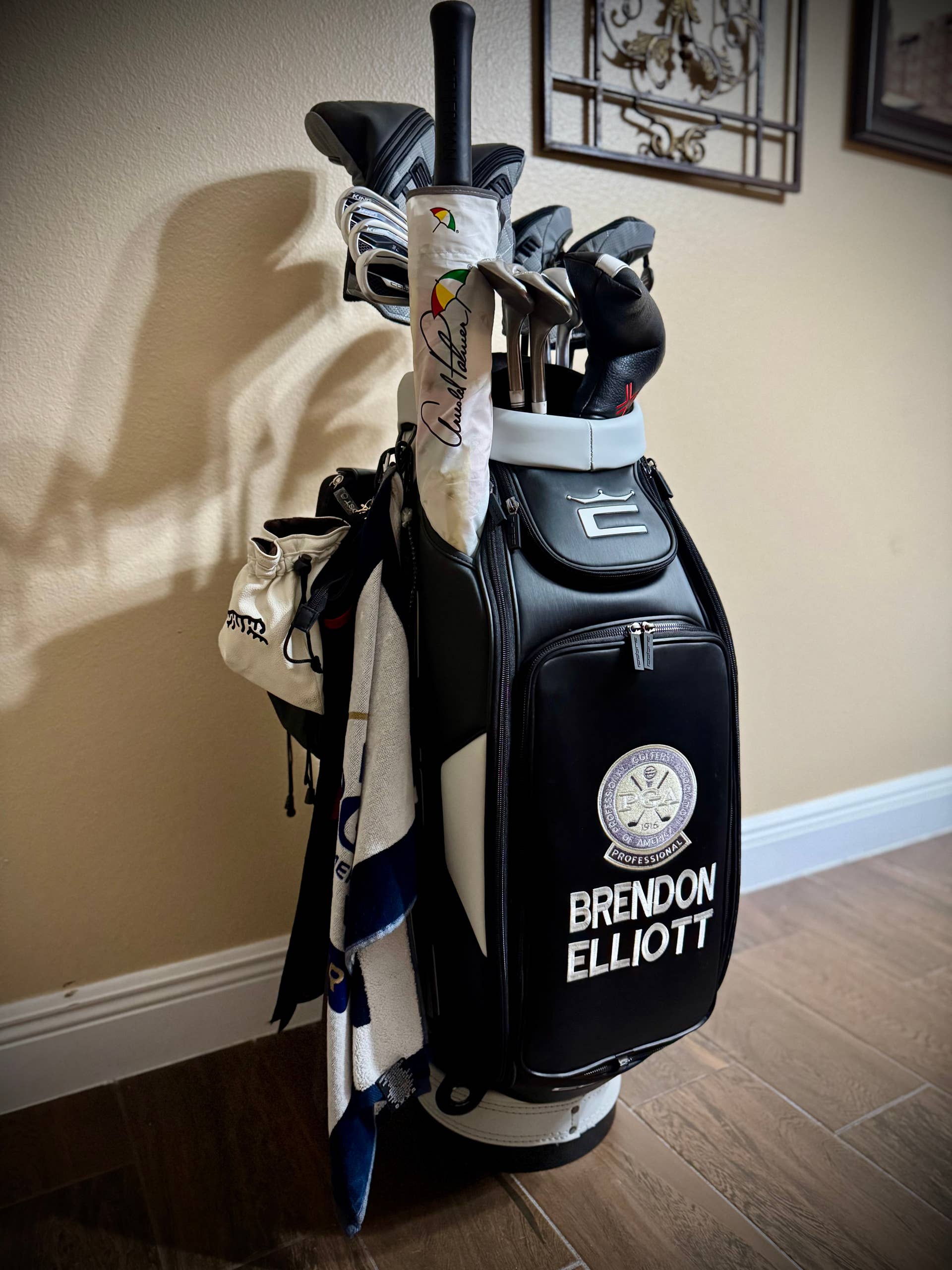
Brendon R. Elliott, PGA
I Am A PGA Professional, But I Am Not A “Player”
Before I get into the clubs, I need to be honest about the golfer holding them.
I have been in the golf industry for three decades. I am 17 years and counting as a PGA Professional. I have been fortunate enough to win multiple awards for coaching and education, and I spend a huge portion of my life around the game. I coach. I teach. I write. I talk golf. I study swings. I help players make better decisions. I have a club in my hand at least three days a week in some form or fashion.
But I am not a “Player.”
That capital “P” matters. I am not grinding tournament rounds. I am not chasing Monday qualifiers. I am not playing four times a week and dialing in my launch windows under pressure. These days, I might play 10 times a year. My handicap is 4.5, but in real-world terms, I probably play more like a good 4-to-7 handicap who understands the game very well, manages it pretty well and knows where the ball is supposed to go.
Most of my golf is played around 6,000 yards, because I am 51 years old and my beat-up old man body does not create the speed it probably should. I am in the process of changing that physical part once and for all, but that, too, is a story for another day. For now, the honest version is this: I still know how to play, but I need equipment that helps me play smarter, launch it easier, miss it better and enjoy the game more when I actually do get to peg it.
That is the golfer this Cobra setup was built for.
Inside The Switch
The Cobra Setup Built For The Golfer I Am Now
This is not a vanity build. It is a practical, modern setup designed around launch, forgiveness, playable speed and the honest reality of a 51-year-old PGA Professional who still knows how to score but does not play every week.
Driver
OPTM MAX-K Driver
10.5 degrees, FutureFit33 B1 setting, Project X Denali Blue 60 regular shaft and Golf Pride MCC Align grip.
Why it fits: More stability, better launch and a smarter miss pattern off the tee.
Fairway Wood
OPTM MAX 3-Wood
FutureFit33 B1 setting with a regular-flex MCA Kai’li Dark Waves Red 50 shaft.
Why it fits: Confidence off the tee and fairway without needing to manufacture speed.
Hybrids
OPTM 3H And 5H
Mitsubishi MMT Hybrid 70 regular shafts, built a half-inch long.
Why it fits: Easier launch, better long-game gaps and more useful shots from imperfect lies.
Irons
KING Irons, 5-GW
Project X LZ 5.5 steel regular shafts, one inch long and 1 degree flat.
Why it fits: Better-player shape and control with enough modern help to protect average strikes.
✓
The Theme Of The Bag
Every choice points in the same direction: easier launch, playable speed, more forgiveness and equipment that matches the golfer I am today, not the younger version I sometimes still remember.
Why The OPTM MAX-K Driver Makes Sense For Me
The driver is the club that first made this switch feel real.
I went into the Cobra OPTM MAX-K driver at 10.5 degrees, with the FutureFit33 setting at B1, a Project X Denali Blue 60 regular shaft and a Golf Pride MCC Align grip. On paper, that is not a “look how macho I am” driver build. That is exactly the point.
I do not need a low-spin, tour-inspired head that looks great in a launch monitor bay but punishes the days when my body does not show up the way I want it to. I need stability. I need launch. I need a head that keeps the ball in play when contact moves around the face. I need something that understands that the modern good amateur, even a low single-digit handicap, does not always produce tour-quality strike patterns.
The MAX-K is attractive to me because it leans into forgiveness without feeling like a surrender. That matters. Some forgiving drivers look like they were built only for a golfer who is terrified on the tee. This one still has enough presence and performance to make a better player feel comfortable, but the benefit is obvious: it helps manage the miss.
That is where my golf is now. I am not trying to hit the most impressive drive of the day. I am trying to hit the one that leaves me in the short grass, or close enough to it, with a reasonable shot into the green. If I can keep the heel strike from peeling too far, keep the toe strike from turning into something ridiculous and get a little more playable speed out of my normal move, that is a win.
At 51, that is not giving up on distance. That is finally getting honest about how distance is created.
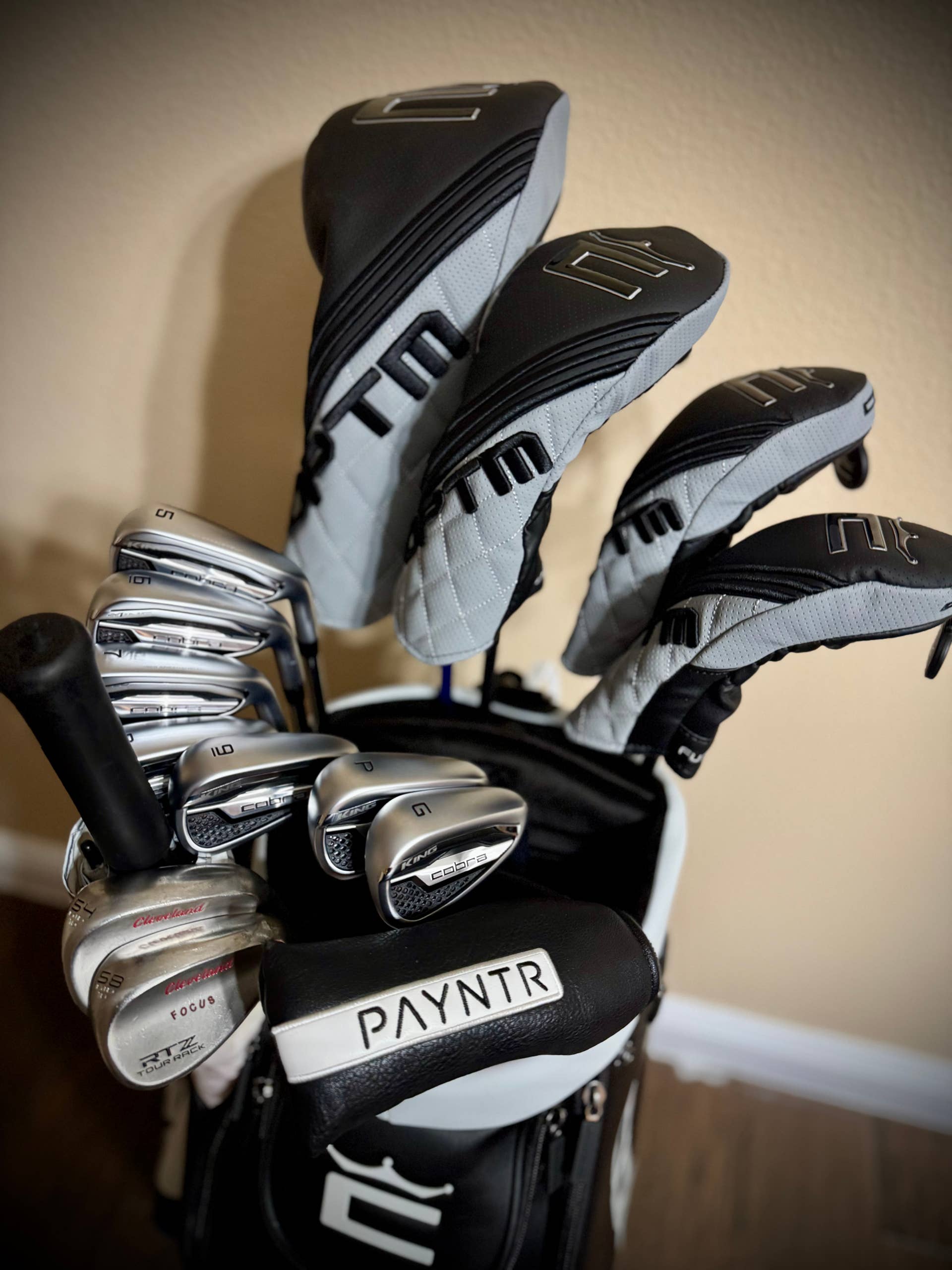
The 3-Wood And Hybrids Are About Usable Launch
The fairway wood and hybrid portion of the bag may be the most important part of this change.
My Cobra OPTM MAX 3-wood is built with a regular-flex MCA Kai’li Dark Waves Red 50 shaft, also set at B1. Then I went with the OPTM 3H and 5H hybrids, both with Mitsubishi MMT Hybrid 70 regular shafts and built a half-inch long.
That combination says a lot about what I need.
I do not need long clubs that only work off a perfect lie, with perfect rhythm, on the third swing of a range session. I need clubs that help me cover yardage gaps without feeling like I have to manufacture speed I do not have. I want the ball to launch. I want it to land with some usefulness. I want options off the tee, from the fairway and out of imperfect lies.
This is where a lot of golfers like me make a mistake. They build the top of the bag around what they used to do. They keep the hard-to-hit 3-iron or the stronger-lofted fairway wood because there is one shot every six months that makes them remember why they love it. The problem is the other 30 shots where the club never really had a chance.
The 3H and 5H give me practical golf. They help bridge the gap between driver, fairway wood and irons without asking my body to be something it is not right now. The half-inch-long build gives me a little more length and a little more natural speed potential, while the regular shaft profile fits the current version of my swing.
Could a stronger player laugh at that? Sure. Let them.
My scorecard does not care about flex labels. It cares about playable shots.
The KING Irons Fit The Golfer I Am Now
The irons might be the most interesting part of the setup.
I am going into Cobra KING irons from 5-iron through gap wedge, built one inch long and 1 degree flat with Project X LZ 5.5 steel regular shafts. That build is important because it does not scream “game-improvement bailout,” but it also does not pretend I need a tiny players iron to validate my golf soul.
As a coach, I love that balance.
The better recreational golfer often lives in a strange equipment middle ground. They strike it well enough to want feel, shape and control, but not consistently enough to ignore forgiveness. They want the club to look clean. They want to flight the ball. They want feedback. They also want help when life, age, work, travel, family and limited practice create the occasional thin, heavy or slightly off-center strike.
That is me.
The KING irons give me something that feels like it belongs in the hands of a good player, but with enough built-in help to make real-world golf easier. The one-inch-long build fits my height and posture. The 1-degree-flat lie angle helps me match up the delivery better. The Project X LZ 5.5 regular shaft gives me a profile that can still be controlled without asking me to swing like the younger version of myself.
That is the theme here. This setup is not about chasing the golfer I was. It is about fitting the golfer I am.
The Lesson For Other Golfers Is Simple
This is why I think this Cobra setup can work for a lot of golfers like me.
There are plenty of low-to-mid handicap players who know how to play but do not play enough to keep a razor-sharp game. They may have a decent index, but they are not tournament sharp. They may still hit quality shots, but they do not practice enough to demand unforgiving equipment. They may have enough pride to avoid “help,” even though help is exactly what would make the game more enjoyable.
That is the golfer who should pay attention to Cobra right now.
Not because Cobra is the only answer. It is not. Every major company makes excellent equipment. This is not about declaring one brand superior to everyone else. This is about recognizing that Cobra has put together a lineup that makes a lot of sense for golfers who need speed, launch, stability, adjustability and forgiveness without feeling like they have been pushed into clubs that do not match their identity.
The FutureFit33 adjustability is a big part of that. Being able to fine-tune loft and lie gives a fitter more ways to clean up ball flight, especially for players whose misses are not always solved by a simple shaft change or head swap. For someone like me, the B1 setting across the driver and 3-wood is part of creating a more consistent window. That is not tinkering for the sake of tinkering. That is fitting with intent.
There is a difference.
Coach’s Lens
The Golfers Who Should Pay Attention To This Cobra Switch
This move is not about chasing a logo. It is about matching equipment to the game a golfer actually plays, especially when age, speed, limited rounds and real life start changing the equation.
1
The Good Player Who Does Not Play Enough
A low-to-mid handicap can still need forgiveness when rounds are limited, practice is inconsistent and the strike pattern is not as sharp as it used to be.
2
The 50-Plus Golfer Managing Speed
Regular-flex shafts, hybrids and higher-launching heads are not signs of surrender. They are smart tools for creating playable speed.
3
The Golfer Tired Of Building Around Ego
The best equipment decisions come from honesty. Your clubs should fit your body, schedule, speed and scoring goals right now.
The Bigger Point
Equipment Should Match Your Reality, Not Your Memory
The right setup does not have to prove how good you used to be. It should help you enjoy the game you are playing now and give you a better chance to play the next version of it well.
Smart Fitting Questions
Can I launch it easier?
Can I tighten my miss?
Can I create speed without forcing it?
Does this club help my average swing?
Coach’s takeaway: There is no shame in help. The best players in the world use every ounce of technology available to them. Recreational golfers should stop pretending they are above it.
Equipment Should Match Your Reality, Not Your Ego
The biggest reason this switch feels right is because it lines up with where I am in life.
I am still a golf professional. I am still a coach. I still know how to work a golf ball, read a lie, think my way around a course and help other people get better. But I am also a 51-year-old writer, business owner, husband, dad and coach who does not play nearly as much as people probably assume I do.
So why would I build a bag for a fantasy version of myself?
That is the message I would give to any golfer who is hanging onto equipment for emotional reasons. Your clubs should not be trophies for who you used to be. They should be tools for who you are trying to be next. If that means more launch, take it. If it means a regular shaft, take it. If it means a hybrid instead of a long iron, take it. If it means a more forgiving driver head that keeps the ball in play, take it twice.
There is no shame in help. The best players in the world use every ounce of technology available to them. Recreational golfers should stop pretending they are above it.
Why Cobra, Why Now
After 20 years with Srixon, this move to Cobra feels refreshing.
It gives me a chance to experience something different, learn from it and speak about it honestly from the perspective of a PGA coach who still loves to play, even if the playing part of my life has become more limited. It gives me technology that seems built around the exact questions I am asking at this stage: Can I launch it easier? Can I tighten the miss? Can I keep enough speed without over-swinging? Can I find a setup that rewards my good swings and protects me better on the average ones?
That is the real story.
This is not a breakup column. It is not a brand war. It is not me trying to convince anyone that one company has all the answers. It is a 51-year-old PGA Professional, coach and golf writer being honest about his game, his body, his schedule and the equipment that now makes the most sense.
I switched to Cobra after 20 years because I wanted to see what else was out there.
So far, what I have found is a setup that does not ask me to be someone I am not. It gives me a better chance to play the kind of golf I can still play, the kind of golf I want to enjoy more often and maybe, with a little work on the body, the kind of golf that reminds me there is still plenty left in the tank.
PGA of America Golf Professional Brendon Elliott is an award-winning coach and golf writer who serves as Athlon Sports Senior Golf Writer. Read his recent “The Starter” on R.org, where he is their Lead Golf Writer. To stay updated on all of his latest work, sign up for his newsletter or visit his MuckRack Profile.


