


For all the struggles Arch Manning endured early in his 2025 campaign, you wouldn’t have known it from watching his Citrus Bowl performance.
Manning was the catalyst for the Longhorns’ offense in a triumphant 41-27 victory over Michigan, tallying 221 passing yards and two touchdowns, while chipping in 155 yards and two scores on the ground. To the people truly paying attention, that Citrus Bowl showing was the cherry on top of a quietly strong finish to the 2025 season.
As we look ahead to the 2026 season, there’s good reason to believe that Manning will live up to the billing and be the type of first-round talent that will have evaluators salivating. A big reason why? The arrival of former Auburn wide receiver Cam Coleman.
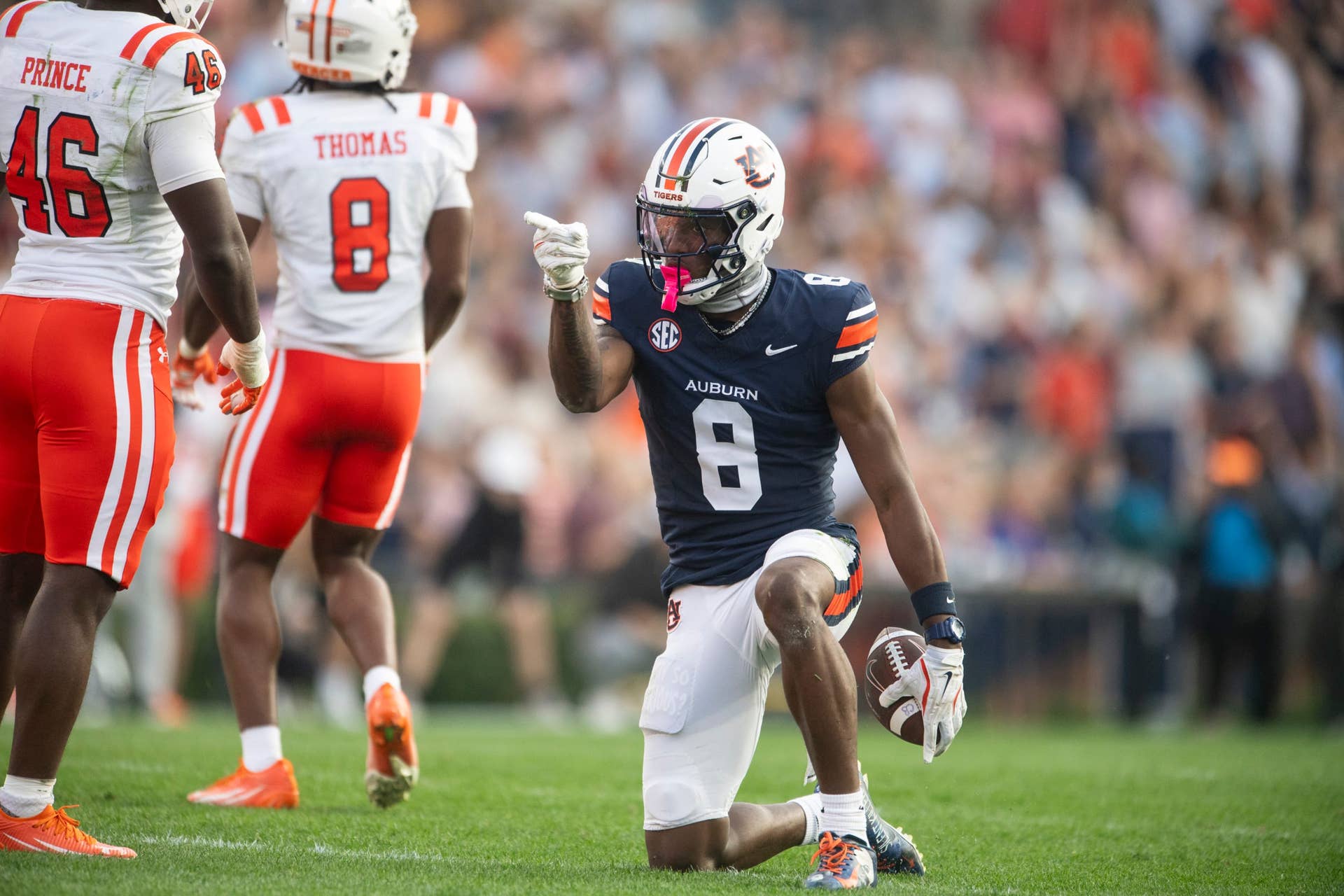
Texas’ acquisition of Coleman was a bet on a player who’s only scratched the surface of his on-field abilities. By adding Coleman to a wide receiver room that also features Ryan Wingo, Texas is betting that this dynamic duo can cause havoc for SEC secondaries and will give Manning the type of downfield threat that will finally unlock his deep-ball abilities.
USA TODAY Network via Reuters Connect
Quantifying the Cam Coleman Ceiling
Coleman is your classic create-a-player wide receiver. He stands 6-foot-3, runs like a deer and has an incredible catch radius. Even with subpar quarterback play at Auburn last season, Coleman routinely made highlight-reel grabs and stretched opposing defenses vertically. He provided serious juice to an offense that looked devoid in the passing game for much of the season.
To the untrained eye, Coleman had two solid-but-not-stellar seasons at Auburn. In two years, he tallied 93 catches for 1,306 yards and 13 touchdowns. Despite the highlight-reel catches, he never had the stats to back up his physical features, often because he never played alongside a quarterback who could consistently get him the ball.
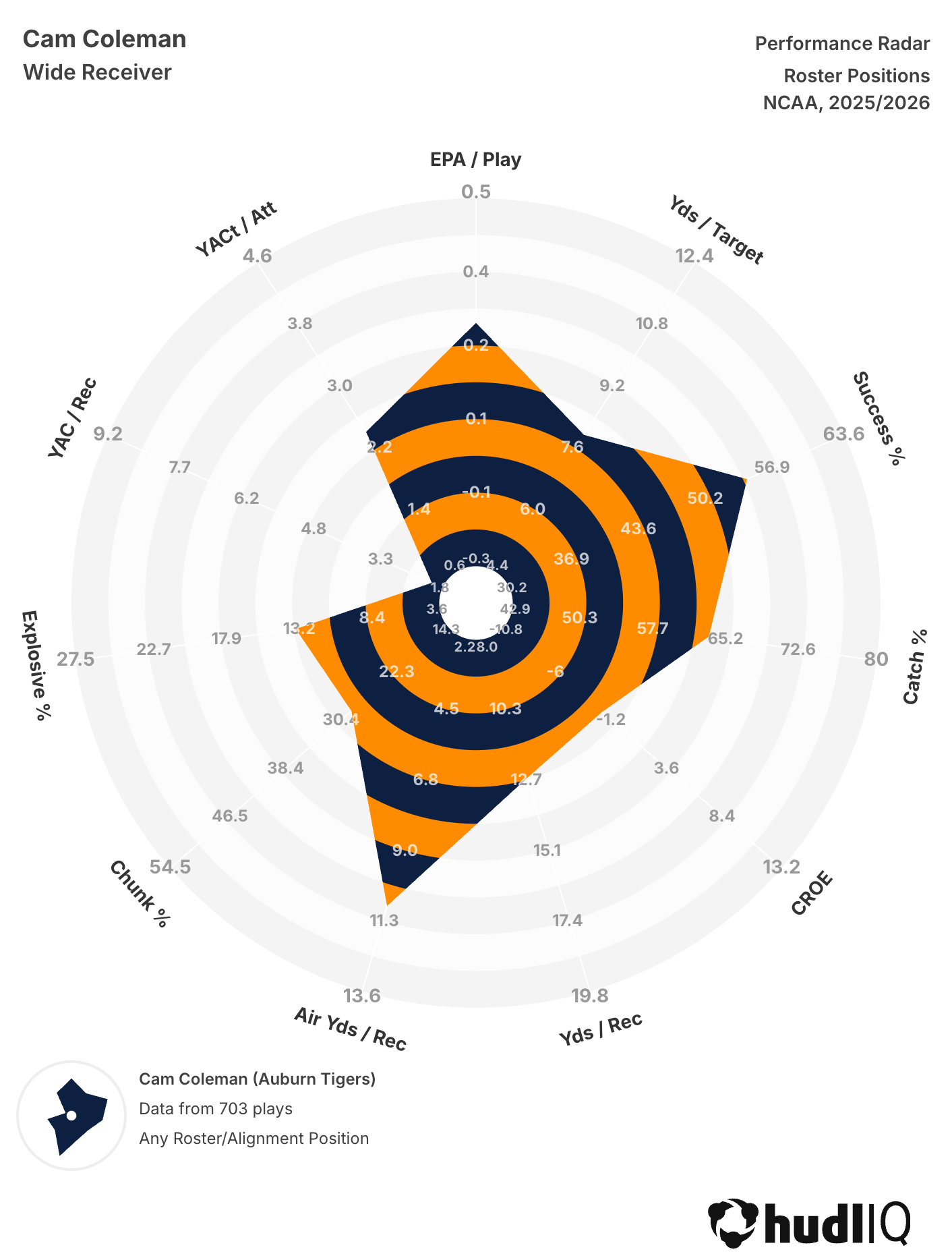
Last season, according to Hudl IQ, Coleman averaged 10.8 air yards per reception and 12.7 yards per reception, both good, but not excellent figures. Coleman was a good downfield threat for Auburn, but he often did his damage without a great connection with the guy throwing him the football.
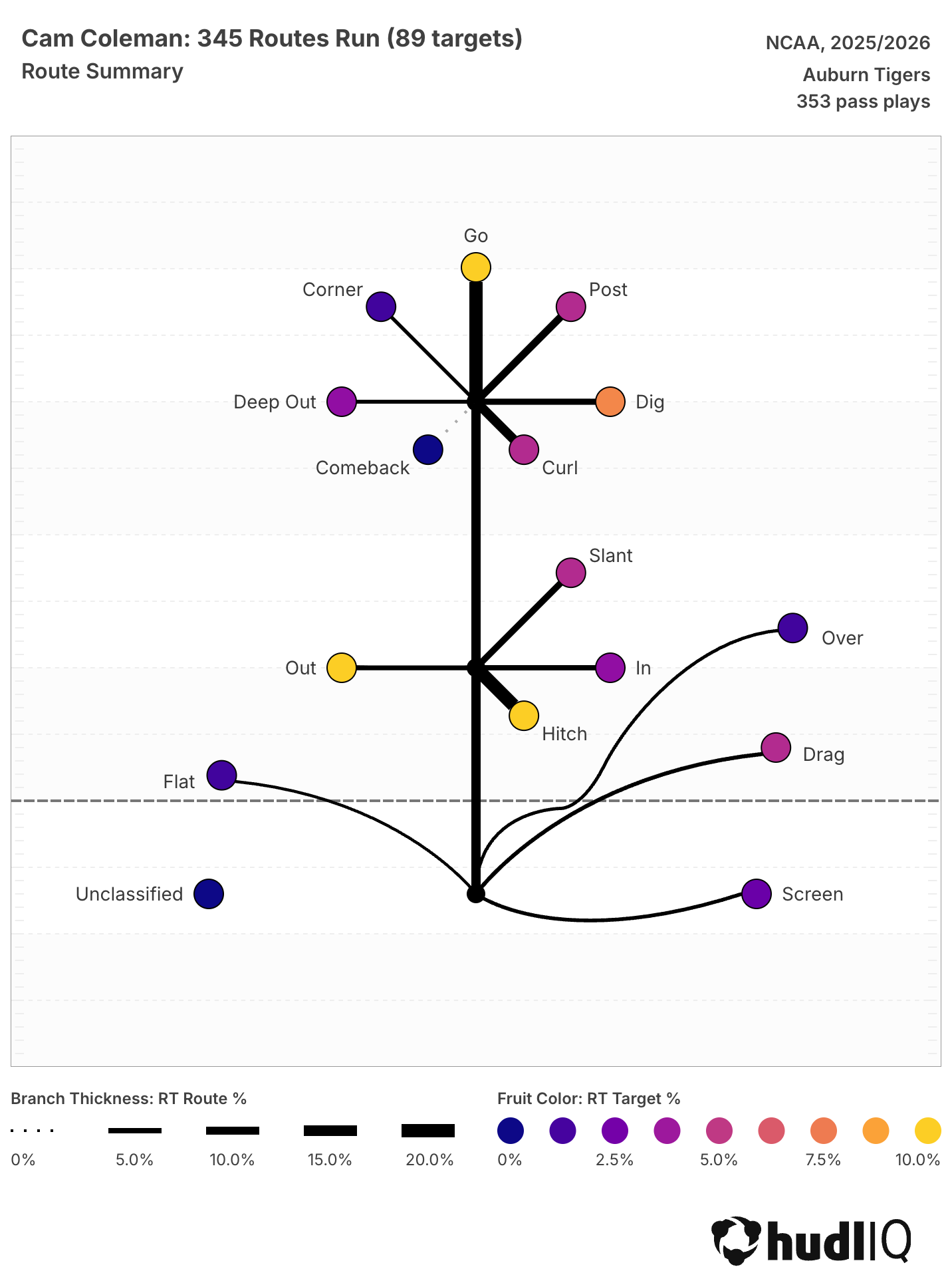
According to Hudl IQ, Coleman ran 345 routes, 82 of which were hitch routes, good for 23.8% of his routes run. His second-most-run route was a go route, which he ran 72 times, just over 20% of the time. This tells us he thrived in the short game with hitch routes and in the deep, downfield game with go routes, but didn’t impact the game in the same way in the medium part of the field.
Also according to Hudl IQ, Coleman also led the Tigers in targets per game (7.4), chunk rate (28.3%), explosive rate (13.0%) and air yards per reception (10.8). The stats paint a vivid picture of a deep-threat magnet that found ways to be successful, even without consistent quarterback play. Now imagine him catching passes from Manning. It’s hard not to see Coleman continuing to be a high performer in the short game and taking a big step forward as a serious deep threat.
The move to bring Coleman to Austin is a clear indicator that Texas wasn’t satisfied with good enough in the vertical passing game. By pairing Coleman with Manning, Texas coach Steve Sarkisian is betting that the Longhorns can maximize the physical abilities of a player who, so far, has been held back by the players around him.
The Best of Texas Longhorns Football
- 10 Greatest Football Players in Texas Longhorns History
- 5 Greatest Quarterbacks in Texas Longhorns History
- 5 Greatest Running Backs in Texas Longhorns History
- 5 Greatest Wide Receivers in Texas Longhorns History
- 5 Greatest Defensive Players in Texas Longhorns History


