


Thomas Tuchel’s final England squad for the 2026 World Cup has been defined as much by the players included as by the names left out. He recently described his decision as bringing “clarity and a certain edge that is necessary”.
Under Gareth Southgate, England were built around stability, possession control and trusted tournament experience. The German coach has gone in a very different and surprising direction. Big names like Phil Foden, Cole Palmer, Harry Maguire, Trent Alexander-Arnold and Morgan Gibbs-White have all been left out. The overall profile of the squad now looks younger, quicker and more aggressive in transition.
We can see that shift most clearly in attack.
At Euro 2024, England depended heavily on the technical quality of Foden between the lines. And Palmer was used as a weapon to unlock tired defenses in the dying minutes of matches. Both players are natural rhythm-setters. They slow games down, combine in tight spaces and create through subtle movement and short passing sequences.
However, two years later, their form dipped this season. Foden’s form has suffered just as badly as Palmer’s.
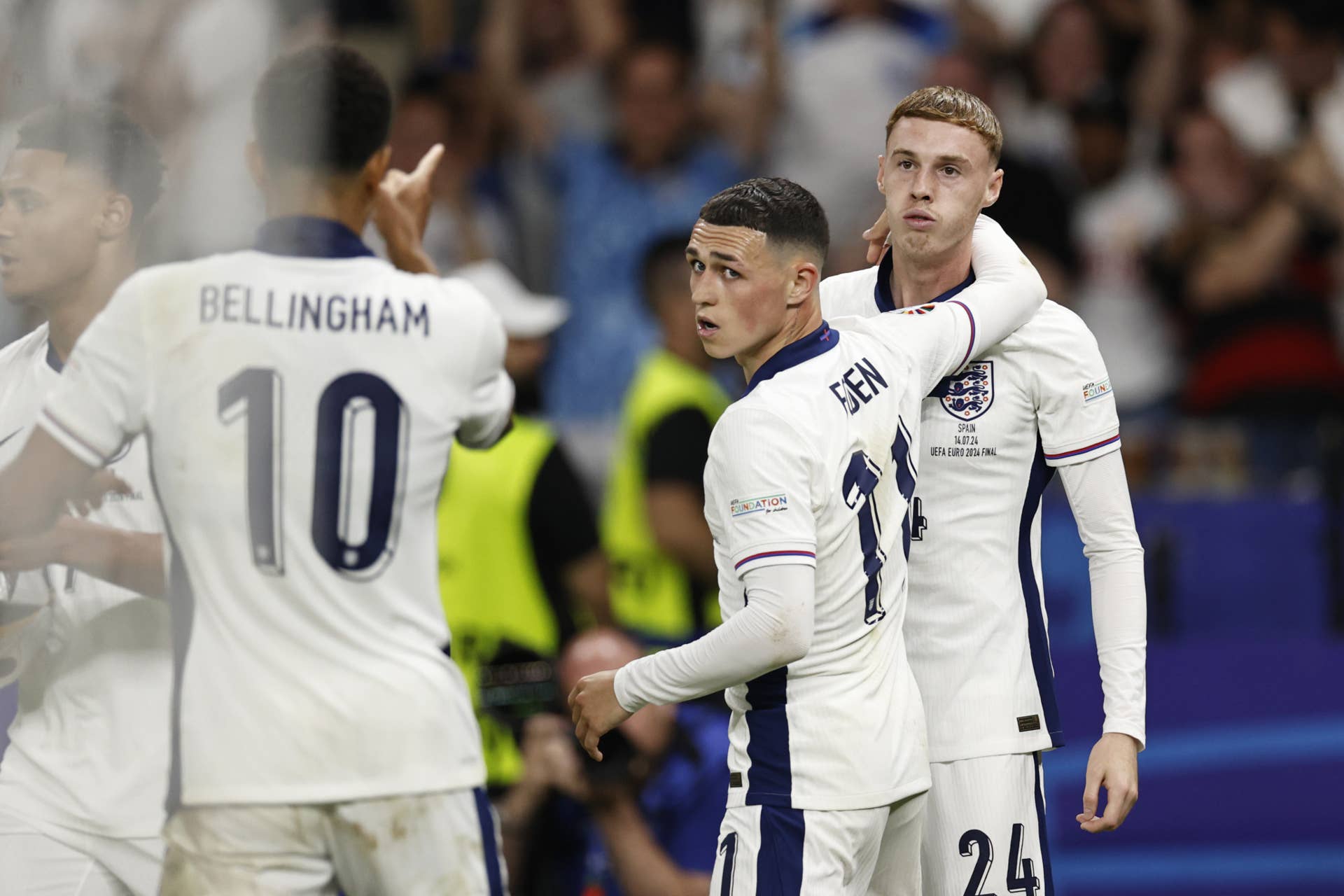
Tuchel’s version of England looks less interested in controlling tempo for long stretches. Instead, the tactical focus seems to be on vertical attacks, fast recoveries and direct running.
That explains why players like Noni Madueke and Morgan Rogers suddenly feel so important. Madueke gives England something very different from Palmer stylistically. Rather than drifting inside to dictate play, he immediately attacks open grass. Everything is direct with quick acceleration, 1-v-1 dribbling and aggressive runs behind defenders.
Another detail is how Tuchel seems like he wants his wingers constantly threatening the far post. Madueke and Anthony Gordon are both natural runners beyond the defensive line, which should give England far more speed and chaos during counterattacks.
Bukayo Saka is still the guaranteed starter on the right side, but Madueke’s inclusion gives England another explosive option who naturally fits transition football.
The same logic applies centrally.
Jude Bellingham is still the centerpiece of the team, but around him Tuchel has prioritized power, ball-carrying and defensive intensity. Eberechi Eze adds unpredictability as a creator, and Rogers offers something England have lacked for years physically from attacking midfield.
Rogers is probably the closest replacement for Morgan Gibbs-White structurally, but the interpretation of the role is completely different.
Where Gibbs-White thrives through combinations and quick technical exchanges, Rogers breaks lines with raw power. He can carry the ball 20 or 30 meters through pressure and instantly change the speed of an attack. In knockout football, that profile can become very valuable when games turn physical and chaotic.
Ultimately, England no longer looks designed to dominate possession for 70 % of matches but instead to attack violently after regaining the ball.
Tuchel's Defense Built for Transition Football
Bellingham’s responsibility in that system becomes bigger. He now looks less like a traditional attacking midfielder and more like the emotional and tactical engine. Tuchel has often built teams around aggressive counter-pressing triggers (Gegenpressing german school), and Bellingham’s energy makes him perfect for that role behind Harry Kane.
The omissions of Palmer and Foden also say a lot about Tuchel’s priorities. There's no question both are “extraordinary players and personalities,” as he said, but he seems to value defensive intensity, pressing discipline and physical output just as highly as creativity.
That philosophy is visible in defense, too. Harry Maguire was one of Southgate’s most trusted players and a huge part of England’s runs in 2018 and Euro 2020. But Tuchel seems determined to move toward a more mobile defensive structure. Maguire's missing out actually feels like the most natural evolution.
Marc Guéhi, Ezri Konsa and Jarell Quansah are now the core depth around John Stones.
Guéhi especially fits the new identity. Compared to Maguire, he's much more comfortable defending large spaces and playing in a higher line. That gives England the ability to squeeze the pitch and sustain pressure after losing possession.
Quansah’s inclusion actually says a lot about how Tuchel wants England to defend overall. He prefers proactive defenders who step forward aggressively rather than retreating toward their own box. England’s defensive line should play higher than it did under Southgate.
Of course, there is a trade-off. Without Maguire, England lose aerial dominance and some set-piece security. Tuchel simply seems willing to sacrifice that for more athleticism against transitions.
The right-back choices tell the exact same story. Tuchel left Trent Alexander-Arnold out in favor of Tino Livramento and Djed Spence.
That decision feels tactical more than anything else.
Alexander-Arnold is still one of the best long-range passers in football, but Tuchel clearly wants full-backs who can survive isolated defensive situations consistently. Livramento and Spence both bring recovery pace, physicality and more natural transition defending.
It may also suggest England are planning to progress the ball more through central midfield combinations rather than relying on diagonal distribution from deep positions. They lose some creativity without Trent, but they gain balance and defensive stability when attacks break down.
The biggest question now is whether England will still have enough creativity against deep defensive blocks.
Tuchel has not chosen the safest England squad. He has chosen the one he believes can function most effectively under his tactical principles. Whether that makes him a genius or England’s most wanted man after the 2026 World Cup will depend entirely on the results.


