


The FIFA World Cup is one of the most impactful sporting events. The 2026 tournament is just around the corner, making it a good time to remember the countries that have won the trophy.
It is impossible to forget those eight nations that, from Uruguay 1930 to Qatar 2022, have lifted FIFA's premier competition. Nations that have written the history of a sport that means more than just a training activity in society.
Below is the ranking of the countries that have won the World Cup the most times, considering that six of them have done so on at least two occasions, and four have touched the sky with their hands on at least three occasions.
1. Brazil: 5 (1958, 1962, 1970, 1994, 2002)
The icons of "jogo bonito" also lead the ranking of World Cup crowns; in fact, they are the only ones to have celebrated on five occasions.
Didi, Garrincha, and a then-teenage Pele illuminated the Canarinha in Sweden in 1958, beating the hosts themselves in the final, while four years later, in Chile, the same protagonists, but with an injured Pele, took care of repeating the title, against Czechoslovakia.
Of course, the footballing zenith came in Mexico 1970, as a result of what many consider the best national team in history, with Lobo Zagallo on the sideline and the now-king Pele on the field, alongside Tostao, Rivelino, Jairzinho, Gerson, and Carlos Alberto, who steamrolled their rivals, including Italy, in the final (4-1).
In the United States in 1994, a more pragmatic Verdeamarela once again left the Azzurri without gold in the decisive match, but on penalties, while in South Korea-Japan 2002, Ronaldo, Rivaldo, and a young Ronaldinho Gaucho formed a luxury attacking trio to guide Felipao Scolari's side to the fifth title, with a victory over Germany in the final match.
2. Italy: 4 (1934, 1938, 1982, and 2006)
Despite missing the 2018 and 2022 tournaments and now having to seek its ticket to the 2026 Mexico-United States-Canada tournament via a playoff, the Squadra Azzurra remains one of the traditional dominators of the international landscape.
It is no coincidence that it was the first back-to-back champion in the world and one of the three nations that have won the most important tournament of all four times.
The Nazionale rose to the top in front of its home crowd in 1934, beating Czechoslovakia in the final, and reaffirmed its status at the first opportunity, in France 1938 at the expense of Hungary; while Il Bambino d'Oro, Paolo Rossi, established himself as the top scorer and centerpiece of the squad that surprised everyone in Spain 1982, where it beat Germany 3-1 in the championship match, before reaching glory again, precisely in Germany, in 2006, after that penalty shootout against France in which Trezeguet hit the crossbar.
3. Germany: 4 (1954, 1974, 1990, and 2014)
The always-feared Mannschaft is part of an exclusive club of just three national teams that have come out on top in four World Cups (and have lost four finals), having taken the honors in the 1954 tournament in Switzerland, 1974 as host, 1990 in Italy, and 2014 in Brazil.
The German side debuted by reaching the summit when it staged the "Miracle of Bern," coming back from 2-0 down in the final to beat ultra-favorite Hungary, featuring Puskas, Kocsis, and Czibor, 3-2. Two decades later, Kaiser Beckenbauer and Torpedo Muller joined forces to lift the title at home, crowned with a 2-1 win in the decisive match against the Mechanical Orange (Netherlands), led by Johan Cruyff.
Then in 1990 came the third star, thanks to a 1-0 win on a penalty kick by Andreas Brehme against Argentina; the same opponent it beat to claim the title at the Maracana in 2014, courtesy of Mario Gotze's epic extra-time goal.
4. Argentina: 3 (1978, 1986, 2022)
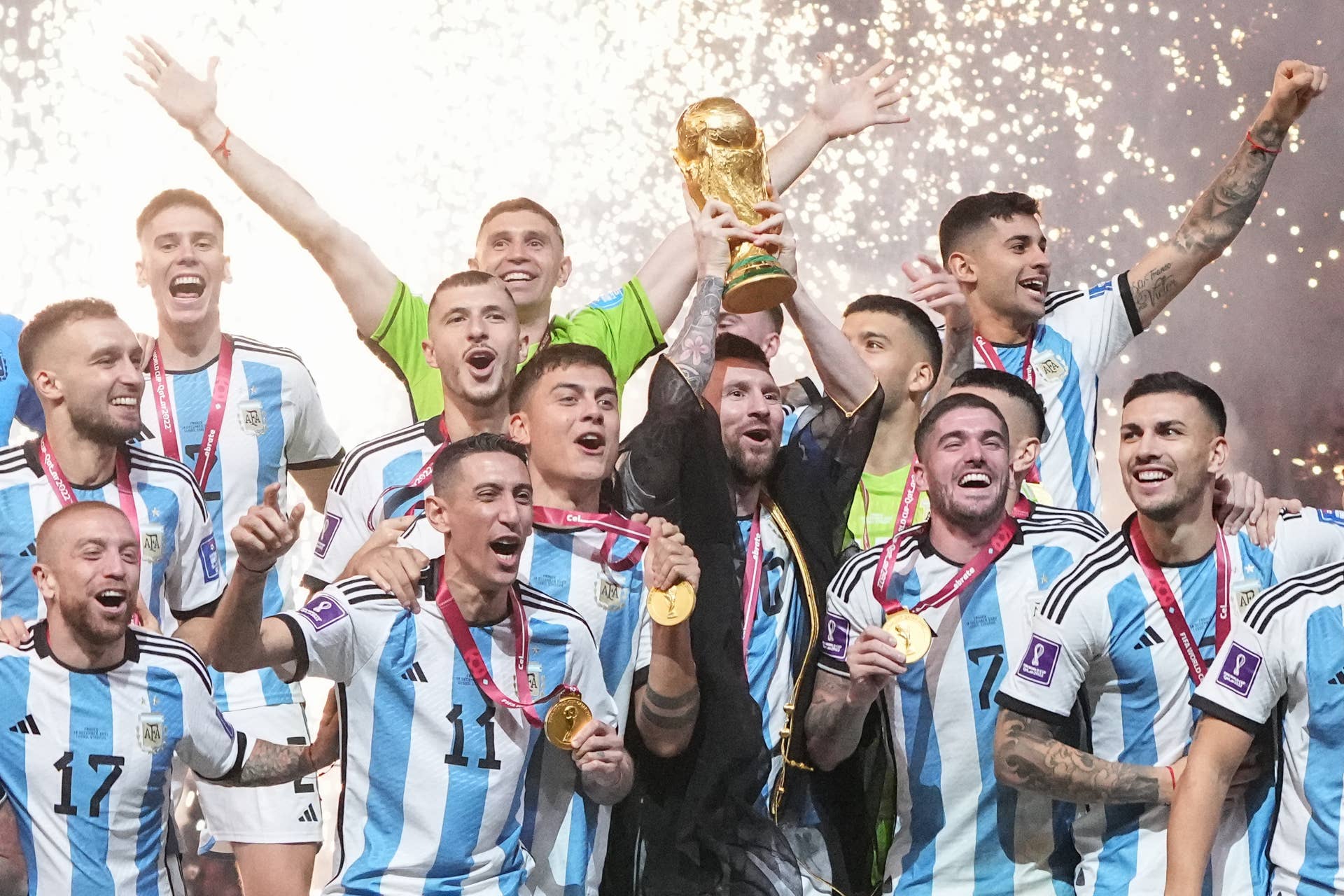
Photo by Cui Nan/China News Service/VCG via Getty Images
Three stars, guided by three distinct names in each. Indeed, Argentina is one of the few countries that have won the FIFA World Cup on at least three occasions.
El Matador, Mario Alberto Kempes, led the Albiceleste to its first universal title in 1978, as host, after defeating the Netherlands in the decisive match, while Diego Armando Maradona delivered perhaps the greatest individual performance ever in this competition, carrying his side in Mexico 1986, beating, among others, Germany in the final.
Finally, after several attempts, Lionel Messi put the finishing touch on his legendary career by shining in Qatar 2022, lifting the collective crown after a thrilling final that was decided on penalties.
5. Uruguay: 2 (1930, 1950)
La Celeste established itself as the first World Cup champion and the second to repeat the feat, after Italy. The Uruguayans organized the first major football event in 1930, when they defeated Argentina 4-2 in the final, with Jose Nasazzi, El Mago Scarone, Jose Leandro Andrade, and Pedro Cea as key figures throughout the tournament.
Meanwhile, 20 years later, in a new format with a group stage to determine the winner, Uruguay staged the Maracanazo in Rio de Janeiro, defeating Brazil 2-1 in the final, with Obdulio Varela, Juan Alberto Schiaffino, and Alcides Ghiggia as the great heroes.
6. France: 2 (1998, 2018)
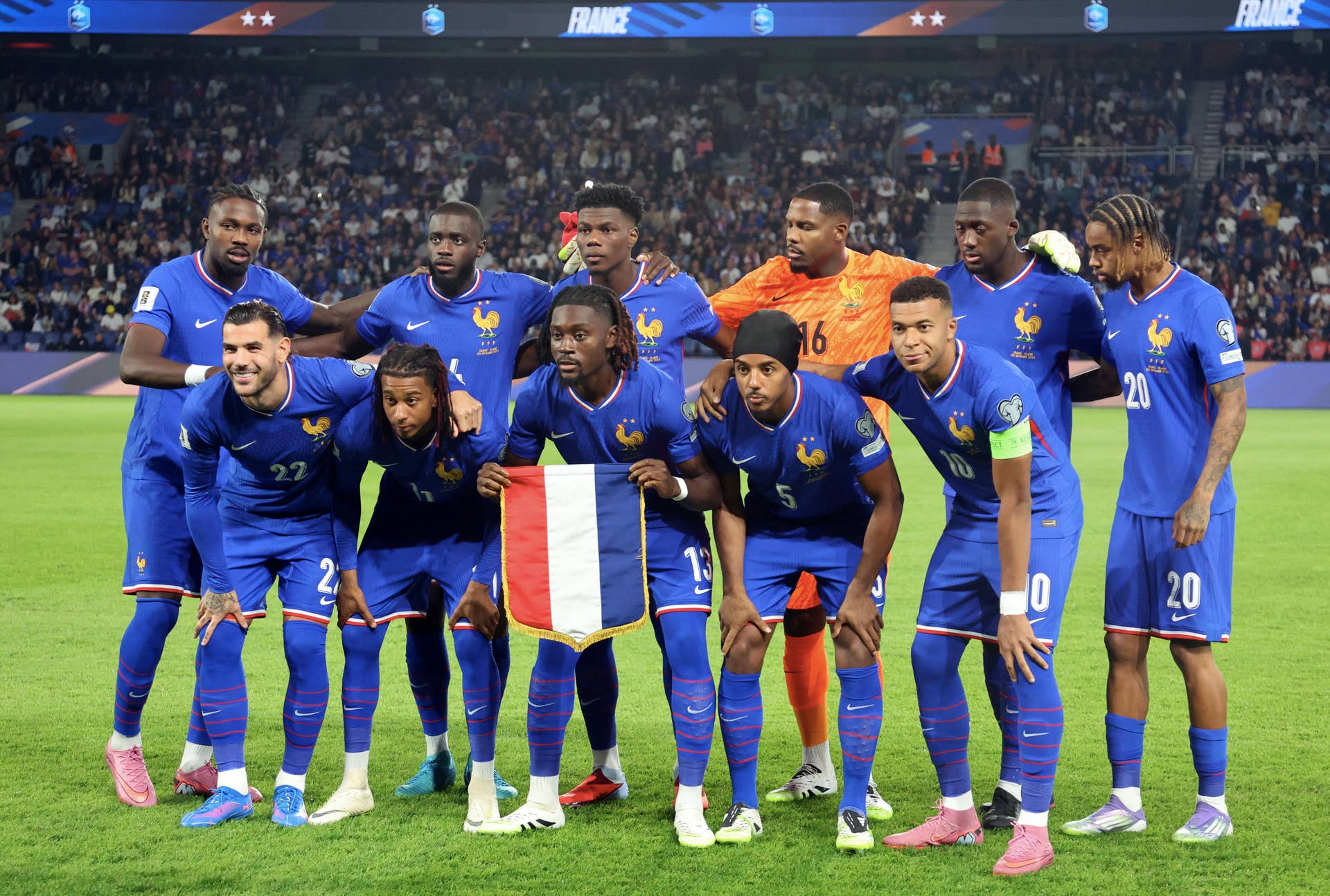
Xavier Laine/Getty Images
Although it is the penultimate country to celebrate a conquest, Les Bleus quickly entered the top six in terms of universal titles, thanks to the 1998 tournament at home and the 2018 edition in Russia, in addition to earning second-place finishes in Germany 2006 and Qatar 2022; in both cases, losing the decisive match on penalties.
While the successful group led by Zinedine Zidane and supported by Desailly, Blanc, Thuram and Deschamps (as a player) thrashed the Brazil of a "prime" Ronaldo Nazario 3-0 in the final at Saint-Denis, the France side with Deschamps himself as coach relied on the solidity of its structure, with a young and electric Kylian Mbappe in attack, to beat Croatia 4-2 in the supremacy clash held in Moscow in 2018.
7. England: 1 (1966)
The Three Lions were the third nation to take advantage of being host in a World Cup, winning the then-Jules Rimet Trophy at Wembley in 1966, thanks to a hat trick by Geoff Hurst in the final against Germany, with controversy included (the apparent "ghost goal").
The paradox of the matter is that the feat of that squad, led by Sir Bobby Charlton, Bobby Moore, and Gordon Banks, has not been emulated by any English generation, despite having enjoyed significant favoritism in some tournaments during the 21st century.
8. Spain: 1 (2010)
La Roja is not only one of the two nations that have "barely" won the World Cup once, but it is also the last to join this distinguished list of kings of the planet.
Indeed, Spain took advantage of its golden generation at its peak, to the point that, after winning Euro 2008, it went on to win the coveted FIFA event in South Africa 2010, courtesy of that epic goal by Andres Iniesta in extra time against the Netherlands, when the decisive match seemed destined for penalties. Two years later (2012), Vicente del Bosque's side again reigned in Europe.


