


Former United States men’s national team goalkeeper and longtime ESPN soccer analyst Kasey Keller detailed his previously undisclosed cancer battle for the first time in an interview with Athlon Sports.
The 56-year-old who made 102 appearances for the United States privately fought a type of non-Hodgkin lymphoma (NHL) called large B cell lymphoma (LBCL) for several years.
Thankfully, Keller is in full remission today, and he has decided to share his story with the world on February 4’s World Cancer Day.
Keller is using his personal experience to raise awareness of a one-time, life-changing treatment, partnering with Bristol Myers Squibb to educate others about CAR T cell–based gene therapy and Breyanzi (lisocabtagene maraleucel).
Celebrated USMNT Goalkeeper Shares His Health Journey
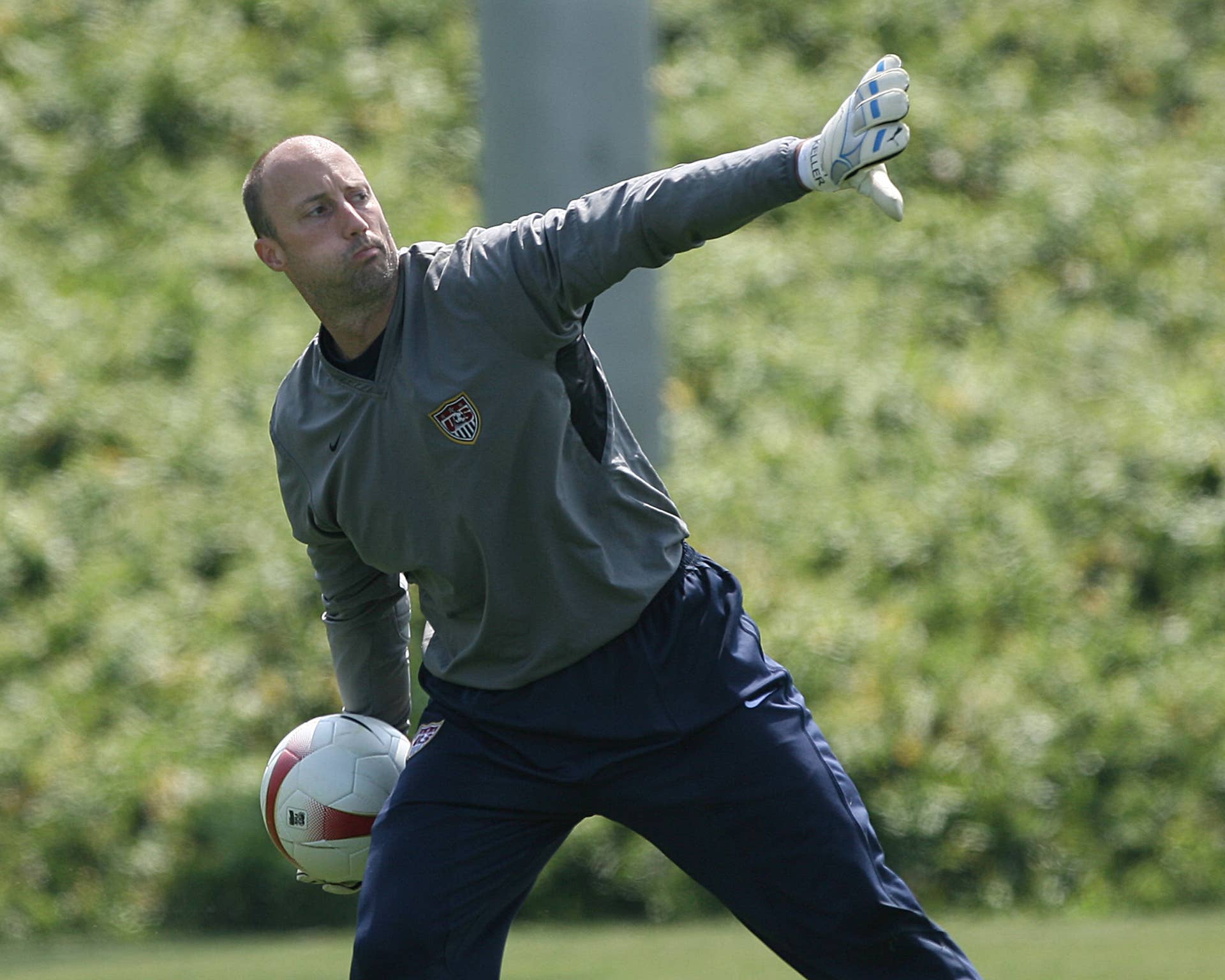
Photo by J. Miranda/MLS
The four-time FIFA World Cup goalkeeper first noticed a minor hip issue in 2010 when he was in the process of negotiating a one-year renewal with the Seattle Sounders of Major League Soccer.
"It started in 2010," Keller told Athlon Sports. "I finished a two-year contract with the Seattle Sounders when I moved home from playing in Europe. I was in negotiations for a one-year extension and had a little hip issue. I wanted to make sure it wasn’t something serious before I signed a new one-year contract. I went in and had an MRI. The MRI basically told me that my hip was okay. I was just an old player that had a lot of wear and tear, but it was fine—nothing serious."
Keller was urged to undergo a biopsy, which revealed a diagnosis of asymptomatic non-Hodgkin’s lymphoma.
"But they did see something of concern," he recalled. "They wanted me to go back in very quickly. The next morning, I had a biopsy, which a few days later confirmed that I had non-Hodgkin’s lymphoma, which was obviously a little bit of a surprise—thinking that I was just going in to see if my hip was okay, and then finding out that I had cancer. That was a little bit of a shock.
"Upon consultation with the oncologist, the suggestion was basically just to monitor the situation. I was asymptomatic. They found this from something else and said to just roll with it. But I felt odd signing a year’s extension without at least telling the club that this had happened. I didn’t know what potentially could happen during the next season."
Keller informed the Sounders of his condition and completed his final professional season in 2011. It would turn out to be one of his most decorated seasons.
"So I told the club, signed a contract, went away to preseason," he said. "I had a scan after preseason — everything was okay. Halfway through the season, I had a scan — everything was okay. I retired, moved into the broadcast world. After a couple of years, the doctor basically told me, “Look, we’re going to stop testing. We don’t see any reason to test until there’s a reason to test, and you’ll know when that reason is."
He captained Seattle and recorded a shutout against the Chicago Fire in the Sounders’ 2011 Lamar Hunt U.S. Open Cup final victory. For a third consecutive season, Keller led Seattle to a U.S. Open Cup title while wearing the captain’s armband.
The 6-foot-2 Washington State native took part in an emotional home farewell game at CenturyLink Field (now known as Lumen Field) in front of a record crowd of 64,140 fans on October 15, 2011.
Keller finished his playing career on October 22, 2011, as the third-oldest player in MLS history at 41 years and 324 days. He closed the book on his storied career by earning a trio of honors in his final season, being named as MLS Goalkeeper of the Year, earning an MLS Best XI place and MLS Save of the Year.
All the while, his cancer diagnosis was kept from the public eye. He then began a distinguished broadcasting career, appearing on color commentary for Sounders broadcasts alongside play-by-play announcer Ross Fletcher and regular work on ESPN match broadcasts and studio shows.
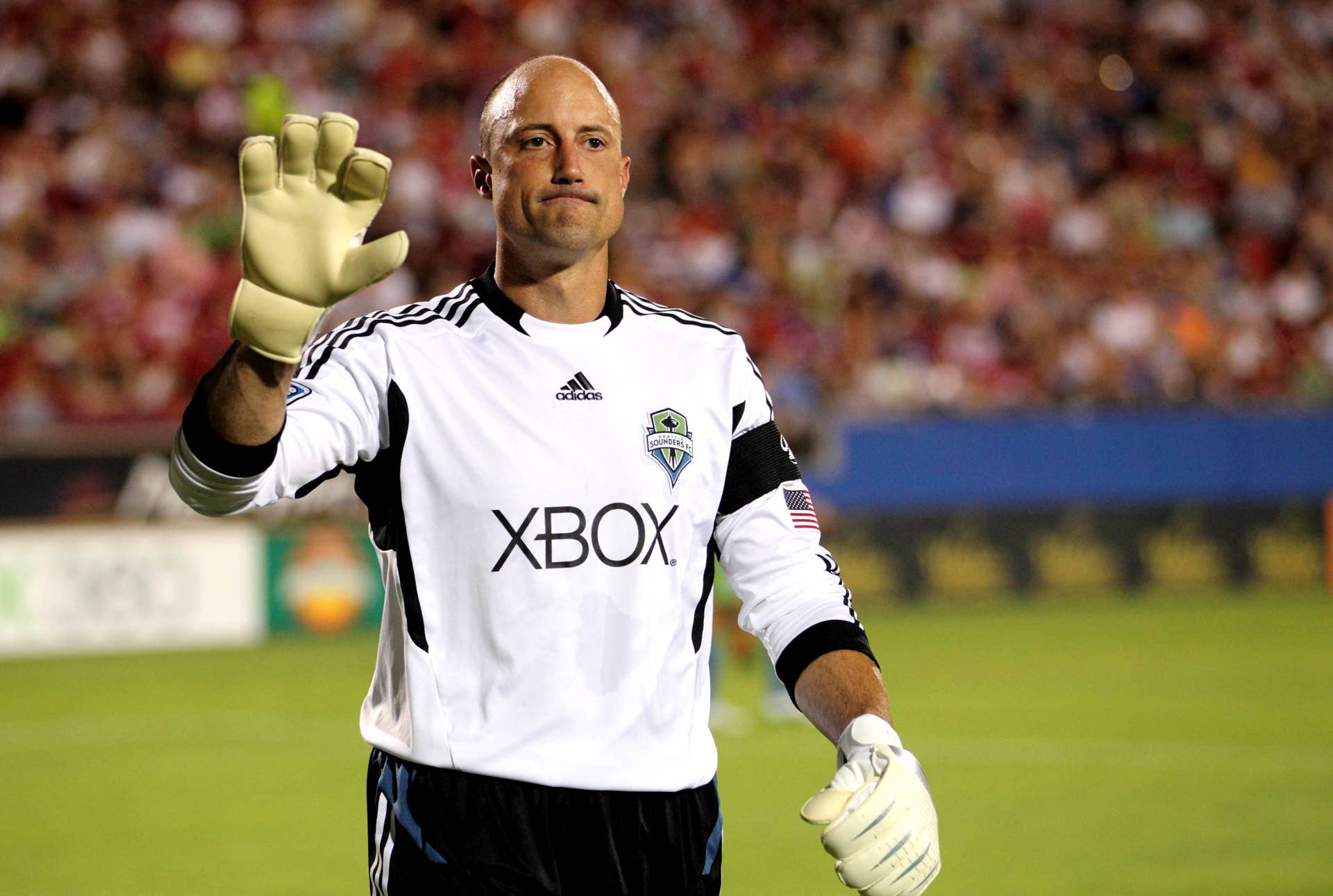
Kevin Jairaj-USA TODAY Sports
Around the 2017 holiday season, his wife, Kristin, suggested that he visit a doctor after she noticed a change on his body.
"Fast-forward to the fall of 2017 – I started to gain a little bit of weight in my post-playing career, like most pros do," Keller remembered. "I wanted to kick that workout regimen back up a little bit and lose some weight. I started working out harder, lost a little weight, worked out harder again, lost a little more weight — and then something just didn’t seem right. It seemed too easy.
"I went through the Christmas season, ate everything in sight, and still lost weight. Then my wife pointed out, as I was getting out of the shower, that my lymph nodes in my groin looked like they were going to come out of my skin, and that I should probably go have a chat with my doctor. So I did."
Keller began his first cancer treatment in early 2018. It would be the first of 13 treatments that would follow before he was informed by his doctor about CAR T cell therapy.
"By the end of February 2018, that’s when I started treatment," Keller said. "Unfortunately, it was a very difficult treatment. The very first treatment I went through — I fully expected the doctor to tell me it was the best results he’d ever seen — but it was very minimal results. I then went on to treatment after treatment, clinical trial after clinical trial, with very mixed results. Some strong results halfway through treatment, then zero — absolute zero — results.
"Eventually, I had a change in my cancer to large B-cell lymphoma, which opened the door for a brand-new treatment that had just been FDA-approved, called Breyanzi. After consultation with my doctor, this was the path we wanted to go down. I got all the information — including potential side effects. I’d been through it so many times before that I was like, 'Yeah, of course. Sign me up.'"
Keller became one of the first patients to receive Breyanzi CAR T cell therapy, a one-time treatment, following its approval in 2021.
Breyanzi is a chimeric antigen receptor (CAR) T cell therapy. It is a type of treatment that uses a patient’s own white blood cells (T cells) to fight cancer. The treatment process includes blood collection, CAR T cell creation, administration and side-effect monitoring.
"Breyanzi is a CAR T cell therapy," Keller said. "You go in, get apheresis, where they take out the T cells. The T cells go to a lab and get engineered. It takes about a month, and then they get infused back into your body. CAR T uses your own cells, with those engineered markers, to fight the cancer."
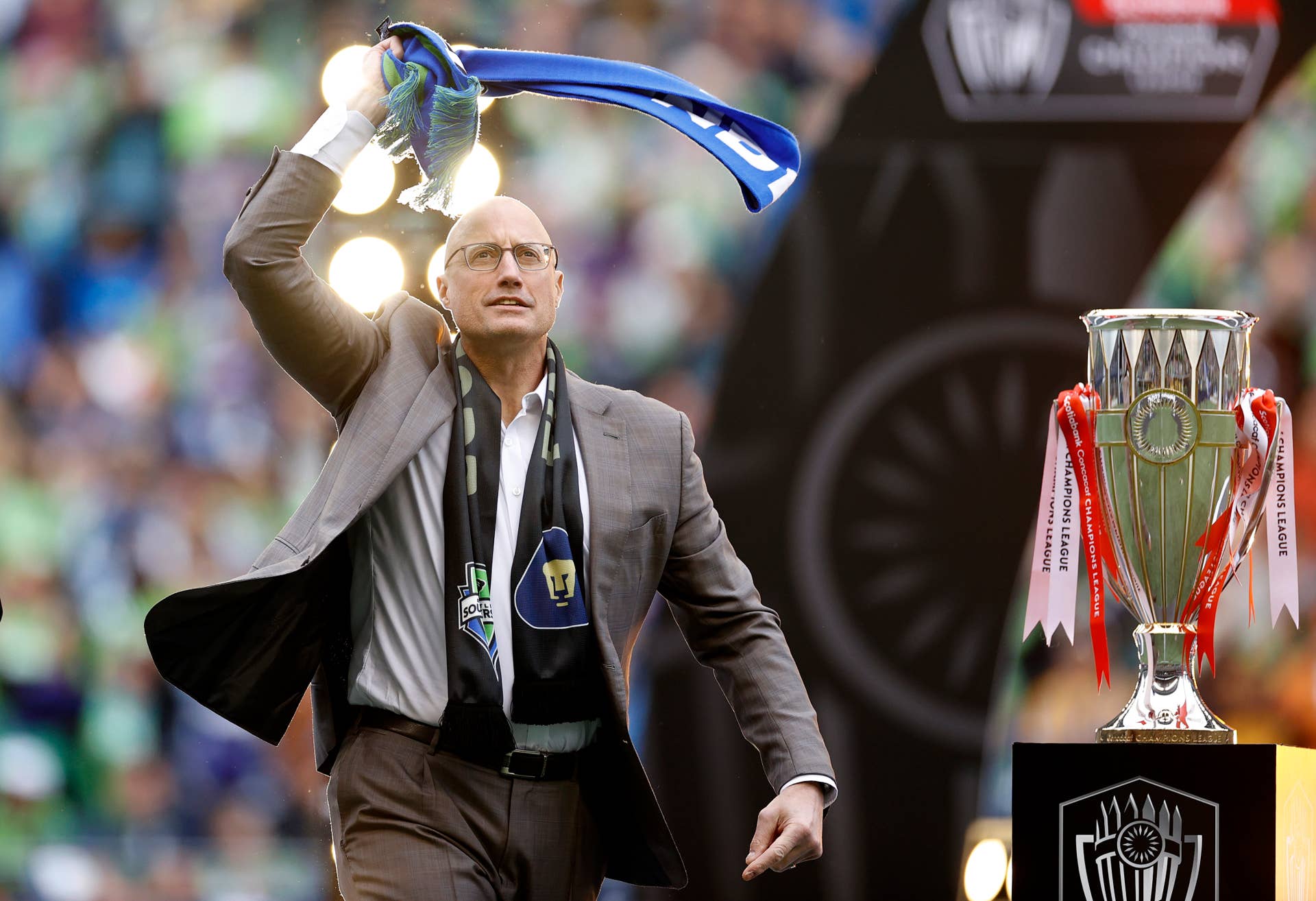
Photo by Steph Chambers/Getty Images
The breakthrough arrived when Keller was declared disease-free two months after he underwent Breyanzi therapy.
"After 12 other treatments with minimal to no success, after one month I was in remission, and after two months I was declared NED — no evidence of disease," he stated. "Now that I’m a few years into remission, I had the opportunity to partner with Bristol Myers Squibb and tell my story — how Breyanzi worked for me — and to let people know to keep fighting, because you never know when that next thing down the line might be the one that does the job.
"For me, having gone through so many different types of treatment, what I really love about CAR T and Breyanzi specifically, with my type of CAR T and my type of cancer, is that you’re using your own body.
"You’re using your own body to fight the cancer. You have to be your own biggest advocate. You have to have that relationship with your doctor. You have to do the research. You have to have those communications, second opinions, and talk to everybody and anybody, because this is your chance. Yes, there’s a point where you don’t know what you don’t know, but when you can go on sites like Breyanzi.com and different providers to find out what your options are, you keep looking to see what might be the treatment that works for you — because Breyanzi eventually was the one that worked for me."
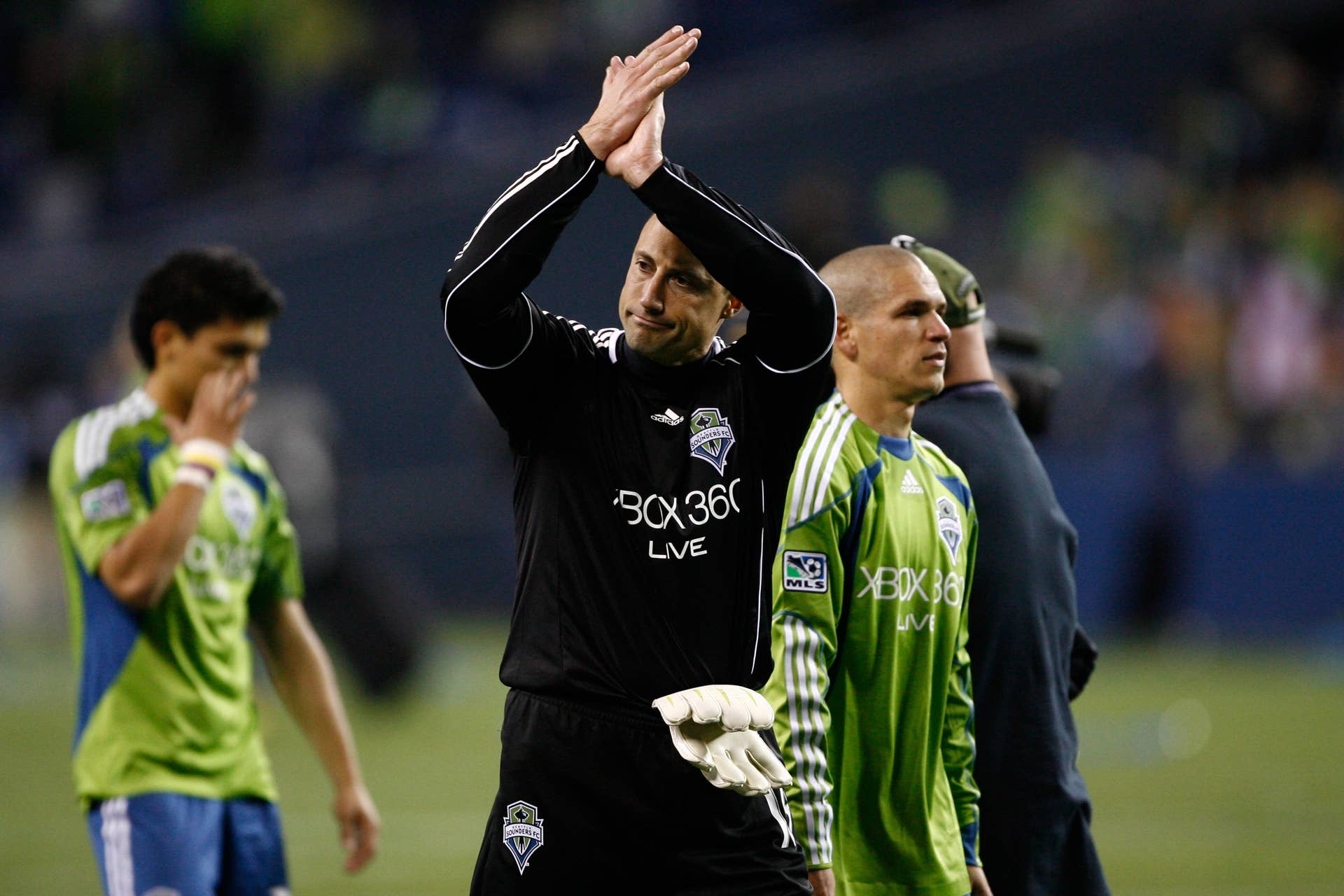
Joe Nicholson-USA TODAY Sports
Keller hopes that his story will encourage those fighting cancer to find positivity and hope even in the most trying of situations, where it feels like every option has been exhausted. A lifesaving treatment could be just around the corner.
"For me, I kept my diagnosis and treatment very private," Keller stated. "That’s what felt right for me and my family. Now that I’ve come out the other end for a few years, I have a different perspective.
"When the opportunity arose to partner with Bristol Myers Squibb and tell my story — and talk about Breyanzi, the CAR T treatment that did the job for me — it was about letting people know that even if there are setbacks, you never know what’s down the line to work.
"So keep fighting. Keep doing whatever is possible, knowing that maybe the next one will be the one. From someone who went through 13 different treatments before finding the one that worked — you never know what the next one is. Just keep being as positive as you can, keep being an advocate for yourself, and keep those relationships with your doctors, providers, and support group."
Keller underlined the importance of having a strong support group, keeping a positive mindset and attempting to live a normal lifestyle.
"Everybody’s battle is individual," he said. "You’re going to have your own thing. But if you’re not happy with something, look for something different. If you don’t think you’re getting what you want, keep asking questions. Keep fighting for yourself. Get that support group to keep fighting with you.
"When I started treatment, Breyanzi didn’t exist. To be able to keep going long enough to eventually get the treatment that did the trick — that’s huge. Keep a positive attitude as best you can. I know it’s not fun, but if you put yourself into a really negative space, it’s going to affect you. Do whatever you can to live life as normally as possible. Be positive. Look for that next situation that might be the one that does the trick."
For Keller, a celebrated goalkeeper who made countless game-changing saves across the globe on fields in the English Premier League, Spanish La Liga, German Bundesliga, MLS and international competitions in a United States kit, CAR T cell-based gene therapy and Breyanzi were his game-changer.
Readers who would like to learn more about the treatment can visit BreyanziWithin.com.