


The U.S. Open is never gentle with newcomers.
That is especially true this week at Shinnecock Hills, where history, wind, exposed ground, firm greens and championship pressure can make even elite players feel like guests in someone else’s house.
For first-timers, the goal is not always the same. Some arrive with a legitimate path to a high finish. Some are chasing low-amateur honors. Some are trying to make the cut, learn everything they can and prove that qualifying was not the end of the story.
That is part of what makes this group worth watching.
The 2026 U.S. Open field has the usual stars, former champions and major-tested names. It also has a fascinating first-timer class: a rising PGA Tour player stepping out of his brother’s shadow, two 17-year-old amateurs, a former college basketball player, an NCAA champion, a Latin America Amateur champion, a first-ever national milestone for Iceland and a 36-year-old pro finally getting his first major start.
Here are some of the U.S. Open first-timers to watch, how they got to Shinnecock and what kind of chance they realistically have this week.
U.S. Open Watch List
First-Timers With The Best Storylines
Shinnecock Hills is no soft landing spot. These debutants bring the strongest mix of form, path, story and upside.
Alex Fitzpatrick
Path: FedExCup exemption
Best true contender among the debut group. Top-20 upside if the wind makes this a patience test.
Miles Russell
Path: Final qualifying playoff
Youngest player in the field. The question is not talent, it is U.S. Open patience.
Preston Stout
Path: NCAA champion
The cleanest low-amateur profile with college wins, Walker Cup experience and elite amateur form.
Árni Sveinsson
Path: Final qualifying
The first golfer from Iceland to play in the U.S. Open. Historic before he hits a shot.
Alex Fitzpatrick Has The Best Chance To Make Real Noise
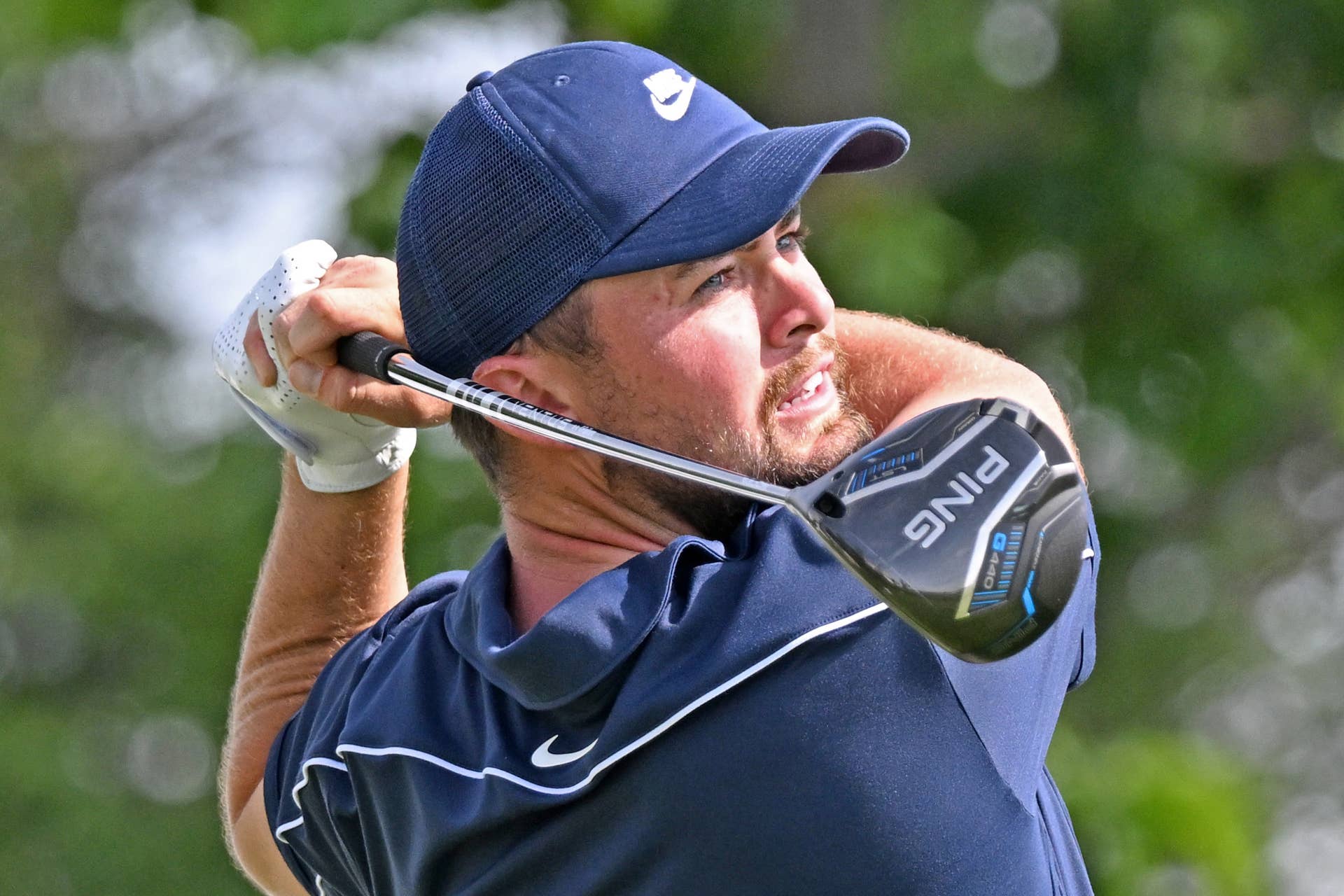
Credit: Dan Hamilton-Imagn Images
Alex Fitzpatrick is not the cute little-brother story anymore.
For years, that was the easy way to frame him because his older brother, Matt Fitzpatrick, had the U.S. Amateur title, the U.S. Open title and the established global profile. Alex is building his own resume now.
He got into this U.S. Open through the top-five FedExCup exemption category for players not otherwise qualified. That alone tells you this is not just a nice debut story. He has earned his way into a different tier.
The 27-year-old Englishman broke through on the DP World Tour earlier this year at the Hero Indian Open, then won alongside Matt at the Zurich Classic of New Orleans, becoming part of the first brother duo to win a PGA Tour event together. Since then, he has continued stacking strong starts and has become one of the more interesting U.S. Open debutants in the field.
His chances this week are real, at least compared with most first-timers.
Winning is still a big ask. U.S. Opens tend to punish impatience, and Shinnecock asks hard questions around every green. But Fitzpatrick has links instincts, major-family experience, recent form and a game that should not be overwhelmed by wind or discomfort.
Realistic ceiling: Top 15.
Best-case dream: Late Sunday relevance if the course gets brutal and the winning score drifts upward.
Most likely outcome: Makes the cut and proves he belongs in this tier.
Miles Russell Brings The Biggest Teen Story
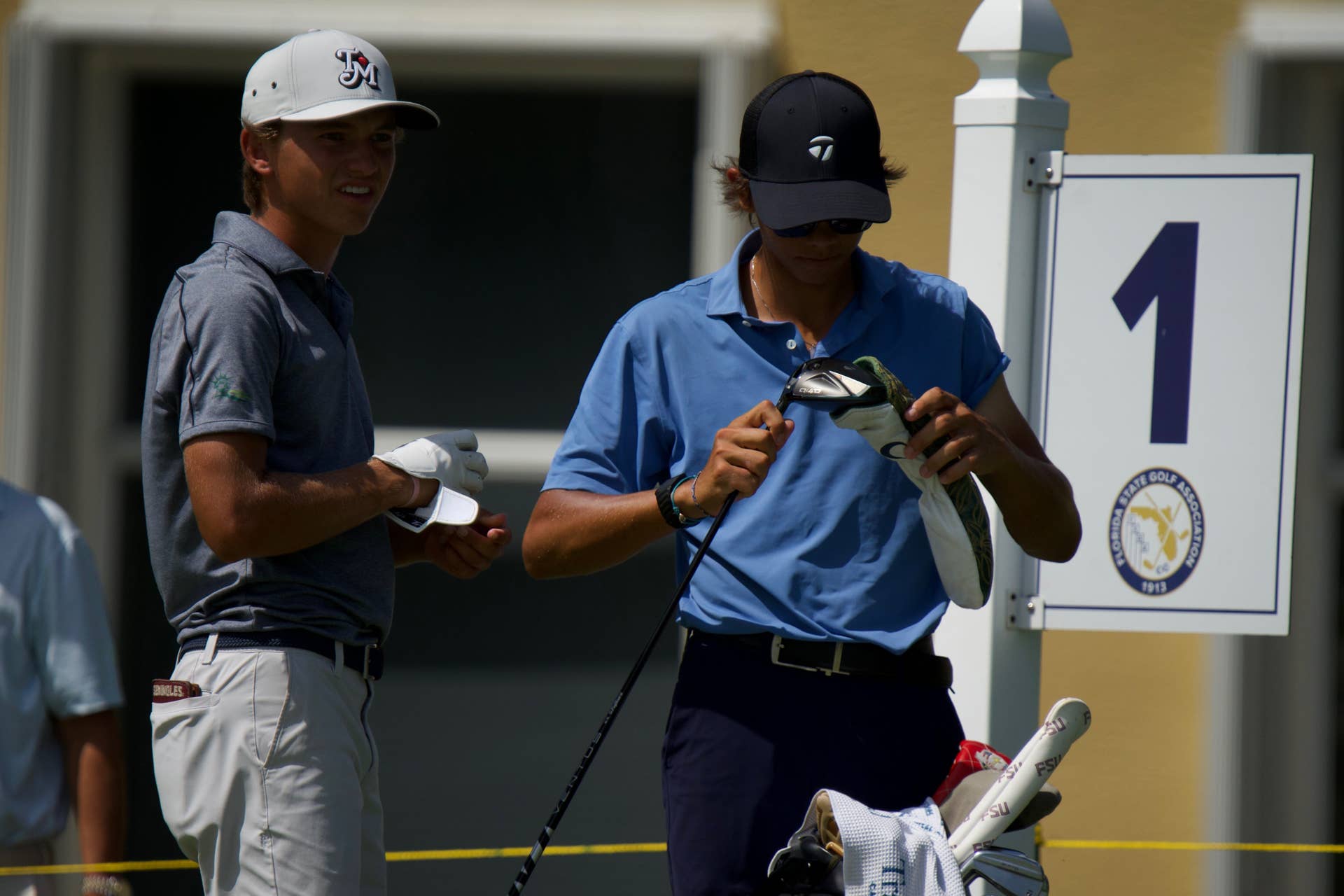
USA TODAY Network via Reuters Connect
Miles Russell is the youngest player in the field, and that alone would make him one of the week’s most followed first-timers.
But his path adds another layer.
The 17-year-old left-hander earned the final spot out of the BallenIsles final qualifier in Florida with a birdie on the second playoff hole. Charlie Woods, his friend and future Florida State teammate, caddied for him during qualifying, which naturally pushed the story into a different kind of spotlight.
Russell is not just a novelty. He is the No. 10 player in the World Amateur Golf Ranking and the highest-ranked junior. He has already been around bigger stages than most players his age, but Shinnecock is a different animal.
The challenge is not talent. It is patience.
Teenage stars often have enough speed, creativity and confidence to produce highlight moments. The U.S. Open asks them to accept boring pars, awkward lies, conservative targets and the emotional reset after an unfair bounce.
Russell can absolutely make some noise for a round. A weekend appearance would be a major statement.
Realistic ceiling: Low amateur contention.
Best-case dream: Makes the cut and becomes one of the stories of the week.
Most likely outcome: Flashes his talent but learns how unforgiving a U.S. Open can be.
Giuseppe Puebla Made It The Hard Way
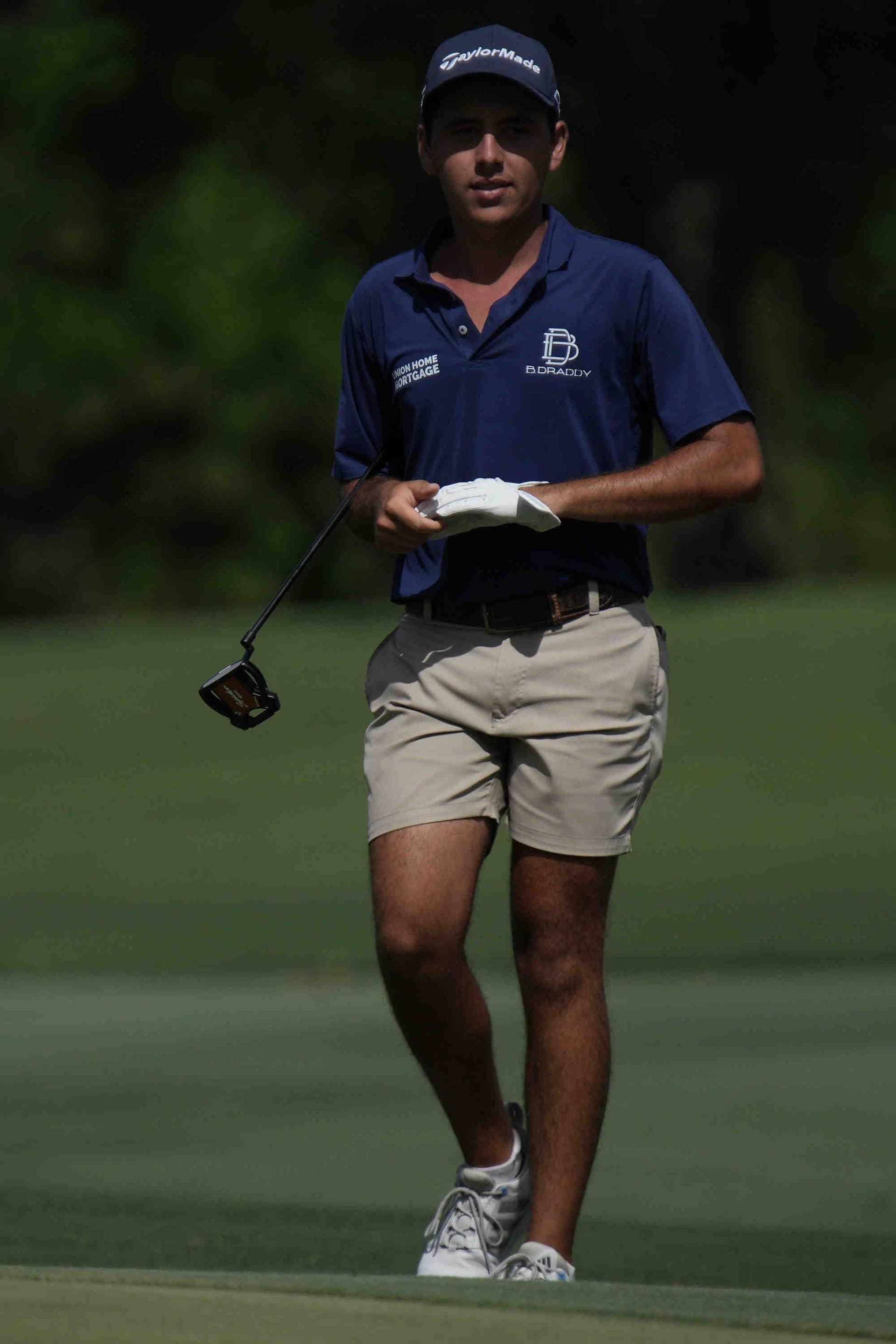
Giuseppe Puebla is the other 17-year-old in the field, and his route was even more old-school U.S. Open.
He navigated both stages of qualifying. He shot 66 in local qualifying at The Moorings at Hawks Nest, then shared medalist honors at BallenIsles with a 7-under 137 in final qualifying.
That matters.
For a high school player, making it through one qualifying stage is impressive. Making it through both says something about competitive maturity, shot control and emotional steadiness.
Puebla is a rising high school senior, a member of the U.S. National Junior Team and a University of Florida commit. He is also the second-youngest player in the U.S. Open field, behind Russell.
His chances this week are similar but slightly different. Russell may get more attention because of his ranking and the Charlie Woods qualifying angle, but Puebla might be better suited to lean into the under-the-radar role.
Realistic ceiling: Low amateur mix.
Best-case dream: Makes the cut with steady, grown-up golf.
Most likely outcome: A tough but valuable first major experience.
Preston Stout Is Built Like A Serious Low-Amateur Threat
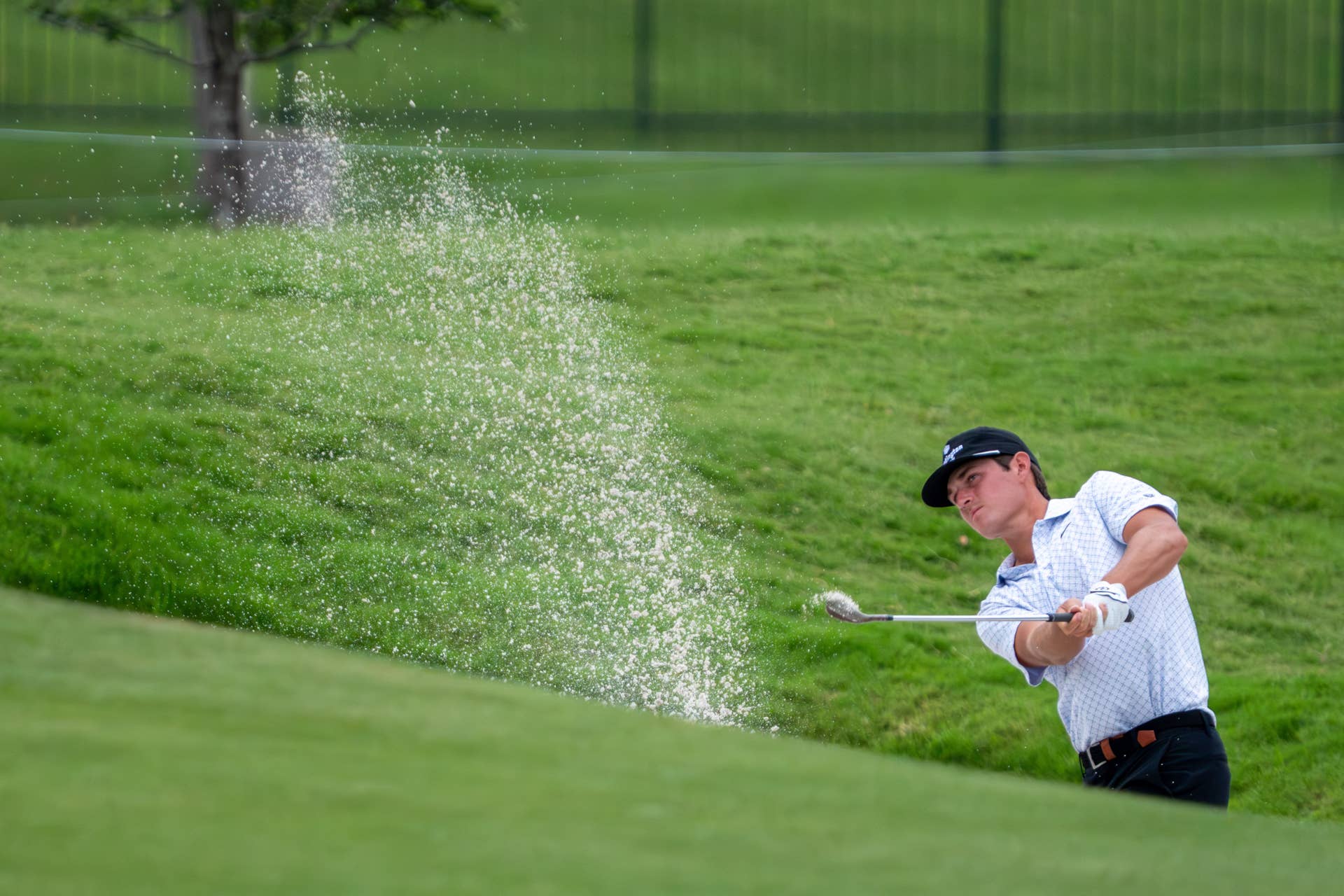
Credit: Raymond Carlin III-Imagn Images
Preston Stout may be the amateur in this group with the cleanest competitive profile for a hard golf course.
The Oklahoma State junior earned his first U.S. Open start by winning the 2026 NCAA Division I individual championship at La Costa. He shot 14 under, edged Alabama’s William Jennings by one and entered Shinnecock as one of the top amateurs in the world.
He is not here as a ceremonial college champion.
Stout was No. 3 in the World Amateur Golf Ranking in his USGA profile, won four times in college during the 2025-26 season, defended his Big 12 title and played on the winning 2025 USA Walker Cup team. That is a serious body of work.
The U.S. Open question is simple: Can he keep the ball in the right places for 36 holes?
If he does, he can absolutely be part of the low-amateur race. If he gets loose, Shinnecock will expose that quickly.
Realistic ceiling: Low amateur.
Best-case dream: Weekend run and a top-40 finish.
Most likely outcome: The amateur most likely to look comfortable in uncomfortable conditions.
Árni Sveinsson Gives Iceland A Historic First
Árni Sveinsson already has a permanent place in this U.S. Open.
The LSU golfer became the first golfer from Iceland to qualify for the U.S. Open after shooting 9-under 135 at final qualifying in Ohio. He also had to survive a playoff to claim his spot, which makes the breakthrough even more meaningful.
That is the kind of story the U.S. Open still does better than any championship in golf.
The field is filled with major winners and PGA Tour stars, but the national open remains a place where a college player from Iceland can play his way into one of the sport’s biggest weeks.
Sveinsson’s chances are hard to frame because this is a huge jump in environment. But he has already done something that required nerve. He posted a strong 36-hole score, handled playoff pressure and now gets four practice days to adjust to the biggest stage of his life.
Realistic ceiling: Makes the cut if he handles the moment quickly.
Best-case dream: Low-amateur chase and a history-making weekend.
Most likely outcome: A landmark start with flashes that travel well beyond Iceland.
Brandon Holtz Is The Most Unlikely Amateur Story
Brandon Holtz might be the best “only in the U.S. Open” story in this group.
He is a former Illinois State basketball player, a reinstated amateur, a real estate agent in the Bloomington, Ill., area and the reigning U.S. Mid-Amateur champion. His 2025 U.S. Mid-Amateur victory at Troon Country Club came in his first-ever USGA championship start.
Now his first U.S. Open start comes at Shinnecock Hills.
Holtz is long, competitive and old enough to know who he is. That matters. He is not a teenager trying to figure out the stage. He is a grown man with life experience, a different athletic background and a clear understanding that this week is both opportunity and reward.
His chances to contend are extremely slim. But that is not the right measuring stick.
If Holtz plays the weekend, it would be one of the best amateur stories of the championship.
Realistic ceiling: Makes the cut and becomes a fan favorite.
Best-case dream: Low amateur.
Most likely outcome: A hard, memorable week that still validates an incredible second act.
Mateo Pulcini Continues His Amateur Championship Tour
Mateo Pulcini earned his U.S. Open debut through his dramatic win at the Latin America Amateur Championship in January.
The 25-year-old from Argentina defeated Virgilia Paz Valdes in a playoff at Lima Golf Club. That victory gave him a major-championship runway that included the Masters, the U.S. Open and a spot in The Open Championship.
Pulcini’s story has layers. He was a three-time NCAA Division II All-American at Oklahoma Christian, played one season at Arkansas as a graduate transfer and has represented Argentina internationally.
He is older than many elite amateurs, which can help in a U.S. Open setting. He should not be overwhelmed by simply being around professional golf. The bigger test is whether his short game and distance control can hold up when Shinnecock starts demanding precise misses.
Realistic ceiling: Makes the cut and challenges for low amateur.
Best-case dream: Top amateur finish.
Most likely outcome: Competitive stretches, but a difficult scoring week.
Kevin Roy Finally Gets His Major Moment
Kevin Roy is the first-timer who best represents the working pro side of U.S. Open qualifying.
He is 36. He turned professional in 2012. He is the son of former PGA Tour and PGA Tour Champions player Jim Roy. And after shooting 67-67 to earn medalist honors at the Purchase, N.Y., final qualifier, he will make his first major-championship start.
That is a long road to a first major.
Roy’s story is not about hype. It is about endurance. The U.S. Open still gives players like him a door, and he kicked it open over 36 holes.
Could he contend? Probably not. But experienced qualifiers can be dangerous for a round or two because they are not playing with the same expectations. He has waited too long to be intimidated by the name on the flag.
Realistic ceiling: Makes the cut.
Best-case dream: A top-40 week that changes his summer.
Most likely outcome: A proud first major start with a chance to hang around if he starts cleanly.
Jayden Schaper Is A First-Timer With Real Tournament Toughness
Jayden Schaper is not arriving as a random international name.
The 25-year-old South African earned his spot as the top player on the 2026 Race to Dubai who was not otherwise exempt. He has won twice on the DP World Tour this season, both in playoffs, and has already shown he can close tournaments when the heat rises.
That does not automatically translate to a U.S. Open at Shinnecock, but it gives him a better chance than many first-timers.
Schaper’s challenge will be patience and approach-shot precision. He has enough game to play the weekend, and he has the competitive scars to avoid looking overwhelmed. The question is whether he can keep rounds from getting away from him when the course gets difficult.
Realistic ceiling: Top 25.
Best-case dream: Briefly gets into the top 10 if conditions suit him.
Most likely outcome: Makes the cut or misses narrowly.
Rocco Repetto Taylor Is A True Major Debut Wild Card
Rocco Repetto Taylor is making both his U.S. Open debut and his major-championship debut.
The 23-year-old Spaniard came through final qualifying at Walton Heath. His path included four years of college golf at Oral Roberts, an Alps Tour victory early in his professional career and a rise onto the DP World Tour through the HotelPlanner Tour pathway.
This week is a leap.
But players like Repetto Taylor sometimes bring the right kind of ignorance to a major debut. They do not carry years of scars from U.S. Open setups. They see a hard course, build a plan and try to execute.
The problem is that Shinnecock does not give many free lessons. If his ball-striking travels, he can surprise people. If not, the margin for error is tiny.
Realistic ceiling: Makes the cut.
Best-case dream: Top-40 finish and a massive confidence boost.
Most likely outcome: A valuable first major lesson.
The Bottom Line
Chances Meter
What Counts As A Win For These U.S. Open Debutants?
Contend
Alex Fitzpatrick is the most realistic debutant with true leaderboard upside.
Top 25
Jayden Schaper has enough tournament toughness to hang around if his approach play travels.
Low Amateur
Preston Stout, Miles Russell, Giuseppe Puebla and Mateo Pulcini all have a path, but Stout looks the most built for it.
Make The Cut
For players like Kevin Roy, Brandon Holtz and Árni Sveinsson, reaching the weekend would be a major accomplishment.
The first-timer most likely to truly factor is Alex Fitzpatrick.
The amateur most likely to have the best week is Preston Stout.
The biggest teen story is Miles Russell, with Giuseppe Puebla close behind.
The best global breakthrough story is Árni Sveinsson.
The best human-interest story is Brandon Holtz.
The U.S. Open is not designed to be welcoming. That is the point. It asks every player, especially the newcomers, to prove that their game can travel from qualifying, amateur golf, college golf, the DP World Tour or the Korn Ferry grind into the most demanding championship environment in American golf.
Some of these first-timers will be gone by Friday night.
A few may still be standing on the weekend.
And one or two might turn a first U.S. Open start into the beginning of something much bigger.
The Debut Problem
Shinnecock Does Not Reward Panic
7,440
Yards, with a par-70 setup that does not offer many soft scoring stretches.
60
Low scorers and ties make the weekend, so one careless stretch can end the week.
Wind
The exposed Long Island setting turns club selection and trajectory control into survival skills.
Patience
First-timers who accept boring pars have the best chance to outlast the chaos.
PGA of America Golf Professional Brendon Elliott is an award-winning coach and golf writer who serves as Athlon Sports Senior Golf Writer. Read his recent “The Starter” on R.org, where he is their Lead Golf Writer. To stay updated on all of his latest work, sign up for his newsletter or visit his MuckRack Profile.


