


For the first time in 19 seasons, Mike Tomlin will not be coaching the Pittsburgh Steelers. Instead, Mike McCarthy, who was previously the head coach of quarterback Aaron Rodgers with the Green Bay Packers, will take over.
Although the connection between the two is clear, Rodgers has not yet decided whether he will continue playing or retire. Nevertheless, his first season in the black and gold was successful, as he threw for 3,322 yards, completed 24 touchdowns, and had seven interceptions, achieving a completion rate of 65.7%. He led the team to the postseason; however, they lost 30-6 to the Houston Texans.
Regardless of whether he continues to play, the Steelers must prepare for the future. This preparation may begin this season or after one or two more years with Rodgers at the helm. It's essential for them to have a plan in place. That's why Luke Easterling from Athlon Sports projects the team will select LSU Tigers quarterback Garrett Nussmeier in the third round of the 2026 NFL Draft.
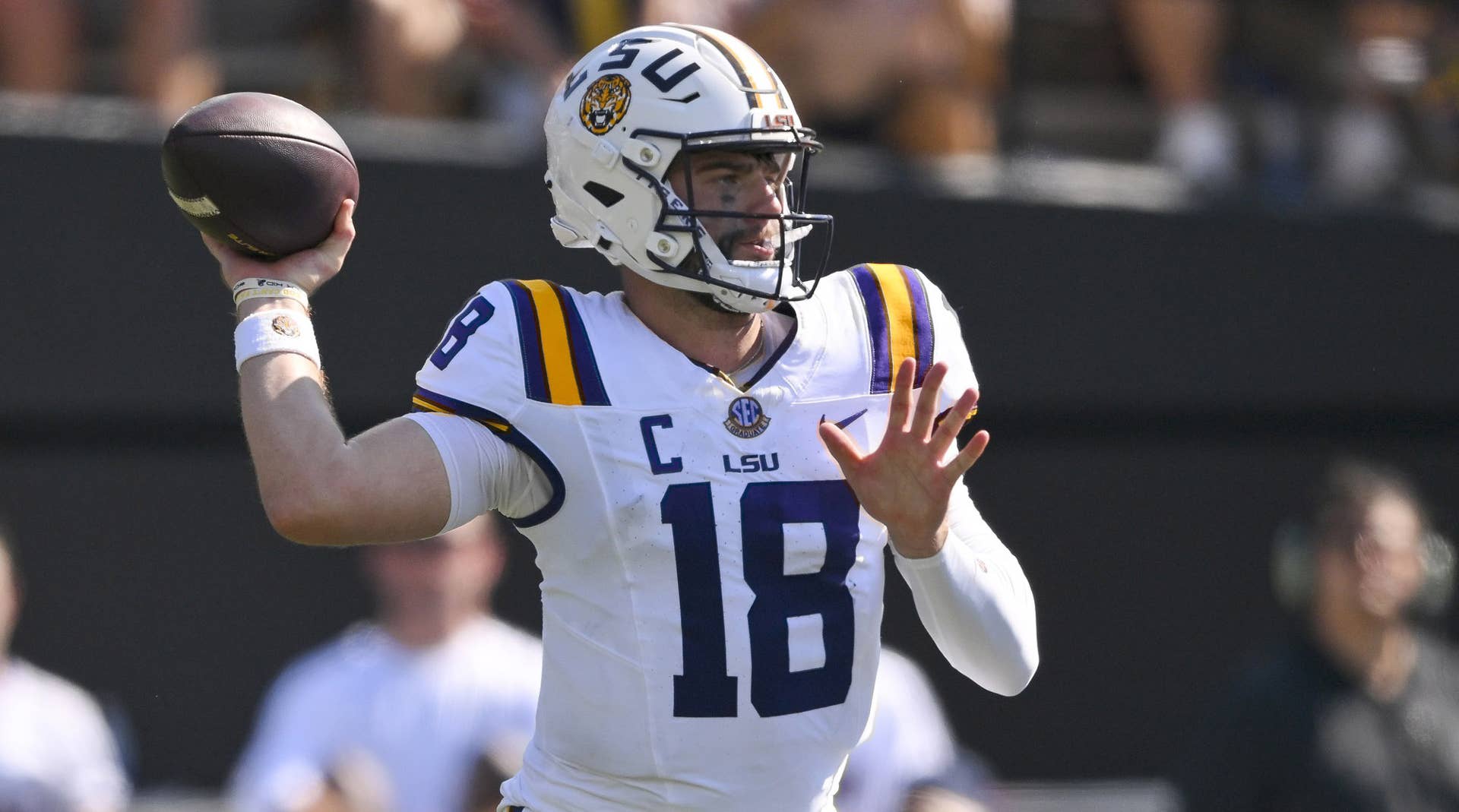
© Steve Roberts-Imagn Images
Nussmeier had an impressive junior season as the starting quarterback in 2024, throwing for 4,052 yards, 29 touchdowns and 12 interceptions. Heading into 2025, he was viewed as a potential first-round pick and one of the top quarterback prospects. However, Nussmeier faced challenges that season, throwing for only 1,927 yards, 12 touchdowns and five interceptions. An injury limited him to just nine games.
Nussmeier’s fit in Pittsburgh would be centered on development rather than immediate impact. His arm talent and willingness to push the ball downfield align with an offense that could evolve under McCarthy, especially given McCarthy’s history of maximizing quarterback play. While Nussmeier is not a finished product, his natural ability gives him a foundation worth investing in.
Sitting behind Rodgers, if he returns, would give Nussmeier a valuable opportunity to refine his decision-making and adjust to the speed of the NFL. That kind of environment could be crucial for smoothing out the inconsistencies that showed up during his final college season. Rather than being forced into action early, he could develop at a more sustainable pace.
Long term, Nussmeier offers the Steelers a pathway to transition at quarterback without a complete reset. If he reaches his potential, he could eventually take over as a more aggressive, vertical passer who adds a different dimension to the offense. For a franchise trying to balance competing now with preparing for the future, that kind of succession plan could prove critical.


