


The Eulogy Everyone's Already Writing
This in the point in every fantasy baseball season in which you must consider transactions that in no way excite you. You need to pick up a guy who is going to be a little bit better than the rest of your league assumes. You need to acquire a guy whose transaction will prompt either no response or some mild mockery.
Enter Marcus Semien.
In Flushing the 35-year-old second baseman is watching his batting line get treated like a career obituary, and the strange part is that most of what's actually wrong with it isn't the part people are complaining about. Semien signed with the Mets this winter as a known quantity: reliable bat, good glove, workhorse innings, the kind of player you draft and then forget about because forgetting about him is the compliment. Instead his 2026 wOBA sits at .264, a number that reads like a bench bat cooked into a lineup by necessity. Fantasy managers see .264 and start drafting the eulogy. Age 35. Body finally catching up. Time to move on.
The Number That Says Otherwise, Mostly
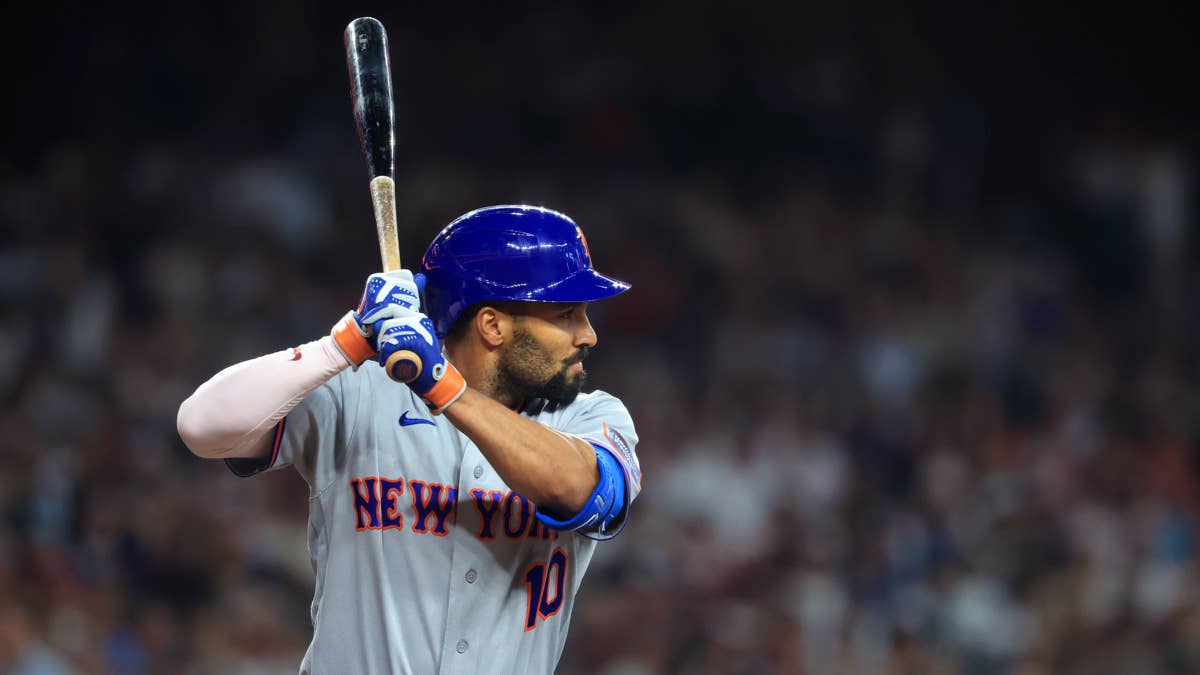
Mark J. Rebilas-Imagn Images
Here's where the eulogy runs into a problem. Semien's xwOBA, the number that strips out where the fielders happened to be standing and just measures how hard and how well he squared the ball up, sits at .309. That is a 45-point gap between what he has earned and what he has actually gotten, and 45 points is not a rounding error. It is the difference between a hitter you cut and a hitter you buy at the exact moment his owner is panicking. Granted .309 is not a great number, but it is world’s better than the wOBA of .264.
I want to be honest about something before I go further, because the whole point of this column is not selling you a stat line with the inconvenient part cropped out. His xwOBA is down from .318 last season to .309 this one. That's a real dip, not nothing. But it is a nine-point dip sitting underneath a 31-point collapse in actual production, and when the gap between "what should be happening" and "what is happening" is that lopsided, the story is still mostly about luck, not skill.
The Receipts
The contact-quality data backs up the "mostly luck" read, and it's more encouraging than the headline number suggests. His barrel rate has actually climbed, from 6.8 percent last season to 7.9 percent this one, and his hard-hit rate is essentially flat at 34.8 percent. When a hitter is barreling the ball more often and his overall production is falling off a cliff anyway, that's not a hitter who forgot how to hit. That's a hitter the league hasn't finished paying yet.
| Metric | 2025 | 2026 | Direction |
|---|---|---|---|
wOBA |
.295 |
.264 |
Down |
xwOBA |
.318 |
.309 |
Down (modest) |
Barrel% |
6.8% |
7.9% |
Up |
HardHit% |
35.0% |
34.8% |
Flat |
BB% |
9.4% |
7.0% |
Down |
K% |
17.4% |
22.3% |
Up |
Marcus Semien, 2025 vs. 2026 (Baseball Savant)
The One Thing Still Worth Watching
Here's the part of the profile that keeps this from being a no-brainer, and I'm not going to bury it in a footnote. Semien's walk rate has dropped from 9.4 percent to 7.0 percent, and his strikeout rate has jumped from 17.4 percent to 22.3 percent. That is not a small-sample blip. That's a real approach change, and for a player who has spent his career living on plate discipline, giving up that much of it is a legitimate concern sitting right next to the good news.
Here's how I'd square the two stories. A hitter chasing more and walking less usually explains some of the gap between wOBA and xwOBA on its own, since more strikeouts mean more empty at-bats that never get the chance to turn into a well-struck ball in the first place. But it doesn't explain a 45-point gap between wOBA and xwOBA by itself, because xwOBA is already built from the batted balls he did put in play, and those batted balls are landing worse than the quality of contact says they should. The discipline slide is a real problem worth tracking. The batted-ball luck is a separate, bigger problem, and it's the one more likely to correct.
The Verdict: Things to Keep an Eye on
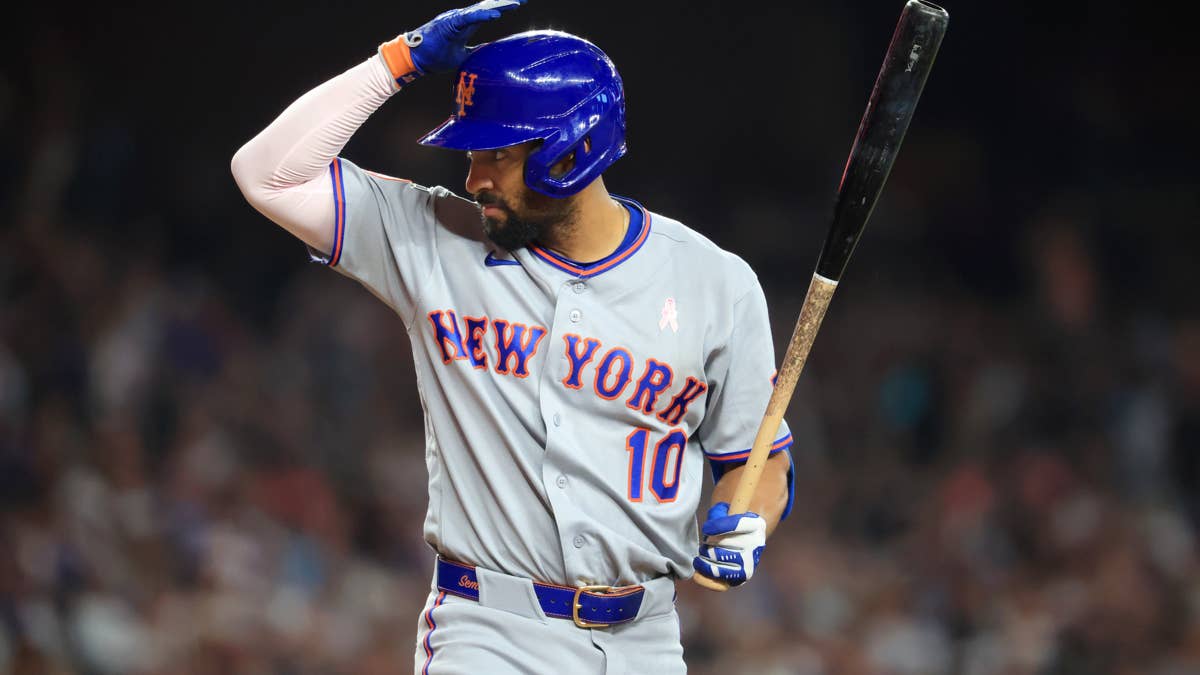
Mark J. Rebilas-Imagn Images
Watch the strikeout and walk rates over the next month before you go all in. If they stabilize anywhere close to his career norms, this is one of the cleaner buy-lows on the board, because the contact-quality data was never actually broken. If they keep sliding in the wrong direction, this stops being a batted-ball luck story and starts being an age-related decline story, and those are two very different players to own down the stretch.
But right now, today, the case is still stronger than the batting line suggests. A hitter barreling the ball more often than last year, hitting the ball just as hard, and sitting 45 points of wOBA below what his own contact quality says he's earned, is not a player in freefall. He's a player the league hasn't gotten around to rewarding yet. If you're in a league where Semien's owner is frustrated, this is the week to make the call, before the batted-ball gods settle their accounts and everyone else notices at the same time.
Questions About Marcus Semien, Answered
Is Marcus Semien a buy-low candidate in fantasy baseball right now?
Yes, with one important caveat. His xwOBA sits 45 points above his actual wOBA despite contact quality that has held up or improved, making the gap look more like bad batted-ball luck than a collapse in skill. However, his rising strikeout rate is worth monitoring before making a full commitment.
Has Marcus Semien's power actually declined in 2026?
No. His underlying contact-quality metrics do not point to a meaningful power decline. His barrel rate has increased from 6.8 percent to 7.9 percent, while his hard-hit rate has remained essentially unchanged. Those numbers suggest he is still producing quality contact even though the results have not followed.
What is the biggest red flag in Marcus Semien's profile right now?
The biggest concern is his plate discipline. His walk rate has fallen from 9.4 percent to 7.0 percent, while his strikeout rate has climbed from 17.4 percent to 22.3 percent. That represents a genuine approach change that deserves close attention over the next month.
Why is Marcus Semien's wOBA so much lower than his xwOBA?
The large gap points primarily to batted-ball luck rather than a complete decline in skill. His quality-of-contact metrics remain steady, indicating he has earned better results than he has received. The decline in plate discipline explains part of the difference, but not the entire 45-point gap between his wOBA and xwOBA.


