


Kelsey Mitchell finished a career year a few months ago with the Fever. She averaged 24.7 points per game and earned her fourth consecutive All-Star nod.
Mitchell, who has spent all nine of her WNBA seasons in Indiana, is set to hit free agency this offseason. And there has been rampant speculation that she could sign elsewhere for the first time.
Amid that interest in Mitchell’s future, she’s staying busy. She teamed up with Lilly for The Court Is Hers initiative, which helps facilitate youth sports participation for young girls in the Indianapolis area. Mitchell recently caught up with Athlon Sports to discuss that work, her journey in basketball, the WNBA’s growth and more.
(This interview has been lightly edited for clarity and length.)
Kyle Wood: I’m here with Kelsey Mitchell, WNBA veteran and four-time All-Star. Thank you for being here with me today. Since we’re here to talk about how you’re working on improving sports access for young girls, I wanted to ask you about your early days playing basketball. I know you wrote a few years ago about your introduction to the game, can you take me back to that moment?
Kelsey Mitchell: Man, it was the best thing that happened. Can you imagine finding something you love at 4 years old? When I really think about what so many kids go through, I was so grateful that I found sports. And I was even more grateful that it happened to be basketball. Like I said, going into the game when my dad asked me to go in because somebody fouled out at my brother’s game, I was just like, don’t really know until you know.
And from there, man, there was nothing that I wouldn’t do to kind of be a part of the game. And like I said, that passion that I have, it will remain because I’ll give it a chance. I got a chance to really give it back to somebody else. I got a chance to really give it to my nieces, my nephew, I got a chance to give it to the young girls that I meet in Indianapolis for The Court Is Hers initiative. It’s like I get a chance to take how I felt about the game and do my best to give it to somebody else. And I think that’s the best part.
KW: What opportunities did you have in your life that allowed you to find that passion and channel that talent for you to be able to flourish in basketball?
KM: I think aside from the sport — and it’s different for everybody — but for me, the sport kind of made my family what it is. And I think that anybody that’s been locked in with their families, like when my dad passed, my dad passed it hurt so much more because he taught me the game of basketball. And it’s like our family was intertwined into it because of his passion for it. And so it’s like a domino effect of what the game could give. And I think that that’s the best part about it. It’s like, I was able to feel love and basketball all in one. And it’s nothing like that, man.
I think that who you guys see in me as a person is just — it was a little girl that found the game because her family was in it. And because the game brought us together. And so you could eat dinner and not watch a movie; you was watching basketball. Can you imagine? That’s just like what the game is. And it’s like, that’s how I see it, you know?
KW: I know we’re talking about access here. Was there anything that you were left wanting for while growing up as far as resources or opportunities as far as playing basketball?
KM: I think that for me, the only thing that I will say that I wish that I was exposed to like young girls are today is to see the Lisa Leslies early, see Maya Moore early, see Cappie Pondexter early, see Elena Delle Donne early. It’s like we were so — our game wasn’t as exposed as it is now. The growth of it is so amazing. I love it. I just wish that selfishly we were able to see it. Like I can’t speak for other athletes that’s in the W, but bro, my first athlete that I loved happened to be a guy, and it sucks because it’s like now these girls get a chance to say, ‘Well, my favorite player is a female athlete.’ And I do wish it was kind of like that for us.
Not to say that watching Kobe Bryant and watching Michael Jordan and seeing LeBron when he first started his career, it’s like, that was also amazing, but the exposure of seeing a woman do it is just different, you know?
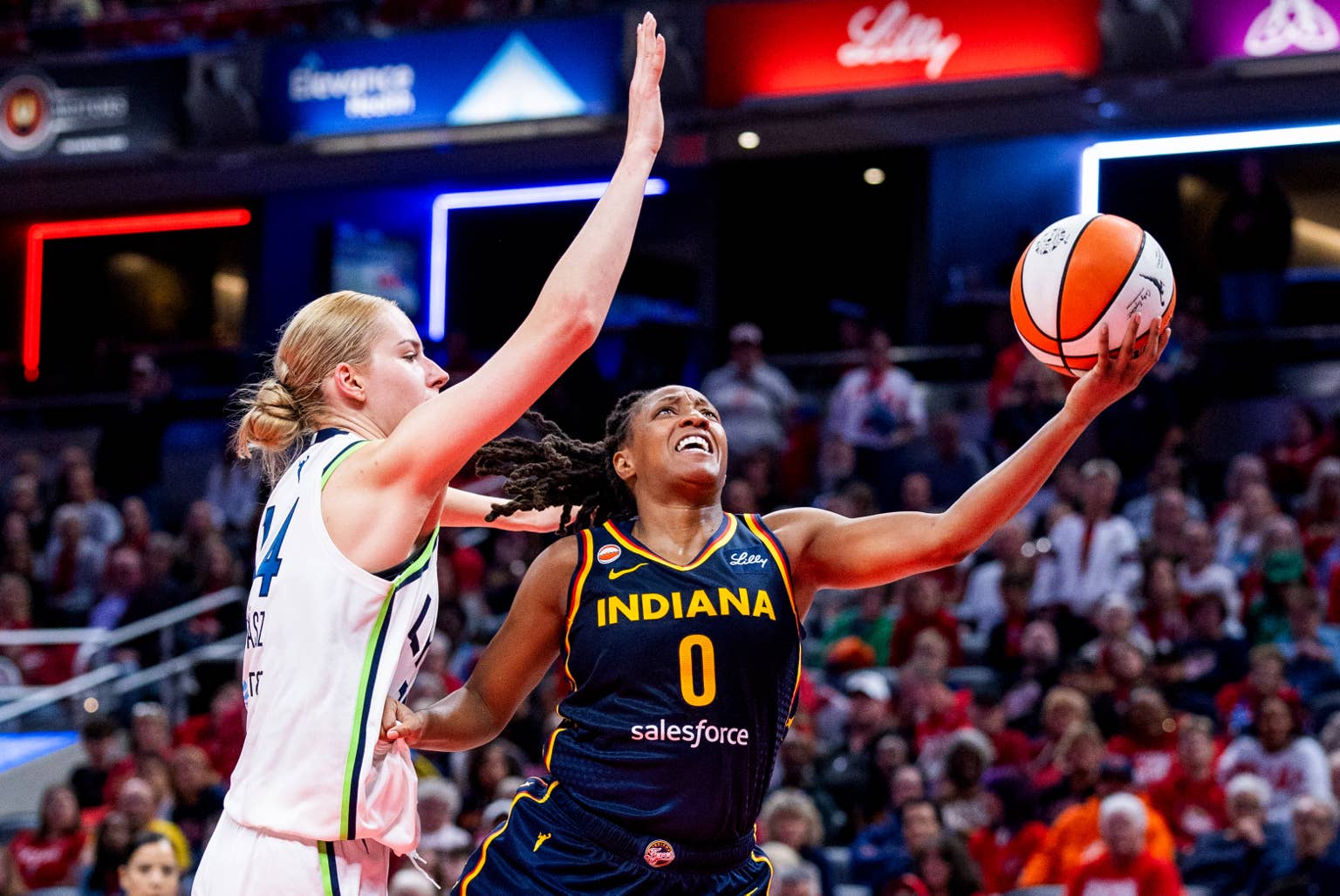
© Trevor Ruszkowski-Imagn Images
KW: Of course. Who was the first male basketball player that you said you looked up to?
KM: It was Allen Iverson for me, man. I can’t even lie to you. Seeing number three, seeing a guy be so creative with the basketball. And I caught on to Allen Iverson when he had just got to Philly. I didn’t see him in Georgetown because I was still kind of young. But even as I got older and he got older, I was just like, ‘This is, like, amazing.’ So, like I said, I just wish it was more women that we could have saw.
KW: Have you ever gotten to meet AI?
KM: I wish. But we’re going to make it happen. You spoke into existence and it’s gonna happen. One day.
KW: How has the WNBA’s growth provided more opportunities and role models for girls who are coming up in basketball now to have players like them to look up to?
KM: I think what the WNBA has done — over the last couple years, especially the last five or six years — exposes the greatness of the women’s game. I think it starts with A’ja Wilson and seeing her greatness, who she is and who she continues to be. Those examples are hopefully what we can be reminded of to keep opening up the game.
And then you think about the A’ja Wilsons in our age group. And then four or five years later, you see Caitlin Clark and you see Angel Reese and you see Flau’jae Johnson. And then you see — it’s just like, when you see how it unfolds, it’s like, there’s so much love and passion to where the game can go. It’s so limitless, man. And I just think that all we can keep doing is what we can keep doing and giving ourselves to the young girls, giving ourselves to the game and being honest about it and being vulnerable about it and making sure that we’re giving our best to it.
KW: That has to be very special for you. You said you didn’t have that female role model in basketball wise and for you to get to be that now. I also understand you’re working with girls who are coming up in basketball through The Court Is Hers with Lilly. Can you tell me about the initiative?
KM: This partnership was easy to do, like it was so easy to do because to be honest, man, when I really think about my career and I think about what my day-to-day lifestyle is in terms of playing the game but also being a part of it, it’s like, what would I be doing? I would be doing myself a disservice if I didn’t give it back to somebody else. And so the Court Is Hers initiative is about that. It’s like, I get a chance to help young girls be exposed to — like, there’s nothing like infinite impossibility, bro. Like, it’s possible to do anything. And so, my job is to make the possibility true. It’s my job to give girls a chance to see that you don’t know if you don’t try, throw yourself out there, give yourself a chance, be vulnerable about it. So I think that’s where the reality is for it all.
KW: We talked about the WNBA’s growth in popularity, but also there’s been expansion as far as the number of teams. How does that affect the boom of there being more players in the league now who can follow in your footsteps?
KM: I think it’s so cool. Like going to Toronto, I’ve never been to Toronto, I never thought I was going to Toronto. And to say I’m a part of a league now where, we have a team in Toronto. If you don’t know about what Toronto is and then I go and see and I play in front of a crowd full of Toronto fans, it’s like you just open your eyes and your heart to so much. And I think that that’s the possibility that I want girls to see. That’s the possibility I want the world to see, man. The game could bring us together in so many different ways. And so to see the game expanded in another country, it’s super cool.
I get a chance to go play in Houston next year. We know what the Houston Comets was, but like to know that it’s coming back and like, they have an expanded team in Houston based on their history. It’s like, you get a chance to be a part of it and see it and give back to it in a way that you didn’t think was possible. I think that’s the infinite possibility that I talk about in terms of like what the game is. And so the examples and to your question about the expansion, we get a chance to grow the game in ways that we never thought was possible, and I think that’s the best part.
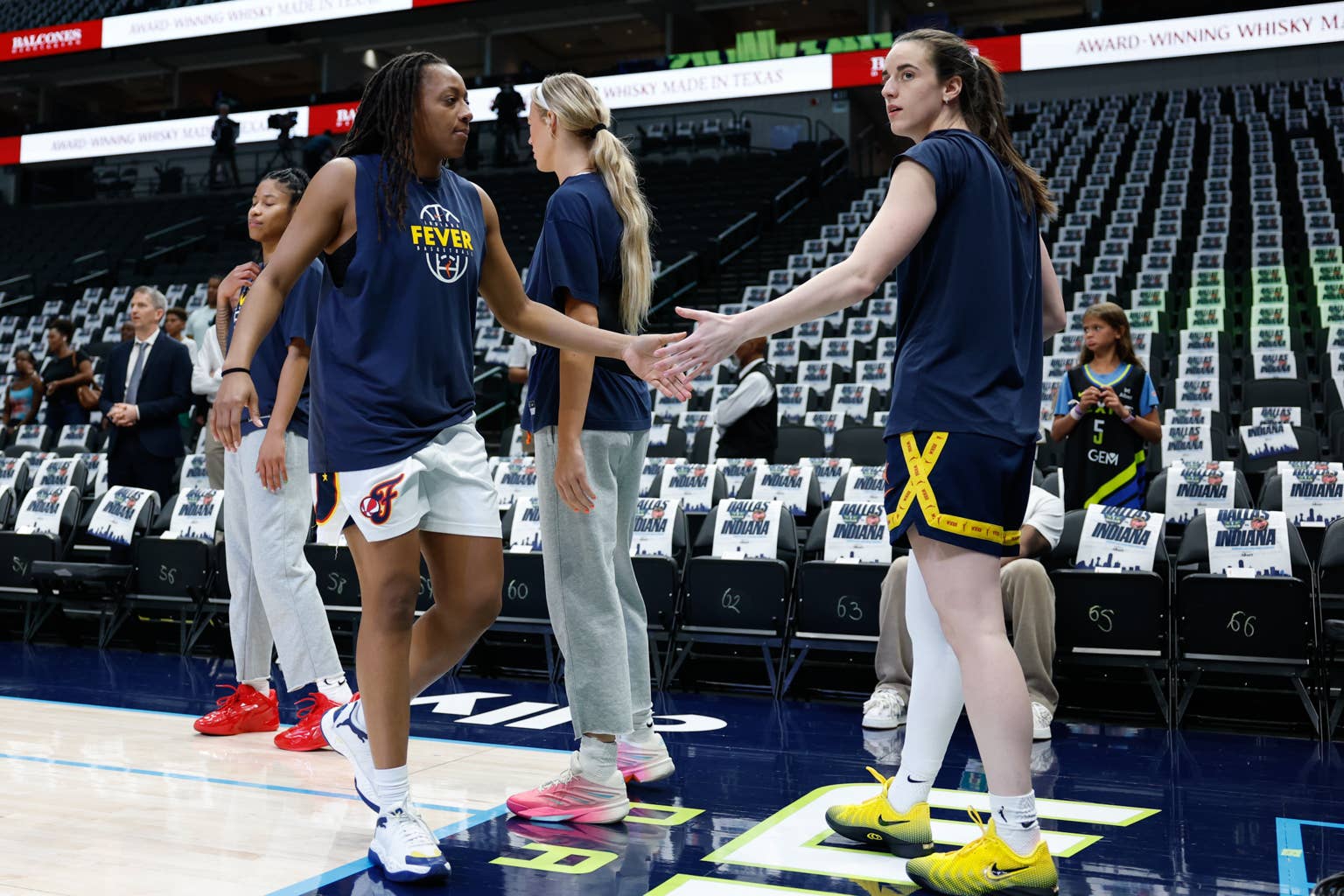
© Chris Jones-Imagn Images
KW: Earlier you mentioned your dad and the outsized impact that he had on your basketball journey and perspective. Can you share how he shaped your game and approach to life?
KM: The background is that my dad was a part of an era — he was old school. And I’m sure you have old-school parents and grandparents and their mindsets, bro. It’s like, it’s not what it is today. If my dad was alive, he’d probably be in jail for cussing a kid out or something, bro. I’m not even going to lie to you. But I said that to say, the passion which he portrayed to me and my siblings was that there was no walk in the park. And I think that what you guys see from me, my passion and my love, and people talk about how I drive the ball and be creative, I think that my dad exposed me to how hard it was first compared to how easy it was going to be. And so at my age, it was 5 through like 8, 9, 10 years old, it was the worst ever. It’s like, ‘Should I be doing this? This is so hard.’ But he exposed me early to what it was.
My dad worked in an inner-city high school. And so inner city is different than, you know what I’m trying to say. The public schools are drastically different than what the outskirts schools could be. And so I was exposed to you know how it is when it comes to teenagers. Some people my dad coached didn’t have parents. Some people that my dad coached didn’t have a house. And so I ended up seeing like two or three of my dad’s players staying at our house. And my dad opened our house to them. And so that’s just who my dad was. And I think that it exposed me to the person that I am, let alone the basketball player. But I was able to see the game from a different light early.
KW: Do you see coaching in your future?
KM: I don’t. I’ve thought about it because me and Myisha Hines-Allen, one of my teammates from the Fever, she’s now an assistant coach at Monmouth. So we try to connect every week and I asked her how it’s going and she makes it seem like really nice, but it looks like — I can’t imagine coaching other kids. I still feel like a kid myself sometimes, I’m like, ‘How are they doing this?’ I can’t see it yet, but I love the game enough that if I had to give myself to it I probably would do it.
KW: Earlier this year you shared that you were pursuing your Ph.D. in educational leadership. How have you found the experience of taking classes while being a professional athlete?
KM: It’s so hard. I don’t want to lie to you, bro, like it’s so hard. One of the last reporters asked me what my day in the life in the off season is, and I was breaking it down. It’s like, I literally do basketball from 10:30 to 1. And then I do activation for my body to make sure I’m healthy, strong. So some weightlifting, stuff like that. And then I go right into school. School is like 3 to 6. And so I say that to say, man, that is one of those things that I didn’t know I needed. I don’t know about you, but do you ever feel like you got to have a discipline? You need to have a discipline in your older life? School gave me a discipline at 31 that I didn’t know I needed. It kind of aligns my schedule, keeps things intact. And so that’s important for me. It’s always been important to me. And so I’m going to continue to use my education for that.
KW: This past season was a career year for you with new highs in points per game, field goal percentage and 3-point percentage. What changed that you were able to hit this level later in your career?
KM: I think that I found love and passion for it in a different way. I think my mental health was very, very important. And I got closer to God in ways I didn’t know I needed either. But I think the stuff that you go through as you get older, it kind of influences — like, I don’t know, it’s weird, man. You ever feel like you have a midlife crisis? And when my dad died, that was one thing. But then like my dad died, and then I didn’t have a trainer. So can you imagine what I’m trying to say? It’s like those kinds of things kind of like shape the confidence that you go to have. It shapes the discipline that you go to have. A lot of my success over the last couple of years just comes from a lot of experience, a little pain, man, a little trauma. And I think that collectively you get the person, you get the person raw and uncut. And that’s who I am, man.
KW: Last thing I want to ask about is your alma mater, Ohio State. What are your expectations for the women’s hoops team under your old coach, Kevin McGuff? And what are your thoughts on this Buckeyes football season?
KM: I watched them play. They had a tough one against UConn. UConn’s really good, but I think that they have a chance to really be one of the top teams in the Big Ten. They have a nice guard that I like, Jaloni [Cambridge], and I think that she can really take them to a lot of places once they get their footing right. I had McGuff as a coach, so I hope he hasn’t changed that much and he just lets the players keep trying to learn to get the experience that they need to be who they need to be.
And then in terms of the Buckeyes on the football side, it’s shocking me. I was a part of the first CFP. I was there when they first won their first championship and the celebrations, the parades. I got a chance to see all of it because I was around where football was like — when you went to Ohio State, you was not going for any other sport really. And I’m just going to be honest about that. Like when I first got on campus, I was on campus with Braxton Miller who did it, he served his fifth year. That was JT Barrett. That was Dwayne Haskins, rest in peace. I was a part of a really, really great era of football. So my expectations are a little bit higher than others, because I was actually living it. I was in class with these guys. We was training in the same facilities in terms of weightlifting, and so we would see each other in passing, going to our own workouts. Hopefully they get it together. Hopefully. I don’t know what this means now, but who knows?


