


Even the most novice fantasy sports managers know that preseason predictions for a player’s “best season ever” are usually flimsy at best. That being said, there’s a case for saying Jayson Tatum is teed up for a massive fantasy campaign.
After a season heavily truncated by an Achilles injury, the Celtics star is ready for a healthy start to the 2026-27 season. He is also entering a new era in his career, playing his first season of professional basketball without Jaylen Brown in the rotation.
This isn’t just an assumption. There’s evidence that these factors predict Tatum will be a fantasy basketball phenom next season. Here’s what owners need to know as they craft their 2026-27 fantasy basketball draft strategy.
What His Return From Injury Actually Showed
Achilles tears are no joke. MassLive spoke to doctors around the time of Tatum’s return who noted that athletes returning from this kind of injury only operate at about 85% of their former selves, if that. In many cases, players don’t return to their pre-injury caliber in their first season back. And that’s if they return to their elite capacity at all.
We know now that Tatum blew those facts out of the water. He recovered in record time (roughly 10 months) and recorded a double-double in his debut tilt on March 6 (15 points, 12 rebounds). And while his numbers were generally down across the board, he still finished his 16-game regular-season stint averaging 21.8 points, 10.0 rebounds, 5.3 assists, and 1.6 stocks on 32.6 minutes of play per night. That continued into Boston’s brief postseason run, when he averaged 23.3 points, 10.7 rebounds, 6.8 assists, and 1.2 stocks on 36.3 minutes per night.
If that’s what Tatum could do coming off of rehabbing an Achilles injury, he should improve on those stats in a fully healthy start to the season. That sets him up for a big season fantasy-wise.
The Role Change That Supports the Case
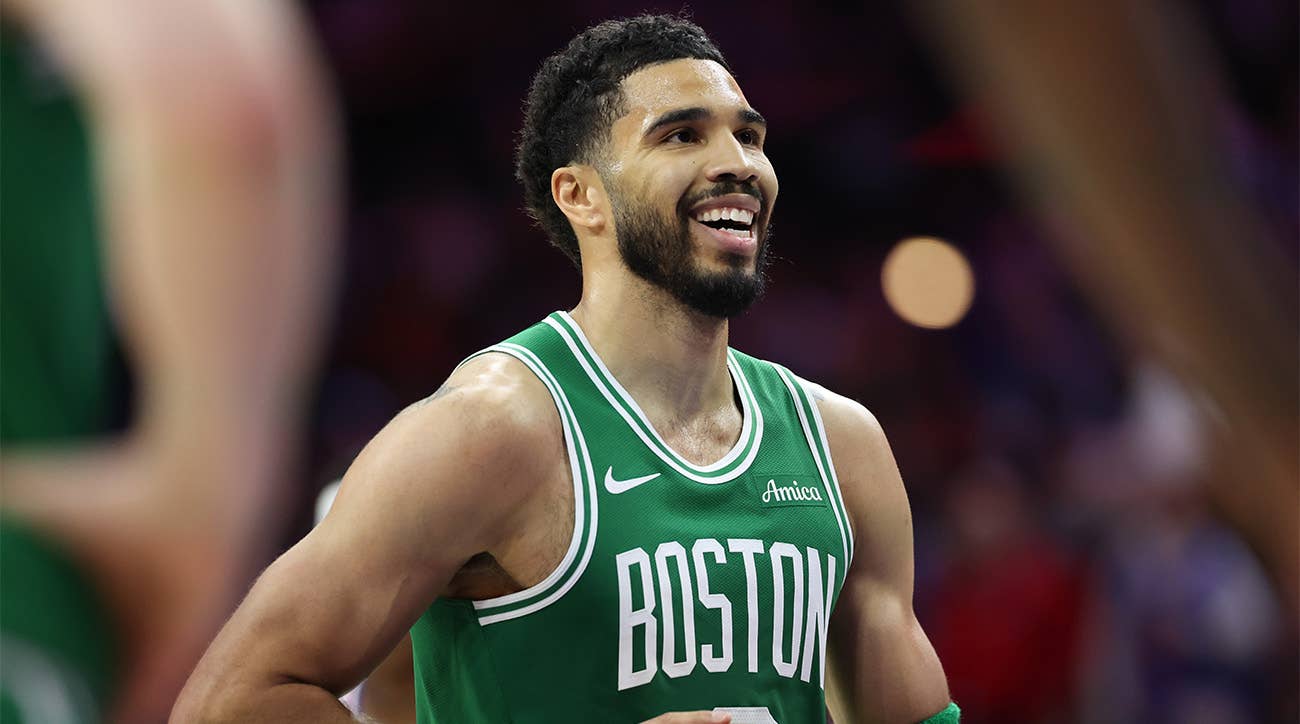
Bill Streicher-Imagn Images
The Celtics didn’t just trade Jaylen Brown. They got an aging Paul George in return and didn’t add any other star players. That makes Tatum the lone focal point for Boston’s offense. And that means a usage boost.
Athlon even named Tatum as a potential league-leader since his usage rate jumped from 28.5% with Jaylen Brown on the court to 38.3% without him. George and newly-acquired Center Mitchell Robinson will be the supporting cast in the frontcourt (along with Sam Hauser, who should get plenty of playing time off the bench in place of an injury-prone George.)
Derrick White and Baylor Scheierman will hold down backcourt duties with Payton Pritchard coming off of the bench. None of them are going to sway Boston’s offensive engine from Tatum, as long as he stays healthy.
The 2026-27 Fantasy Basketball Verdict
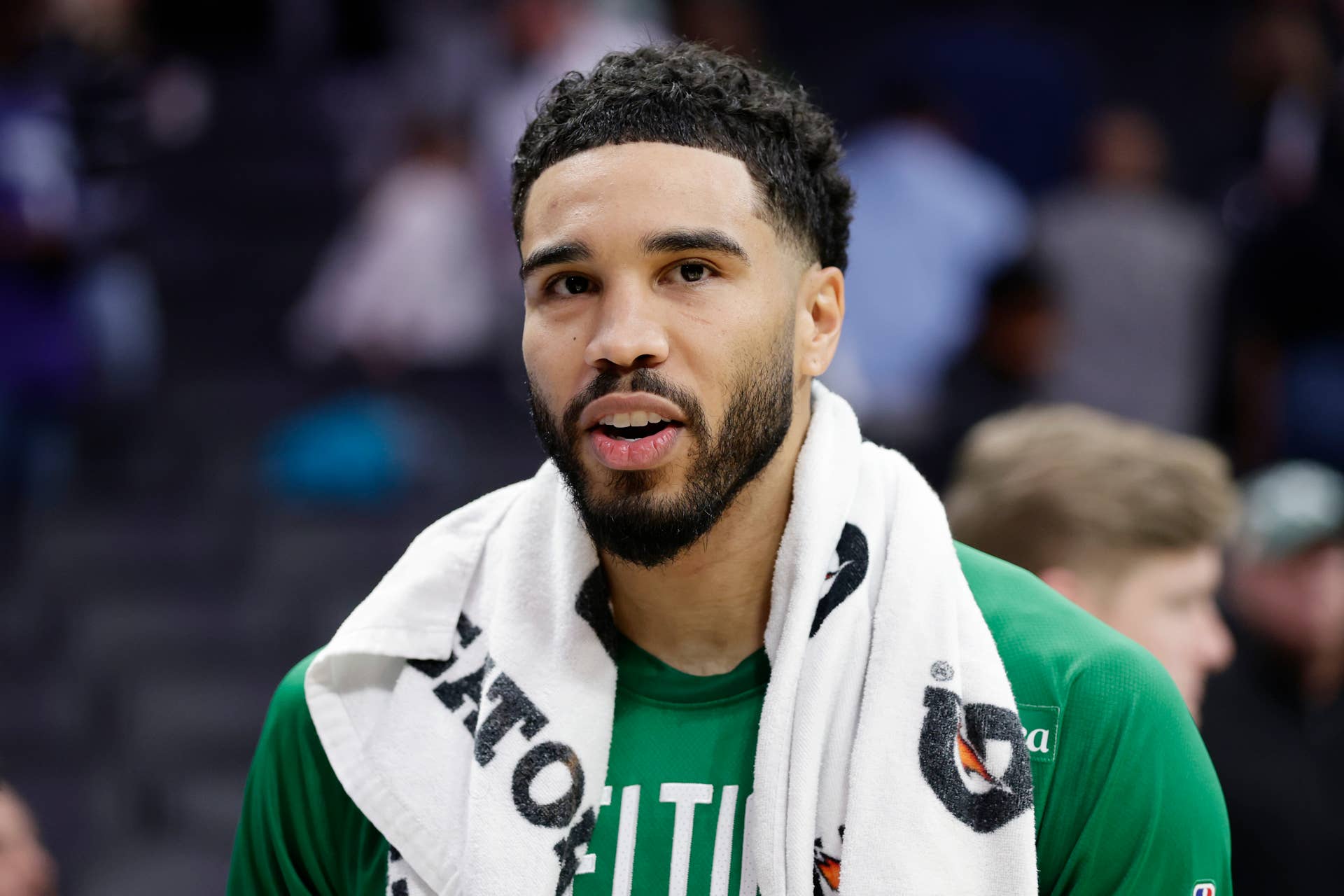
Brian Westerholt-Imagn Images
The case for Tatum to have a career season and bounce-back fantasy run is real. Yes, it’s still conditional on him staying healthy. But his impressive rehab and recovery, plus Brown being traded from Boston, unlock more opportunities for him to succeed. Fantasy managers should still monitor Tatum’s health through training camp and preseason to make sure he’s 100%, but he should be a high target on fantasy draft boards all the same.
Questions About Jayson Tatum, Answered
Could Jayson Tatum really have his biggest fantasy season in 2026-27?
It’s a real possibility. Tatum returned quickly from his Achilles injury and produced strong rebounding and playmaking numbers during his abbreviated 2025-26 season. With Jaylen Brown no longer in Boston, Tatum is also positioned as the Celtics’ primary offensive focal point, provided he remains healthy.
How serious was Jayson Tatum’s Achilles injury?
Tatum’s Achilles injury significantly shortened his season, but he returned in roughly 10 months and recorded 15 points and 12 rebounds in his March 6 debut. He then averaged 21.8 points, 10.0 rebounds, 5.3 assists, and 1.6 stocks across his 16-game regular-season stint.
What did Tatum look like when he returned in March 2026?
Tatum showed considerable production despite returning from an Achilles injury. He averaged 21.8 points, 10.0 rebounds, 5.3 assists, and 1.6 stocks in 32.6 minutes per game during his 16-game regular-season stint, then averaged 23.3 points, 10.7 rebounds and 6.8 assists during Boston’s postseason run.


