


Long before Gary Player became a nine-time major champion, one of golf’s most recognizable global figures and a member of the career Grand Slam club, he was a boy in South Africa who needed somebody to believe in him. His achievements in golf came later. The lesson about what one person can mean to a young life came first.
Player remembers a childhood in which his mother had died, his father worked late in the gold mines, his brother was fighting in World War II and his sister was away at boarding school. In the middle of that uncertainty, a teacher became one of the people who changed his direction.
“A consistent, caring adult can alter the entire direction of a child’s life,” Player told Athlon Sports.
At 90, Player has spent decades talking about fitness, discipline, education and personal responsibility. Now, through the Gary & Vivienne Player Foundation USA and its new Player Academy of Excellence, that philosophy is being turned into something much more ambitious than another charitable contribution.
PLAE, which stands for Participate. Learn. Achieve. Excel., is the foundation’s new direct-service youth initiative. It will begin with a pilot program in Philadelphia and combine academics, athletics, mentorship, wellness, leadership, service and family engagement in one year-round development model. The foundation formally launched the initiative this year after years spent primarily supporting other organizations working with vulnerable children.
The recognizable name belongs to Gary Player.
The next chapter increasingly belongs to his daughter, Amanda Player-Hall.
And perhaps the most important question surrounding PLAE is whether a family legacy built across generations can be converted into something capable of changing lives long after the people who created it are gone.
What PLAE Is Built to Do
PLAE stands for Participate. Learn. Achieve. Excel. The Gary & Vivienne Player Foundation USA is developing the program as a holistic, year-round model for youth development.
From Supporting Good Work to Building Their Own
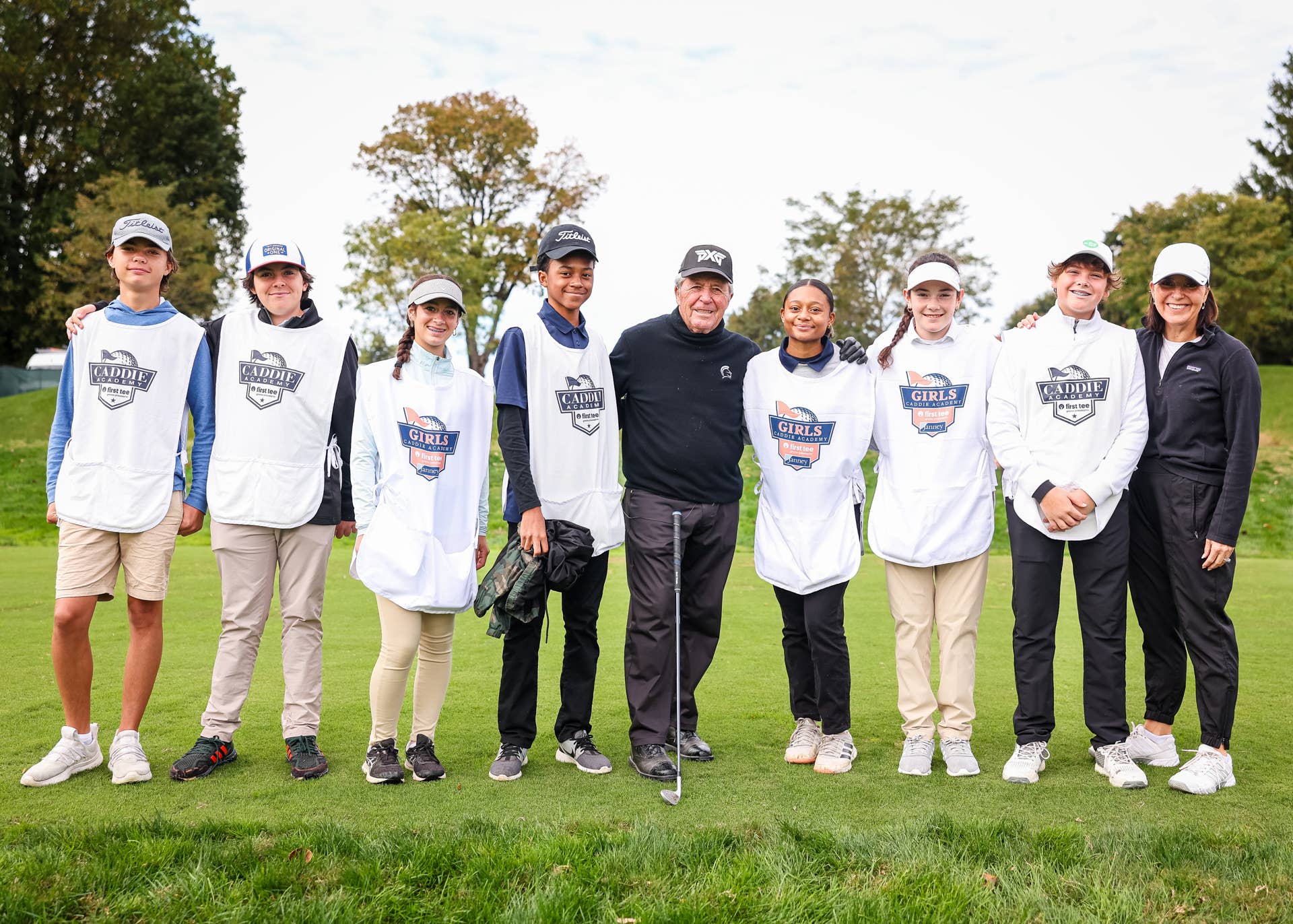
Player-Hall, president and executive director of the foundation’s U.S. operation, does not describe its previous work with outside nonprofit organizations as something PLAE replaces.
She sees those partnerships as its education.
“One of the greatest privileges of leading the Gary and Vivienne Player Foundation USA has been working alongside extraordinary nonprofit organizations across the country,” Player-Hall told Athlon Sports. “We have learned so much from each of them, like what inspires young people, what strengthens families, and what creates lasting change.”
Eventually, the question became whether those lessons could be brought together.
Instead of supporting tutoring in one place, athletics somewhere else and mentoring through another program, PLAE is intended to address a reality anyone who has worked extensively with young people understands: A child does not arrive at school, practice or home as a collection of separate problems.
Everything is connected.
A typical PLAE afternoon might include literacy or homework support before moving into sports, mentorship, leadership training, wellness activities or service projects. Families remain part of the process.
Its six core values are discipline, accountability, courage, service, excellence and belonging.
That last word is significant.
There is a substantial difference between giving a young person something to do for a few hours and creating an environment where that child feels expected, supported and known.
“The heart of PLAE is not a building or a curriculum,” Player-Hall said. “It is relationships.”
That philosophy also explains why the foundation is approaching expansion cautiously. Player-Hall believes the framework can eventually be reproduced in other cities, but the relationships cannot be manufactured from a national office.
Six Values Meant to Travel With a Child
The curriculum is designed around qualities that apply in school, sports, relationships, careers and community life.
Philadelphia comes first.
The city also holds a separate place in the Player family’s golf history. Player won the 1962 PGA Championship at Aronimink Golf Club outside Philadelphia, the third major championship of his career, and the PGA of America noted earlier this year that Player-Hall lives nearby. Player’s victory at Aronimink is context, however, not the foundation’s stated reason for choosing Philadelphia.
Player-Hall said the foundation chose the area after listening to families, educators and community organizations.
“We’ve learned that trust is everything,” she said. “Families want to know that they are respected and valued. Schools want partners who genuinely support their work rather than adding another program. Community organizations want collaboration, not competition.”
That might ultimately matter more to PLAE’s success than the strength of the Player name.
Gary Player Still Starts With Discipline
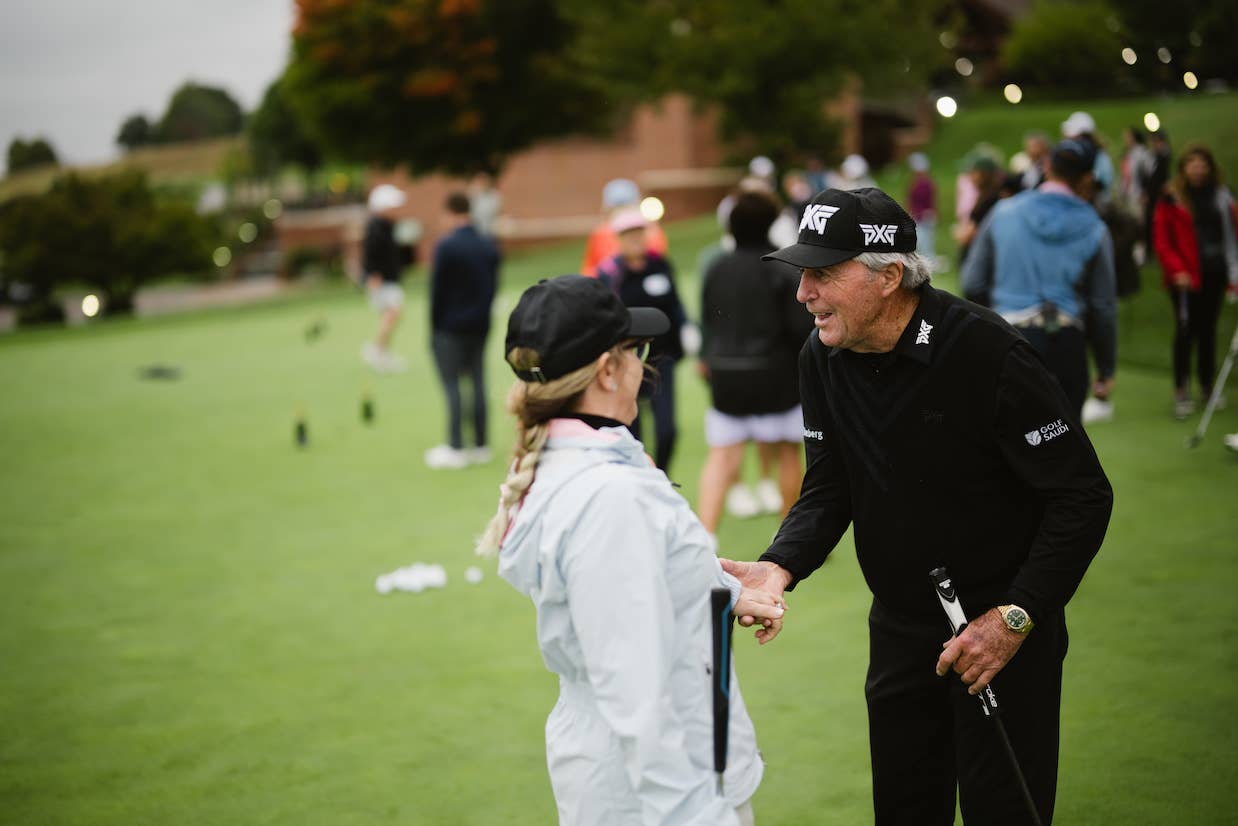
Ask Gary Player to choose among fitness, education, personal responsibility and discipline, and the answer is predictable to anyone familiar with his life.
Discipline comes first.
But Player’s explanation is considerably more useful than another version of his famously demanding fitness philosophy.
“Fitness teaches a child to respect the body. Education opens the mind. Personal responsibility teaches that your future is not simply something other people determine for you,” Player said. “But discipline is what turns all of that promise into daily action.”
That is the connective tissue between Player the golfer and Player the philanthropist.
Golf rewarded repetition, preparation and resilience throughout his career. He won three Masters, three Open Championships, two PGA Championships and the 1965 U.S. Open, which completed his career Grand Slam.
PLAE is attempting to introduce some of those same concepts without pretending every child needs to become a golfer or an athlete.
Sports are a tool in the model because they create immediate opportunities to experience accountability, teamwork, perseverance and failure. The larger objective is transferring those behaviors elsewhere.
Player views discipline differently than many young people probably encounter the word.
It should not simply mean punishment.
To Player, discipline creates freedom because a child begins discovering that actions can influence outcomes.
“Talent may give you an opportunity,” he said, “but character determines what you do with it.”
That idea becomes particularly compelling when placed beside Player’s own childhood experience.
He remembers what it meant when an adult saw potential before he had a résumé proving it existed.
Player believes children need that same combination of encouragement and expectation.
Someone willing to say: “I see something in you. I expect something from you, and I am going to help you achieve it.”
There are sophisticated discussions to be had about poverty, educational access and the structural obstacles facing underserved communities. PLAE will not solve those issues by repeating motivational slogans.
Player-Hall appears to understand that distinction.
What Success Could Look Like
The program intends to measure academic growth, literacy, attendance, family engagement, leadership participation, wellness and college and career readiness. Player-Hall also wants to track harder-to-quantify changes connected to the academy’s six values.
After one year, she says success would begin with earning families’ trust and having children want to return.
By three years, she hopes participants are emerging as mentors and leaders.
By five years, the target becomes more consequential: PLAE graduates moving toward college, careers, entrepreneurship, military service or vocational pathways with the resilience and confidence to navigate what comes next.
That is where a well-intentioned program starts becoming accountable for results.
Vivienne Player Remains at the Center of the Mission
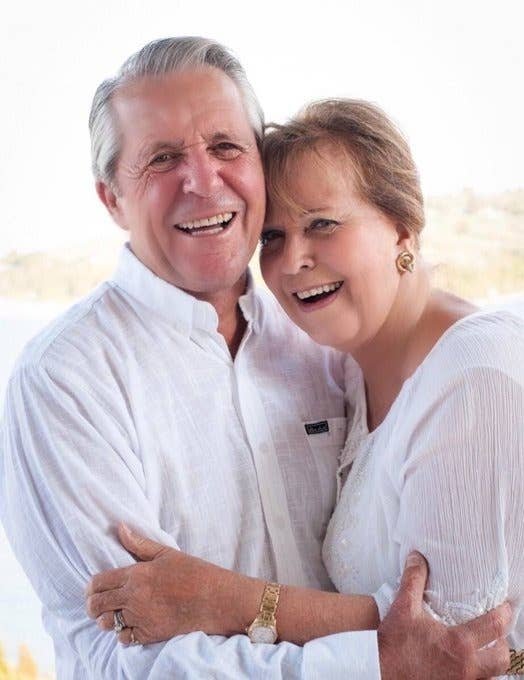
Gary Player’s name inevitably attracts attention, but PLAE cannot be understood without Vivienne Player.
Player and Vivienne were married for 64 years before her death in 2021. The U.S. foundation took shape that year as a continuation of the work and philosophy they had shared.
When Player talks about his late wife’s influence, he does not begin with fundraising.
“Vivienne understood that love is not merely something you say but something you do,” he told Athlon Sports.
She raised six children while Player built a career requiring extraordinary amounts of international travel. Yet, he said, her definition of family never stopped at the front door.
“The strongest families widen the circle and make room for people who need care,” Player said.
That idea runs directly into PLAE’s family-centered structure.
Player-Hall does not envision the academy replacing parents, teachers or existing organizations. She wants it connecting them.
That distinction is important because youth programs often become attached to charismatic founders, major donors or recognizable names. Those advantages can help launch an initiative. They cannot guarantee its durability.
Player-Hall’s challenge is to build systems around values that began as something deeply personal.
The Player Name Can Open the Door, but Amanda Must Build What Follows
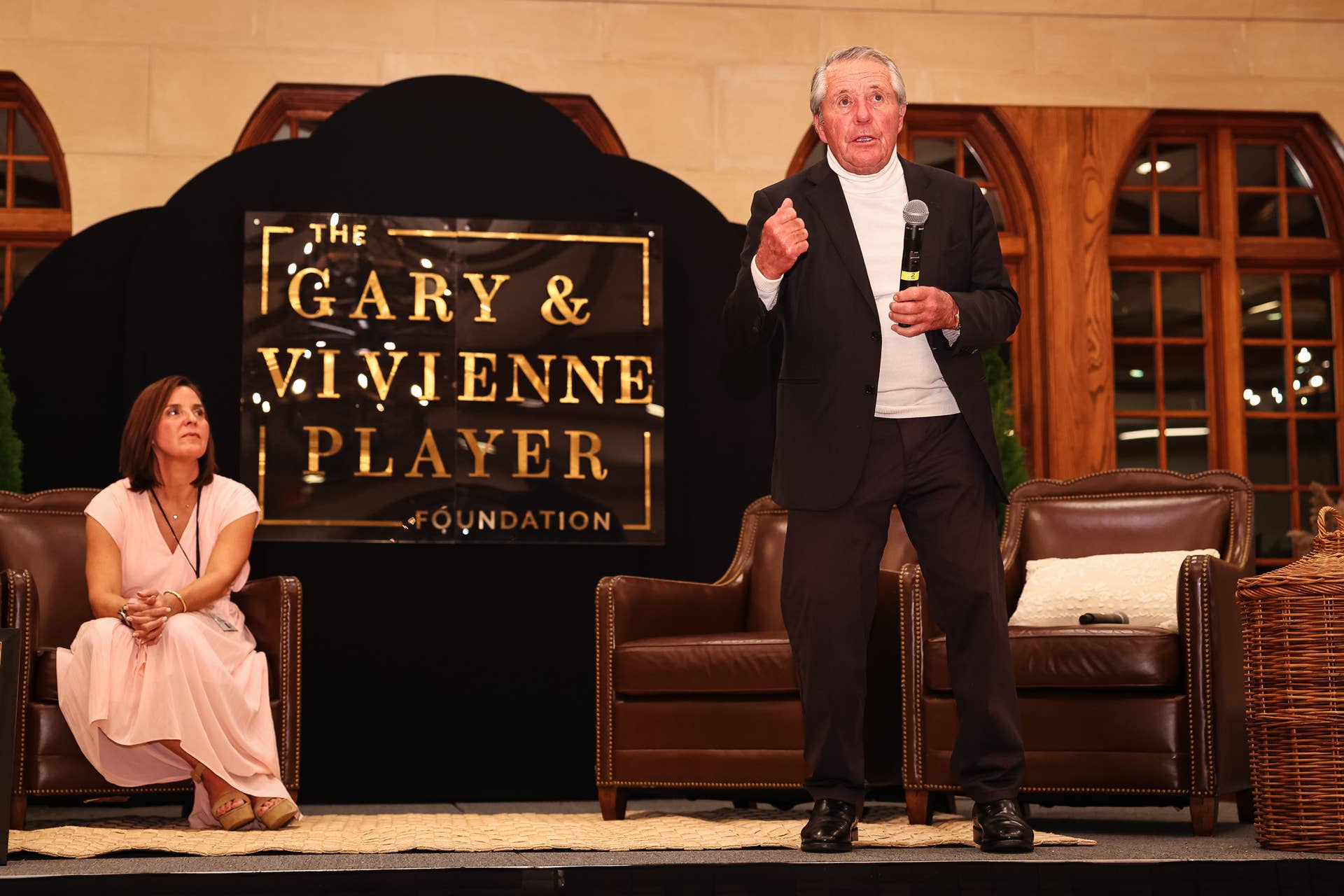
Player has lived most of his public life as the central figure.
This time, he is intentionally ceding that position.
When asked why he trusts his daughter with the foundation’s future, Player’s first observation had nothing to do with organizational charts or fundraising.
“She serves before she leads,” he said.
Player-Hall has spent years working with nonprofit organizations and now faces a larger test: developing curriculum, building local partnerships, measuring results and eventually determining whether PLAE can expand without becoming impersonal. The foundation has said the Philadelphia program is intended as a pilot for a model that could eventually be replicated elsewhere in the United States.
Scaling relationships is much harder than scaling a logo.
Player-Hall seems aware of the danger.
“The framework of PLAE can be replicated, but the relationships must always remain local,” she said.
That may be the sentence upon which this entire idea eventually succeeds or fails.
Gary Player already has a golf legacy few players in history can approach. Nine major championships will remain nine major championships. The career Grand Slam is permanent. The trophies do not require another generation to maintain their meaning.
This does.
That makes what Player-Hall is building different.
The outcome will not be measured by how often her father appears at an event or how recognizable the family name remains. It will be measured in children who may never care that Gary Player won at Augusta National, Muirfield or Aronimink.
Player understands that.
He said the foundation must eventually become larger than his name and larger than anything he achieved in golf.
“Its true legacy will be found in the lives of children who become healthy, educated, responsible adults, and who then reach back to help somebody else.”
For someone who spent a lifetime measuring success with scorecards and trophies, that is a very different leaderboard.
And perhaps the one Player now cares most about.
PGA of America Golf Professional Brendon Elliott is an award-winning coach and golf writer who serves as Athlon Sports Senior Golf Writer. Read his recent “The Starter” on R.org, where he is their Lead Golf Writer. To stay updated on all of his latest work, sign up for his newsletter or visit his MuckRack Profile.


