


Athlon's Five New Duos piece covered Giannis Antetokounmpo with Bam Adebayo, LaMelo Ball with Anthony Edwards, Jaylen Brown with Joel Embiid, Kawhi Leonard with Scottie Barnes, and Ja Morant with Damian Lillard. Solid group. This is a different exercise. Four star pairings go head to head here, and only one can win. Three of them are basically new. One has already played a full season together and reached a Finals. That last detail decides more than you might expect.
James Harden and Donovan Mitchell, Cleveland Cavaliers
This pairing has a math problem. Both guards want the ball. Cleveland acquired Harden from the Clippers on February 4 for Darius Garland. In 26 games as a Cavalier he averaged 20.5 points, 4.8 rebounds and 7.7 assists. Across the whole season with both teams he put up 23.6 points and 8.0 assists in 34.8 minutes. Mitchell, meanwhile, averaged 27.9 points, 4.5 rebounds and 5.7 assists on 48.3 percent shooting.
That is two players who each need possessions to produce. It worked in a small sample. Cleveland went 22-9 after the deadline and finished 52-30.
My projection over a full year: I predict Harden to settle near 18 points and 7.5 assists, Mitchell to be around 27 points and drop toward 5 assists. Combined production is high. Combined efficiency takes a small hit. To me, that's the tradeoff they will have to endure to make this partnership work.
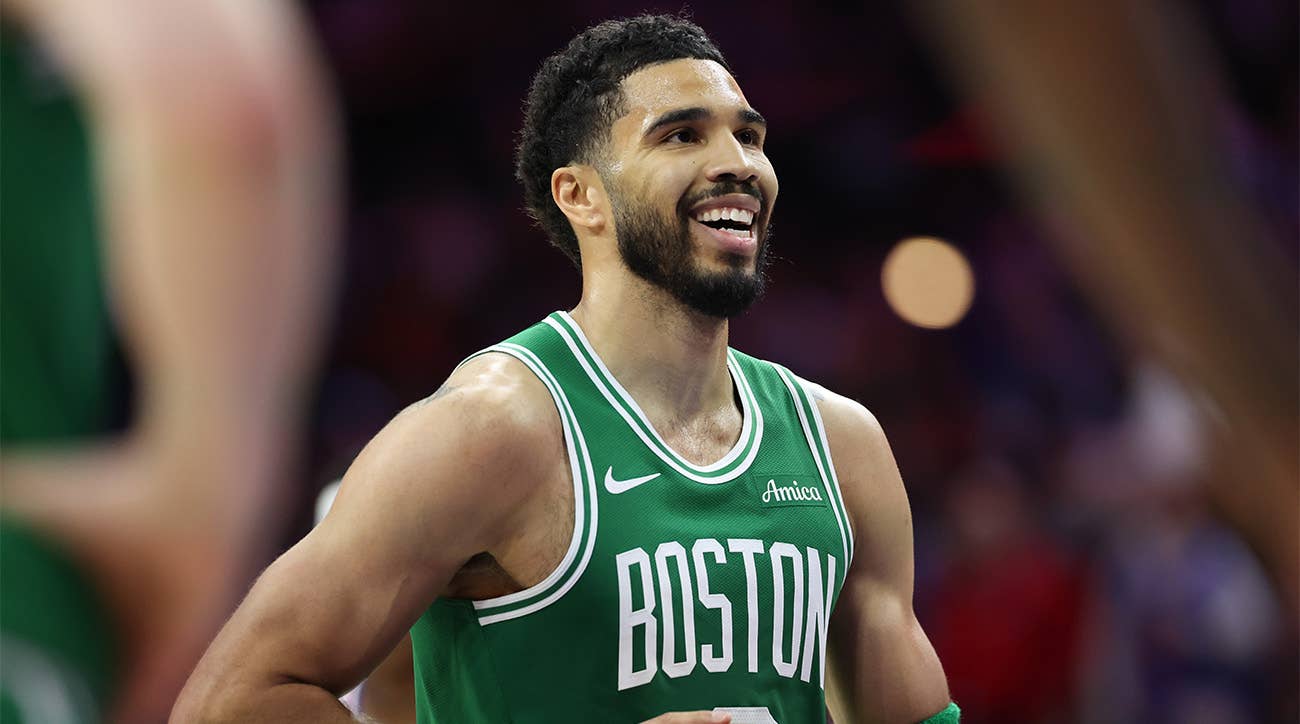
Paul George and Jayson Tatum, Boston Celtics
Bill Streicher-Imagn Images
This one is lopsided on purpose, and that is exactly the issue. Boston sent Jaylen Brown to Philadelphia and got George plus two first-round picks back. George arrives at 36 with a thin recent résumé. He played 37 games last season and averaged 17.3 points, 5.3 rebounds, 3.6 assists and 1.7 steals in 30.7 minutes. An injury cost him the first 12 games, and a 25-game suspension in January took most of the middle. He did finish strong, averaging 21.0 points on 41.5 percent from three across 10 games afterward.
Tatum is the whole offense now. He came back from his Achilles injury on March 6 and averaged 21.8 points, 10.0 rebounds and 5.3 assists across 16 games.
Here is my take on why lopsided hurts the pair even when it helps the team. One player absorbs everything, so the second becomes a role player with a big salary. While that is great for Boston, it isn't so ideal for anyone drafting both.
Norman Powell and Josh Giddey, Chicago Bulls
This is the cleanest fit of the four, and my runner-up. Powell signed a two-year deal with Chicago worth $45 million with a team option in the second year, after starting 52 games in Miami. He arrives off his first All-Star season. He has not shot under 38 percent from three since 2017-18.
Giddey does the opposite job. He played 53 games last year and averaged 17.0 points, 8.3 rebounds and 9.1 assists with 13 triple-doubles. Career bests everywhere.
The case for it as runner-up is simple. Nothing overlaps. Giddey creates and rebounds. Powell catches and scores. Neither needs what the other one takes, and Powell's shooting gives Giddey the spacing his passing has never really had. Miami had a crowded shot chart, Chicago does not.
De'Aaron Fox and Victor Wembanyama, San Antonio Spurs, and the Verdict

Daniel Dunn-Imagn Images
This pairing wins, and the reason is that it already proved itself. Start with where they began. In their first tiny sample together, 46 possessions, Fox and Wembanyama scored just 0.82 points per possession on pick-and-rolls, and San Antonio finished that season 19th in offensive rating. Then came a full year of reps.
The Spurs went 62-20 and grabbed the No. 2 seed in the West. They closed 30-4 across their final 34 games, a 28-win improvement. Wembanyama averaged 25.0 points, 11.5 rebounds, 3.1 assists, 3.1 blocks and 1.0 steals in 64 games. He became the first unanimous Defensive Player of the Year in the award's history, and the youngest winner ever at 22. Fox started 72 games at 18.6 points and 6.2 assists and made his second All-Star team. San Antonio reached the Finals and lost to the Knicks in five.
The money is settled too. Wembanyama signed a five-year, $252 million extension in July. Fox's four-year extension begins this season at $51 million. A Win-Win situation anyhow you look at it.
Conclusion: Look At It This Way
Fox and Wembanyama win because they are the only pair on this list whose fit is already a measured result rather than a forecast.
Look at what the other three are asking you to believe. Cleveland needs two ball-dominant guards to share smoothly across 82 games. Boston needs a 36-year-old who reached 37 games last season to stay upright in a smaller role. Chicago needs a fit that makes sense on paper to survive contact with a young roster. Those are all reasonable bets, but that's the problem: They are still bets.
San Antonio already ran the experiment. The offense that finished 19th became a 62-win team. The roles never blurred, because a 7-foot-4 center and a downhill point guard cannot accidentally do each other's jobs.
For the five pairings this piece skipped on purpose, Athlon's Five New Duos column covers Antetokounmpo and Adebayo, Ball and Edwards, Brown and Embiid, Leonard and Barnes, and Morant and Lillard. You can read it to see things from a different perspective.
Questions About Star Pairings, Answered
Which new star pairing works best for fantasy in 2026-27?
De'Aaron Fox and Victor Wembanyama in San Antonio. They are the only pair of the four whose fit is already a measured result rather than a forecast. San Antonio went 62-20, reached the Finals and closed 30-4 across its final 34 games after the pair had a full year of reps together.
Why don't Harden and Mitchell work as well together?
Both guards need possessions to produce, creating a playmaking tradeoff. The pairing worked in a small sample, with Cleveland going 22-9 after the deadline, but over a full season Harden and Mitchell still have to share the ball smoothly while maintaining their combined production and efficiency.
Is Paul George and Jayson Tatum a strong fantasy pairing?
Not as a duo. The pairing is lopsided by design, with Tatum functioning as the center of Boston's offense while George fills a smaller role. That arrangement can work well for Boston, but it is less appealing for fantasy managers drafting both players because one absorbs much more of the offensive workload.
What's the strongest runner-up pairing?
Norman Powell and Josh Giddey in Chicago. Their roles have little overlap: Giddey creates and rebounds while Powell catches and scores. Powell's shooting also provides spacing for Giddey's passing, giving the Bulls pairing a clean complementary fit without requiring either player to surrender what he does best.


