


FlightScope will have three LPGA ambassadors at Bernardus this week and, unusually, no rooting interest that fits neatly on one side of the scoreboard.
Allisen Corpuz and Megan Khang will play for Angela Stanford’s U.S. team. Maja Stark will represent Europe under captain Anna Nordqvist. FlightScope announced Tuesday that all three players use its X3C launch monitor, putting the company’s performance data inside two team rooms preparing to beat each other.
“We are proud to work with Allisen, Megan and Maja to bring our cutting-edge technology to one of the biggest stages in international golf,” FlightScope founder and CEO Henri Johnson said in the company’s release. “It’s exciting to see FlightScope represented by players on both teams.”
That is the company line. The golf story is more interesting.
All three can measure a shot with the same technology, but Stanford and Nordqvist need very different things from them. One is part of the strongest foursomes partnership on the American roster. Another has become one of the toughest players in this event to beat. The third arrives as a major champion trying to help Europe reclaim the Cup at home.
A launch monitor can help each player sharpen her yardages and understand how the ball is behaving. It cannot tell a captain where she belongs in the lineup.
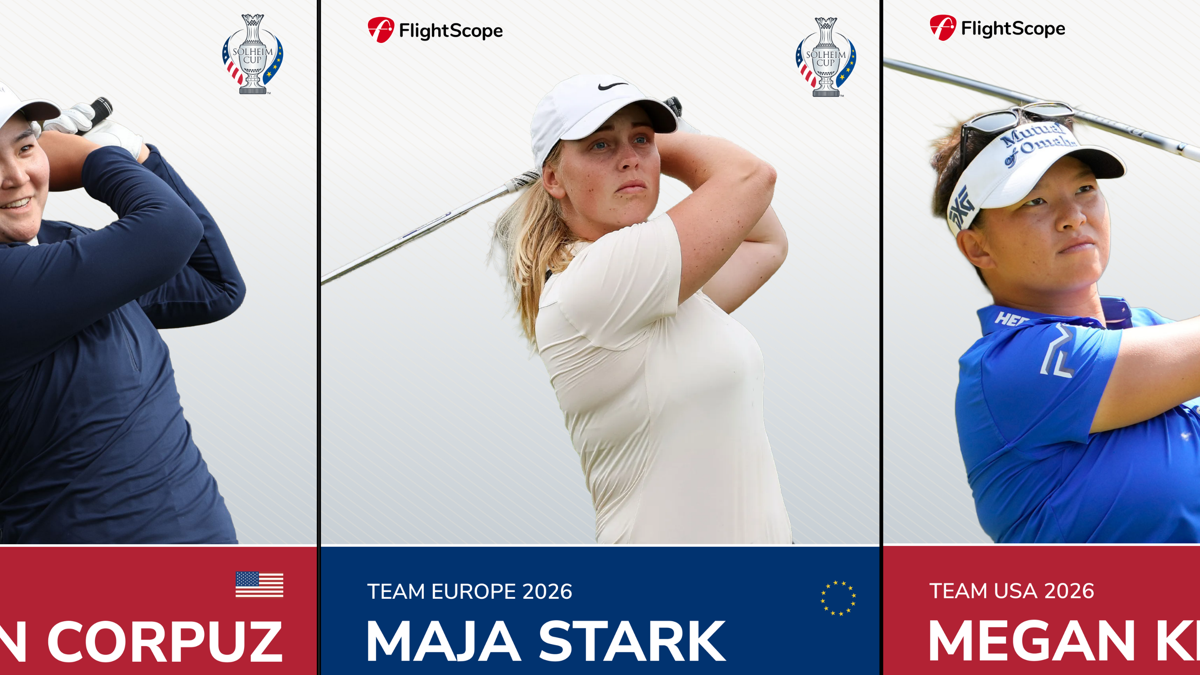
Allisen Corpuz Gives Stanford a Pairing She Already Trusts
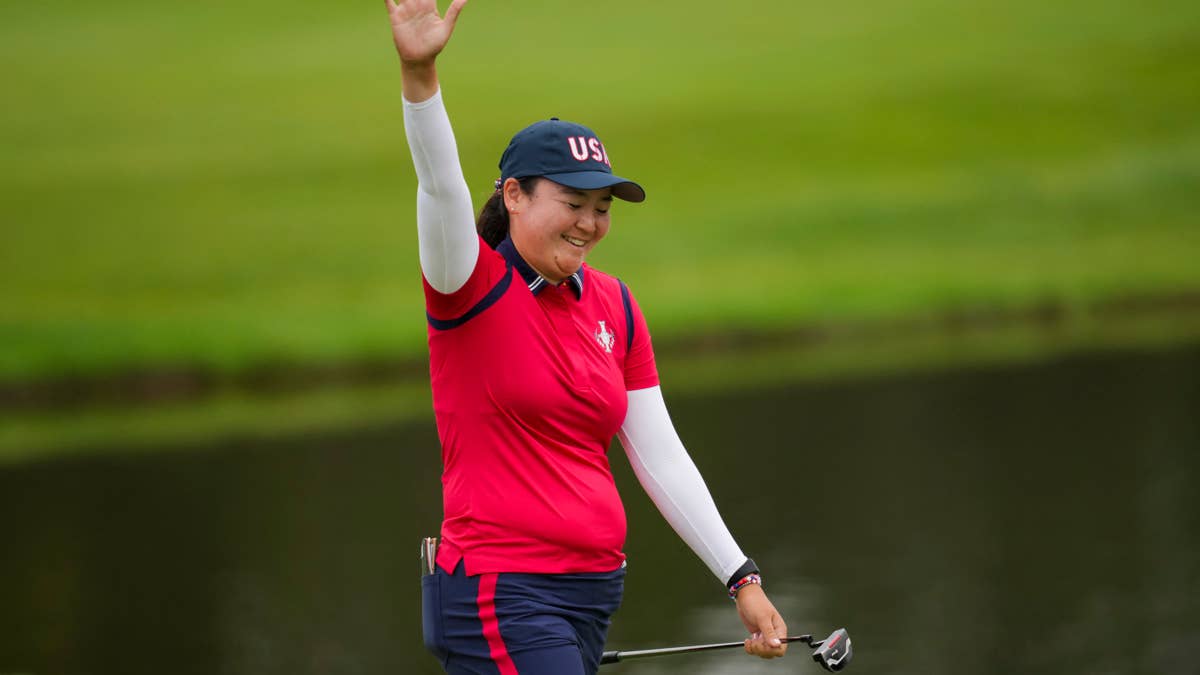
Corpuz automatically qualified for her third U.S. team after finishing seventh in the American points standings with 1,268 points.
The larger number for Stanford is 4-0.
That is Corpuz’s foursomes record alongside Nelly Korda over the past two Solheim Cups. They won twice in Spain in 2023, then added two more victories at Robert Trent Jones Golf Club in 2024. Corpuz owns a 5-2-1 overall record in the competition.
Foursomes exposes any uncertainty between partners. One player’s preferred miss becomes the other player’s recovery shot. A comfortable tee club can leave an awkward approach yardage. Even the golf ball matters because two players must take turns using it.
Korda and Corpuz have already worked through those questions under pressure. Their record does not guarantee Stanford will send them out together again, but breaking up a 4-0 partnership would require a compelling reason.
This is where dependable launch-monitor work has value without becoming the story by itself. Players can compare carry distances, spin, trajectory and expected rollout before alternate shot begins. They can decide which holes suit each player off the tee and which approach numbers they would rather leave.
Then they have to stand on the first tee and own those decisions.
Megan Khang Has Become More Than a Captain’s Pick
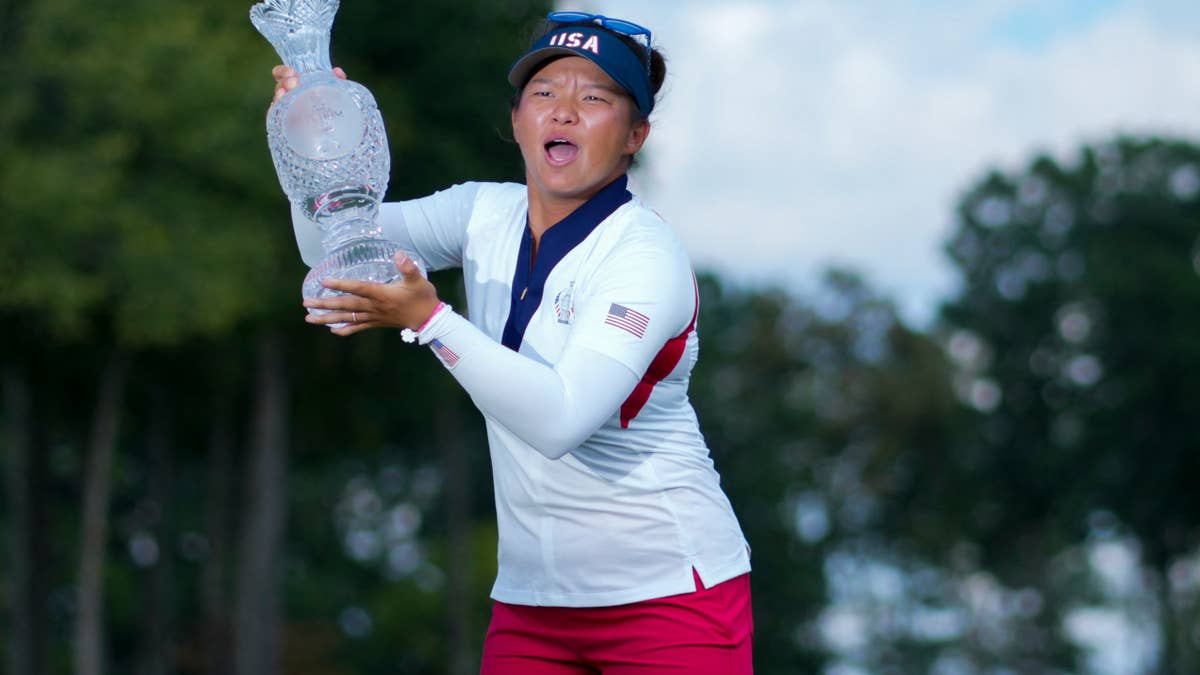
Khang did not secure an automatic spot. She finished 11th in the U.S. standings with 749 points and needed one of Stanford’s three selections.
There was little mystery once the captain began making her picks.
This will be Khang’s fifth consecutive Solheim Cup. She closed 2021 with a singles win, went 3-0-1 in 2023 and finished 3-0 in 2024. That makes eight consecutive matches without a loss. Her career record is 7-3-3, including a 3-0-1 mark in singles.
Those numbers explain why Stanford chose her better than any vague reference to experience could. Khang has won with different partners, handled singles and supplied points in both winning and losing U.S. weeks. She also has the personality to keep a partnership loose when the golf becomes uncomfortable.
Stanford can use Khang without protecting a particular partnership. In Virginia, she played fourball once with Korda and once with Alison Lee, then drew Pedersen in singles. Khang won all three, and none of the matches reached the 16th tee.
Her work on the X3C this week can be fairly plain: check the carries, see whether the ball is flying as expected and move on. The complication begins when a partner wants a different tee shot left for her, or needs a different kind of conversation after a bad hole. Khang has handled those changes before.
Maja Stark Brings Major-Champion Authority to Europe
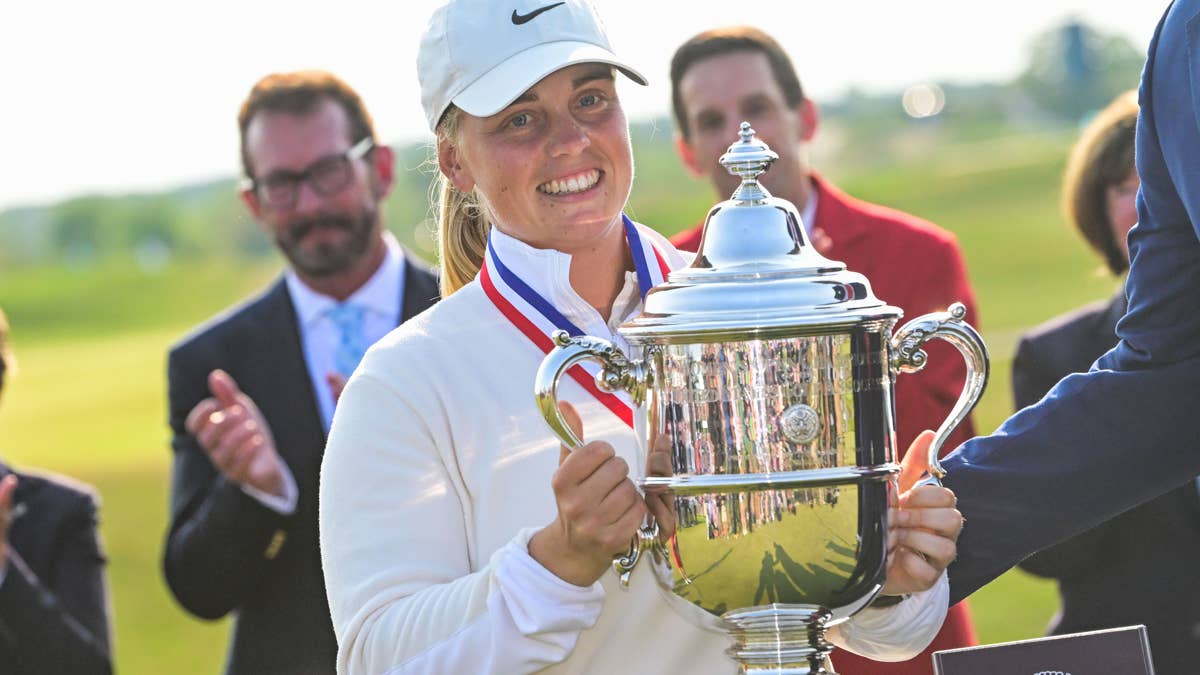
Stark gives the FlightScope group its player on the other side.
The Swede qualified through the Rolex Women’s World Golf Rankings and will make her third Solheim Cup appearance. She owns a 3-3-2 record, including a singles victory over Corpuz in 2023 and a tie with Lauren Coughlin in 2024.
Her standing within Europe’s team has changed since those matches. Stark won the 2025 U.S. Women’s Open at Erin Hills, holding off Nelly Korda and Rio Takeda by two strokes for her first major championship.
At Erin Hills, Stark reached 9 under after a birdie at the 14th and walked to the 17th tee with a three-shot lead. She bogeyed both closing holes and still finished two clear. She had banked enough good golf that the late mistakes never handed the championship to Korda or Takeda.
Nordqvist now has a player who has felt Sunday at a U.S. Women’s Open tighten around her and still signed for the trophy. If a match gets untidy at Bernardus, Stark does not need to pretend otherwise. Win the next hole.
Stark also gives Nordqvist options. She has played foursomes with Linn Grant and Emily Kristine Pedersen, fourball with Pedersen and singles without losing. Europe can use her beside a familiar Swedish teammate, pair her with a different personality or ask her to carry more responsibility than she did as a Solheim Cup rookie three years ago.
Bernardus Will Test the Distance Behind the Distance
The official Bernardus course guide repeatedly returns to wind, run and angle. The fourth and 11th are long par-3s that can play into the breeze. Water crowds the sixth green. The 14th has enough depth to create a two-club difference between front and back hole locations. At the 18th, water guards the left side while bunkers punish a tee shot sent safely to the right.
Those are not problems solved by knowing one stock yardage.
When I work with a golfer on a launch monitor, the most useful session rarely ends with a list of perfect 7-iron numbers. We need the low shot, the comfortable carry and the miss that still leaves the player somewhere playable. Bernardus may ask for all three before lunch.
FlightScope can return more than 50 parameters. On a Solheim Cup practice tee, that is far too much to carry onto the course. I would want a much shorter sheet: the actual carry on a lower flight, the club that covers the front edge at the fourth and the wedge number a player can produce without squeezing another 4 yards from it.
That sheet should look different for each of the three. Corpuz can work backward from the approach distances she and Korda prefer in foursomes. Khang may draw a different partner from one session to the next. Stark is preparing for Nordqvist, a different uniform and the same Dutch wind.
Friday will expose whether they chose the right numbers.
The sixth at Bernardus is a short par-3 surrounded by enough water and slope to make the middle of the green look wonderfully sensible. If one of these three players reaches that tee with a carry number she believes, the remaining work belongs to her.
That shot will not care which launch monitor produced the number. The scoreboard certainly will.
PGA of America Golf Professional Brendon Elliott is an award-winning coach and golf writer who serves as Athlon Sports Senior Golf Writer. Read his recent “The Starter” on RG.org, where he is their Lead Golf Writer. To stay updated on all of his latest work, sign up for his newsletter or visit his MuckRack Profile.


