


The 2026 NBA Draft class is genuinely one of the best in recent memory. But here is what every fantasy manager needs to understand immediately: talent and immediate fantasy production are not the same thing. The best Fantasy Basketball 2026-27 prospects in this class fall into two categories. First, crowded roster cases: talented players sharing the court with established stars who directly limit their stats and minutes. Second, pure dynasty stashes: players too injured or too far away to contribute anything in Year 1. Knowing which category you are dealing with is the difference between a smart hold and a wasted roster spot.
The Crowded Roster Cases — High-Ceiling Picks Who Land in Situations That Cap Year 1 Production
Great talent means nothing if the roster around a rookie limits his touches. The names below all have star ceilings. What limits them right now is circumstance, not ability. Understanding how to evaluate the 2026 NBA Draft class for dynasty stash value versus immediate redraft contribution will help you place each one correctly before your draft.
Darryn Peterson, Utah Jazz, No. 2 Overall
Peterson is a 6-foot-6 scoring guard who posted an impressive freshman season at Kansas despite cramping issues costing him 11 games. Utah drafted him second overall, and the talent is undeniable. The problem is the roster. Keyonte George broke out last season with 23.6 points and 6.1 assists per game and is the established starting guard Peterson is joining. Lauri Markkanen and Jaren Jackson Jr. hold down the frontcourt. Second-year wing Ace Bailey is pushing for rotation minutes after a strong finish to his rookie year. Peterson will start, but scoring freely as a 19-year-old in that hierarchy is a different thing entirely. Utah is no longer rebuilding. That context puts a hard ceiling on his 2026-27 counting stats.
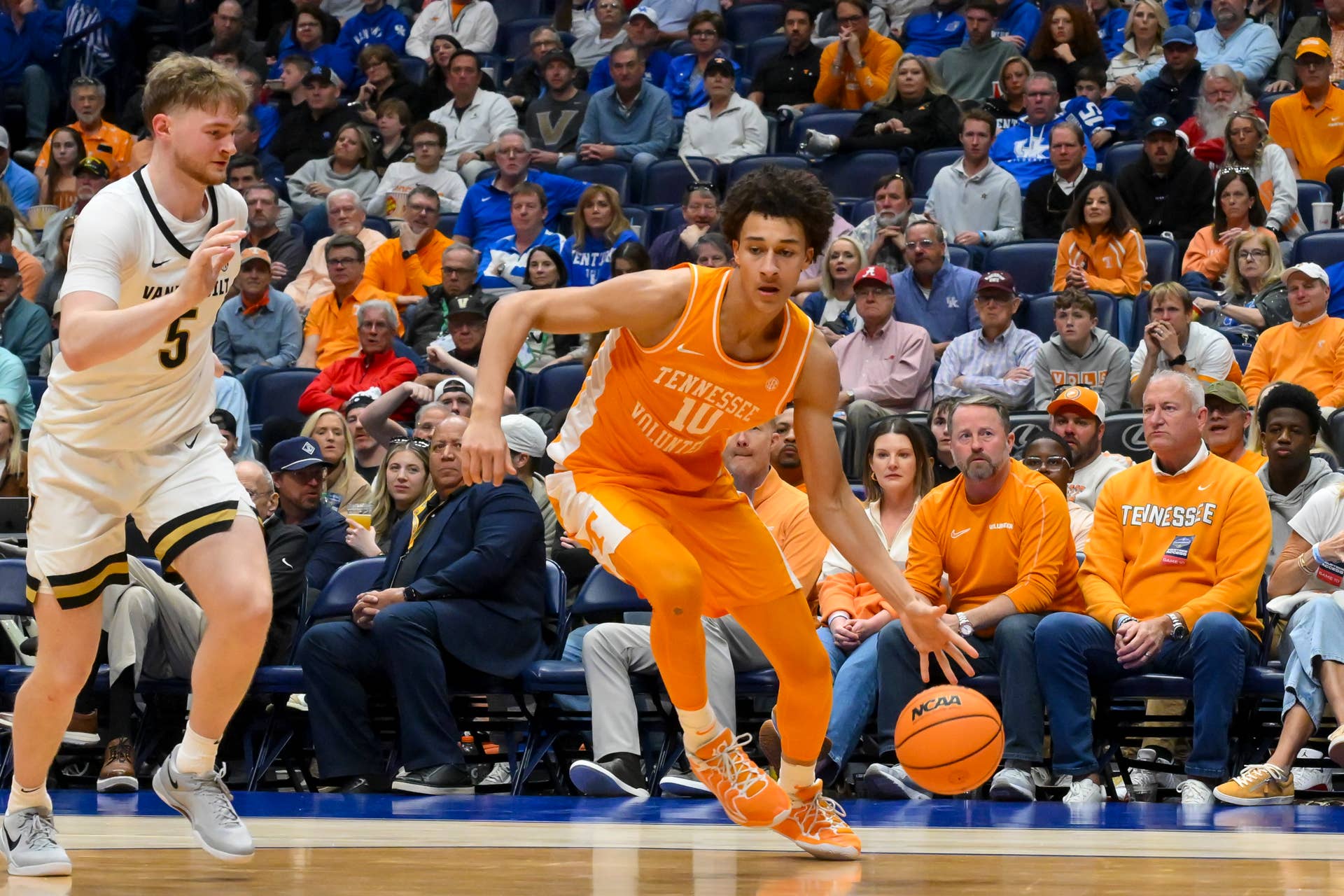
Nate Ament, Milwaukee Bucks, No. 13 Overall
© Steve Roberts-Imagn Images
The No. 13 pick was part of the Giannis trade package to Milwaukee, and the Bucks used it on the 6-foot-10 Tennessee wing. That landing spot changes everything. Milwaukee is in full rebuild mode, which means genuine minutes are available. At Tennessee, Ament averaged 16.7 points, 6.3 rebounds, and 2.3 assists per game on 39.9 percent shooting, with a 1-to-1 assist-to-turnover ratio that shows he is still learning to process speed at the next level. His competition for forward minutes is Jaime Jaquez Jr. and Kyle Kuzma. Expect 22 to 26 minutes per night to start, which projects to modest but real counting stats around 10 to 13 points and 4 to 5 rebounds per game.
Jayden Quaintance, San Antonio Spurs, No. 20 Overall
The most extreme patience case in the first round. Quaintance fell out of the lottery entirely because of a torn ACL and meniscus suffered in February 2025 at Arizona State. He transferred to Kentucky, played four games, then was shut down again with ongoing knee swelling. After being drafted, he told reporters he is not sure whether he will be ready for training camp and still feels some pain. His pre-injury numbers were genuinely exciting, 9.4 points, 7.9 rebounds, and 2.6 blocks per game at Arizona State, but that version of him has not played real basketball in over a year. Victor Wembanyama starts in front of him. Luke Kornet is the established backup. There is no path to meaningful rookie minutes. Quaintance is a dynasty-only hold for at least two years.
Year 1 Fantasy Ranking by Realistic Output
Ament leads the group because Milwaukee is rebuilding and the minutes are genuinely there.
Peterson will start in Utah but the Jazz's crowded rotation limits his counting stat ceiling in Year 1.
Quaintance is a pure stash. Do not roster him in any redraft league.
AJ Dybantsa and Why Even the No. 1 Pick Carries Patience Requirements
Dybantsa is not in the same patience tier as the three names above. He is a top-50 dynasty asset immediately and a legitimate redraft target. His BYU season speaks for itself: 25.5 points per game to lead all of Division I, 51 percent shooting, 6.8 rebounds, and 3.7 assists using a 7-foot wingspan that made him nearly unguardable in college. Washington drafted him first overall for a very good reason.
But even the No. 1 pick has fine print. Trae Young just signed a four-year, $212 million extension and is this team's primary offensive engine. Anthony Davis is expected to make his Wizards debut this fall. Alex Sarr averaged two blocks per game in his second season. Kyshawn George and Tre Johnson both flashed real production last year. None of these players are stepping aside. A realistic Year 1 projection is 18 to 21 points, five to six rebounds, and three assists per game. That is a strong rookie season. But rostering him expecting 28 points a night will lead to disappointment. The ceiling is real. Just understand it arrives in 2027-28, not right now.
The Pure Dynasty Stashes — Draft Night Picks With No 2026-27 Fantasy Value
David Banks-Imagn Images
This category is different from everything above. Crowded roster cases still have a player on an NBA court with some path to counting stats. Dynasty stashes do not. These are players who will either play overseas in 2026-27 with zero NBA minutes, or face such extreme developmental barriers that treating them as redraft contributors is simply wrong. The format distinction matters enormously here. Read the complete guide to evaluating 2026 NBA Draft prospects by dynasty timeline and risk before assigning a single roster spot to anyone in this section.
Aday Mara, Oklahoma City Thunder, No. 12 Overall
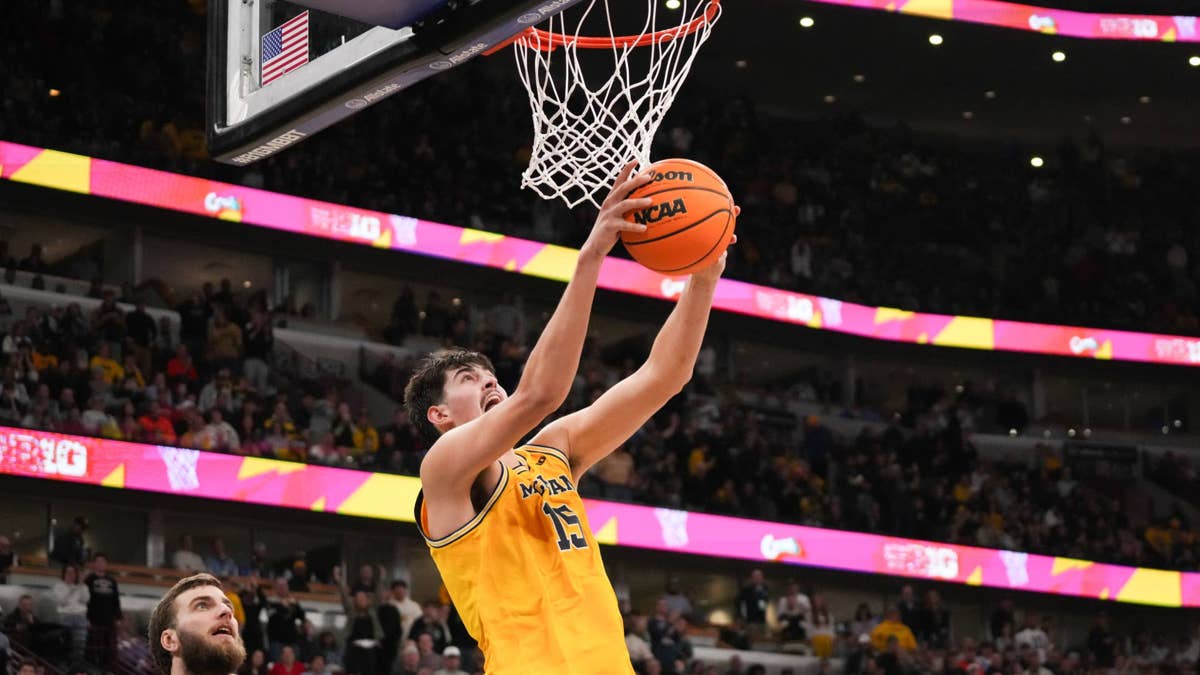
Mara is a 7-foot-3 Spanish center who averaged 12.1 points, 6.8 rebounds, and 2.6 blocks per game for national champion Michigan this past season. His per-36 numbers jump to 18.6 points, 10.4 rebounds, and 4.0 blocks. The ceiling is genuinely elite. But OKC is the league's gold standard development organization, and Sam Presti does not draft for right now. The Thunder already have Chet Holmgren and Isaiah Hartenstein in the frontcourt, both under contract. Nikola Topic was drafted in 2024 and barely featured in his first season. OKC manages rookie development, it does not rush it. Mara will get there. Just not in 2026-27. In dynasty leagues with taxi squad spots, he is one of the most attractive stashes in the class. In redraft formats, he has zero value this season.
Sergio de Larrea, Dallas Mavericks, No. 25 Overall
De Larrea averaged 9.4 points and 3.5 assists for Valencia Basket last season, shooting 42.9 percent from three, and won the Liga ACB Best Young Player award for the second straight year. He is a real prospect with elite positional size at 6-foot-6. He is also almost certainly not playing NBA basketball in 2026-27. Dallas GM Mike Schmitz declined to set a timeline after the draft, saying only that the team is still working through whether De Larrea arrives next year or the year after. Before getting traded to Dallas on draft night, he was widely expected to stay overseas. For dynasty managers, he is a free lottery ticket on a Bogdanovic-style playmaker. For redraft managers, he simply does not exist this season.
The Contrarian Stash: Morez Johnson Jr., Dallas Mavericks, No. 9 Overall
This is the call that will get pushback. Johnson is being drafted in redraft leagues at his draft-slot ADP, as if ninth overall automatically equals Year 1 fantasy value. It does not. While Johnson proved his shooting touch is developing by hitting 34.3 percent of his three-pointers on limited volume (11-of-29) during his sophomore national championship season at Michigan, he is fundamentally not a perimeter creator. His primary value remains defensive and physical, which historically translates slowly to standard fantasy categories
He walks into a Dallas frontcourt that already has Cooper Flagg, Dereck Lively II, and Daniel Gafford, creating a three-man center rotation on a team that already lacks perimeter shooting. Johnson will play real basketball and defend at a high level. But a complementary big with an unproven three-point shot and no creation upside behind Flagg and Kyrie Irving is not a redraft contributor at a top-10 price. He belongs in the dynasty-stash category. Hold for 2027-28. In redraft leagues, pass.
The Exception That Proves the Rule — and the Patience Framework Applied
Sam Navarro-Imagn Images
Every patience case covered so far exists because of one of two things: a crowded roster or a development gap. Understanding which problem you are dealing with is the entire game. Check out the full post-Draft fantasy basketball impact breakdown: busts, sleepers, and the rookies whose landing spots matter most for deeper reading on the full class. The two names below show what the patience framework looks like when it actually breaks in a rookie's favor.
Caleb Wilson, Chicago Bulls, No. 4 Overall
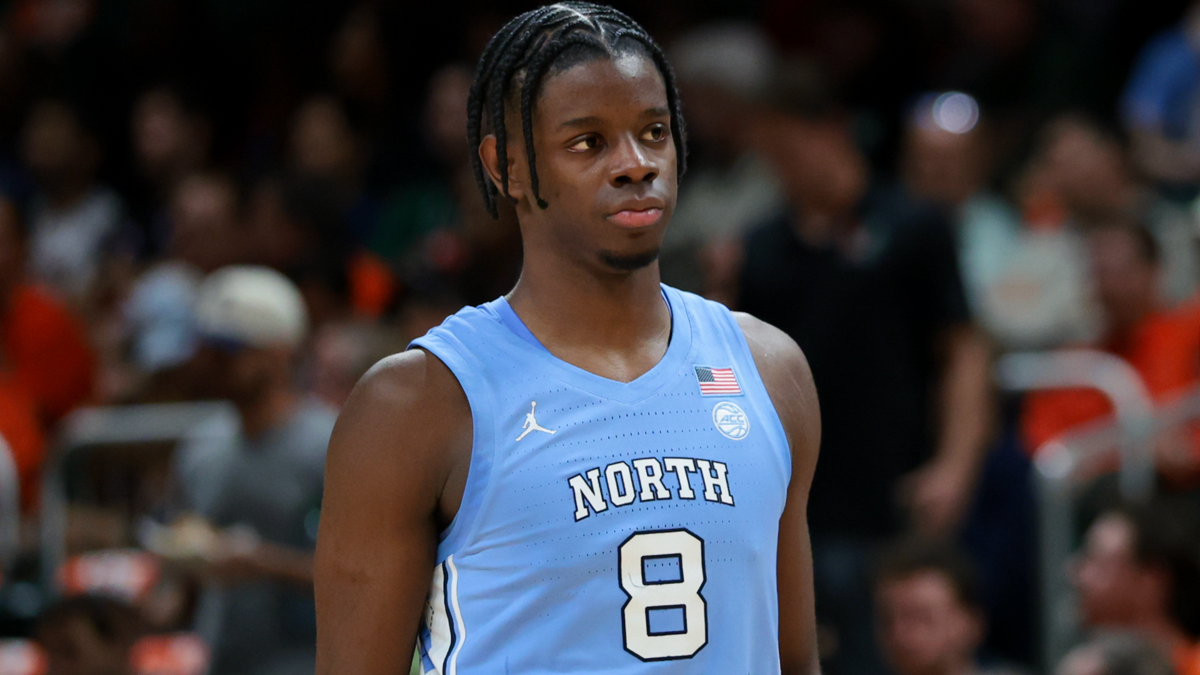
Wilson is the exception this class needed. At North Carolina, the 6-foot-9 forward averaged 19.8 points, 9.4 rebounds, 1.4 blocks, and 1.5 steals per game while shooting 58 percent from the field in 24 games before a hand injury ended his season. He arrives in Chicago on a Bulls team in full rebuild mode. Their frontcourt behind Nic Claxton is Matas Buzelis and Isaac Okoro. That is it. The floor is open, the touches are available, and no established star is standing between Wilson and 30 minutes a night. No other top-5 pick in this class lands in a situation this clear. A 15-point, 9-rebound, 2-stock rookie line is realistic from day one. In a class defined by patience, Wilson requires none.
Yaxel Lendeborg, Golden State Warriors, No. 11 Overall
Lendeborg is the partial exception. He turns 24 in September, making him the oldest first-round pick in the class by at least three years, and he plays with the polish of someone who has been around the block. He averaged 15.1 points, 6.8 rebounds, and 3.2 assists per game for national champion Michigan while winning Big Ten Player of the Year. Golden State drafted him specifically because Stephen Curry is 38, Jimmy Butler tore his ACL in January, and Moses Moody is also injured. Lendeborg is expected to fill those minutes immediately. In a contending redraft context, he is worth drafting earlier than his slot suggests.
The Three-Question Framework
Apply these three questions to every 2026 rookie you are considering:
Question 1: Is the roster open or crowded?
Wilson in Chicago has an open runway. Peterson in Utah does not. Open roster equals immediate minutes.
Question 2: Is the role primary or complementary?
Dybantsa in Washington is the primary scoring option. Ament in Milwaukee is a complementary piece. Primary roles produce more fantasy volume even in crowded situations.
Question 3: Is the player NBA-ready or a development project?
Lendeborg and Wilson are ready. Mara and De Larrea are projects or stashes. Ready players go in redraft leagues. Projects stay in dynasty.
Framework Applied to Two More Names
Kingston Flemings (No. 8, Atlanta Hawks) ran all three questions cleanly. His roster is crowded at guard, with CJ McCollum and Nickeil Alexander-Walker ahead of him. His role is complementary to start. He averaged 16.1 points, 5.2 assists, and 1.5 steals for Houston, but the Hawks signed McCollum to a one-year deal that puts Flemings directly behind him in the pecking order. The answer: redraft patience, dynasty value. Hold for 2027-28 when he inherits the starting point guard role.
Zuby Ejiofor (No. 23, Atlanta Hawks) gets a similar verdict. He averaged 16.4 points, 7.3 rebounds, and 2.1 blocks at St. John's and lands in a Hawks frontcourt where Onyeka Okongwu starts ahead of him. His role is backup big, his blocks have immediate dynasty appeal, and his counting stats will be modest until Okongwu's role shifts. Deep-league watch only in redraft.
The Two Patience Cases Most Likely to Surprise in 2026-27
The patience case most likely to outperform his timeline is Darryn Peterson. Target him in rounds 6 to 8 of redraft drafts. The trigger is simple: if Keyonte George misses time with any injury, Peterson steps into a primary scoring role on a strong Utah team with immediate fantasy upside. George played only 54 games last season. The injury risk is real, the talent is unquestioned, and the reward for rostering Peterson early is a top-20 overall fantasy player if the opportunity opens.
The second is Nate Ament. Target him in rounds 9 to 11. Milwaukee is rebuilding around young players and has every incentive to give Ament extended minutes as the season progresses. The trigger is his three-point shooting. He shot 33.3 percent from three at Tennessee on limited volume. If that number climbs toward 37 or 38 percent in the NBA, his usage expands immediately and his counting stats follow. A Bucks team with no pressure to win could accelerate that timeline faster than anyone expects.
Beware Of The Hype
One last thing before you close your draft board. The 2026 class is genuinely special, and that hype will inflate ADPs across the board. But Darryn Peterson's talent does not make Utah's rotation suddenly generous. Cameron Boozer's ceiling does not make him Memphis's automatic second option in a frontcourt still sorting out its hierarchy. Nate Ament's skill set does not create a larger offensive role in Milwaukee than the rebuild allows. The managers drafting these players at talent-based prices and expecting big January numbers will be frustrated. The managers buying at patience-discounted prices and holding for 2027 are making the smarter bet. Stay locked into Athlon's ongoing 2026-27 Fantasy Basketball coverage as training camp develops and these patience cases either accelerate or confirm their timelines. The landscape shifts fast.
Questions About NBA Rookies Who Need Patience, Answered
Which 2026 NBA Draft rookies require the most patience in fantasy basketball?
The biggest patience cases are Darryn Peterson, Nate Ament, Jayden Quaintance, Aday Mara, and Sergio de Larrea. Peterson and Ament have talent but face developmental or roster-related obstacles, while Quaintance is recovering from injury. Mara and de Larrea project as dynasty-only stashes with little or no expected 2026-27 fantasy value.
Is Darryn Peterson worth drafting in 2026-27 fantasy basketball leagues?
Yes, but expectations should be realistic. Peterson has elite long-term upside, yet Utah's established rotation limits his immediate fantasy ceiling. He is a stronger dynasty investment than a redraft cornerstone, though he has the talent to outperform expectations if his role expands during the season.
Which rookie is most likely to contribute immediately in fantasy basketball?
Caleb Wilson stands out as the best immediate fantasy contributor among the top picks. Chicago offers a clear path to significant minutes, and his all-around production makes him one of the safest rookies to target for Year 1 value. Yaxel Lendeborg is another prospect expected to help right away because of his NBA-ready game.
Should fantasy managers draft Aday Mara or Sergio de Larrea in redraft leagues?
No. Both are better viewed as long-term dynasty investments rather than 2026-27 fantasy contributors. Their projected development timelines make them poor choices in standard redraft formats, where immediate production is essential.
Which patience-case rookie has the best chance to outperform expectations in 2026-27?
Darryn Peterson has the best opportunity to beat his projected timeline. If Utah's rotation changes or injuries create additional usage, his scoring ability could quickly translate into strong fantasy production. Nate Ament is another player capable of exceeding expectations if his outside shooting earns him a larger role as Milwaukee's season progresses.


