


Most fantasy managers fail to realize that the biggest contract in free agency is rarely the biggest fantasy value. The player who signs for $220 million is already priced into every draft board in existence. Everyone knows who he is. Everyone is fighting over him in Rounds 1 and 2. That is not where leagues are won.
Leagues are won on the players who change situations. A player who averaged elite numbers in 23 minutes a night on a crowded roster is a completely different fantasy asset the moment he signs somewhere and walks straight into 32 minutes as the primary option. That is the entire game here.
NBA free agency 2026 officially opens June 30 at 6 p.m. ET. The managers who have already identified which players become instant starters the moment they sign somewhere new will be the ones dominating their drafts. The ones who wait until the dust settles will be picking up their scraps. This is about landing spots, not résumés. All five players discussed in this piece are talented. That is not the question. What changes on July 1 is their opportunity.
Walker Kessler: The Best Blocks Specialist in Free Agency Needs One Thing. A Team That Starts Him.
3.35 Blocks Per 36 Minutes Over His Career. Second Among Active Players. He Just Needs Out of Utah.
Walker Kessler ranks second among every active NBA player in blocks per 36 minutes, and has an average of 3.35 blocks per 36 minutes, over his four-year career.(2.4 blocks per game). That number already existed in Utah. It just never got the full stage. In 2024-25, he averaged 11.1 points, 12.2 rebounds, and 2.4 blocks per game as a legitimate starter. Then a torn labrum ended his 2025-26 season after five games. Utah offered five years, $140 million. He turned it down. His camp wants significantly more, and the Lakers and Bulls are circling.
If Kessler lands somewhere that hands him 30-plus minutes and a starting role from night one, those blocks become a top-five fantasy weapon at the position. If Kessler leaves Utah, draft him in the fourth round of any categories league. If he stays in Utah, slide him to Round 6 based on the same rotation constraints he faced in 2025-26. Keep your eyes on which 2026 NBA free agents are most likely to shake up fantasy basketball draft boards. Kessler is right at the top of that conversation.
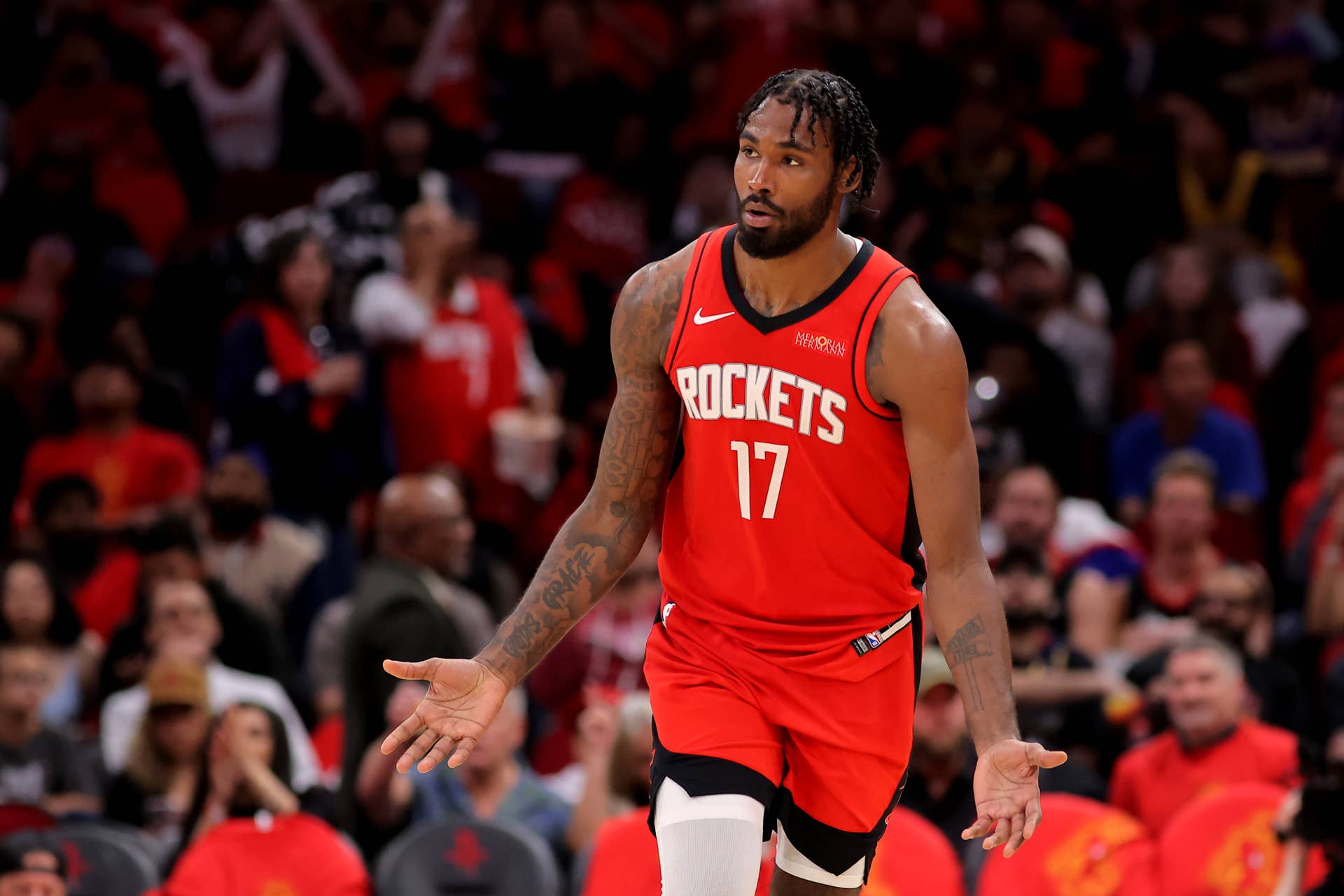
Tari Eason: The Defensive Stopper Who Becomes a Fantasy Asset the Moment He Leaves Houston
Erik Williams-Imagn Images
Elite Steals and Blocks From a Wing Who Has Never Had a Primary Role. That Changes in Free Agency.
Tari Eason averaged 10.5 points, 6.3 rebounds, 1.5 assists, 0.5 blocks, and 1.2 steals in just 25.8 minutes per game in 2025-26. That is the problem right there, 25.8 minutes. On a roster built around Kevin Durant and Amen Thompson, Eason has never had the floor to himself. As a starter across 34 games this season, those numbers jumped to 10.9 points, 6.8 rebounds, and 1.4 steals in 28.4 minutes. More minutes, better numbers. Simple math. The defense has always been elite, the ceiling has just been compressed by Houston's crowded wing rotation. Put him somewhere that hands him 30-plus minutes and no competition for his spot, and the steals alone make him a weekly weapon.
The restricted free agency wrinkle makes this complicated. Houston offered Eason a four-year, $100 million extension last offseason. He turned it down, betting on himself. After 60 games and a post-All-Star shooting slump, that bet looks uncertain. But here is the fantasy reality: a 24-year-old wing with 1.2 steals, 0.7 blocks, and proven playoff intensity is worth targeting regardless of where he lands. In the playoffs, with Durant sidelined, Eason averaged 13.8 points, 7.0 rebounds, and 2.4 steals per game as a starter. That is the preview. In redraft leagues, wait for his situation to resolve and take him in Rounds 7 to 8 if he secures unchallenged starting minutes outside Houston.
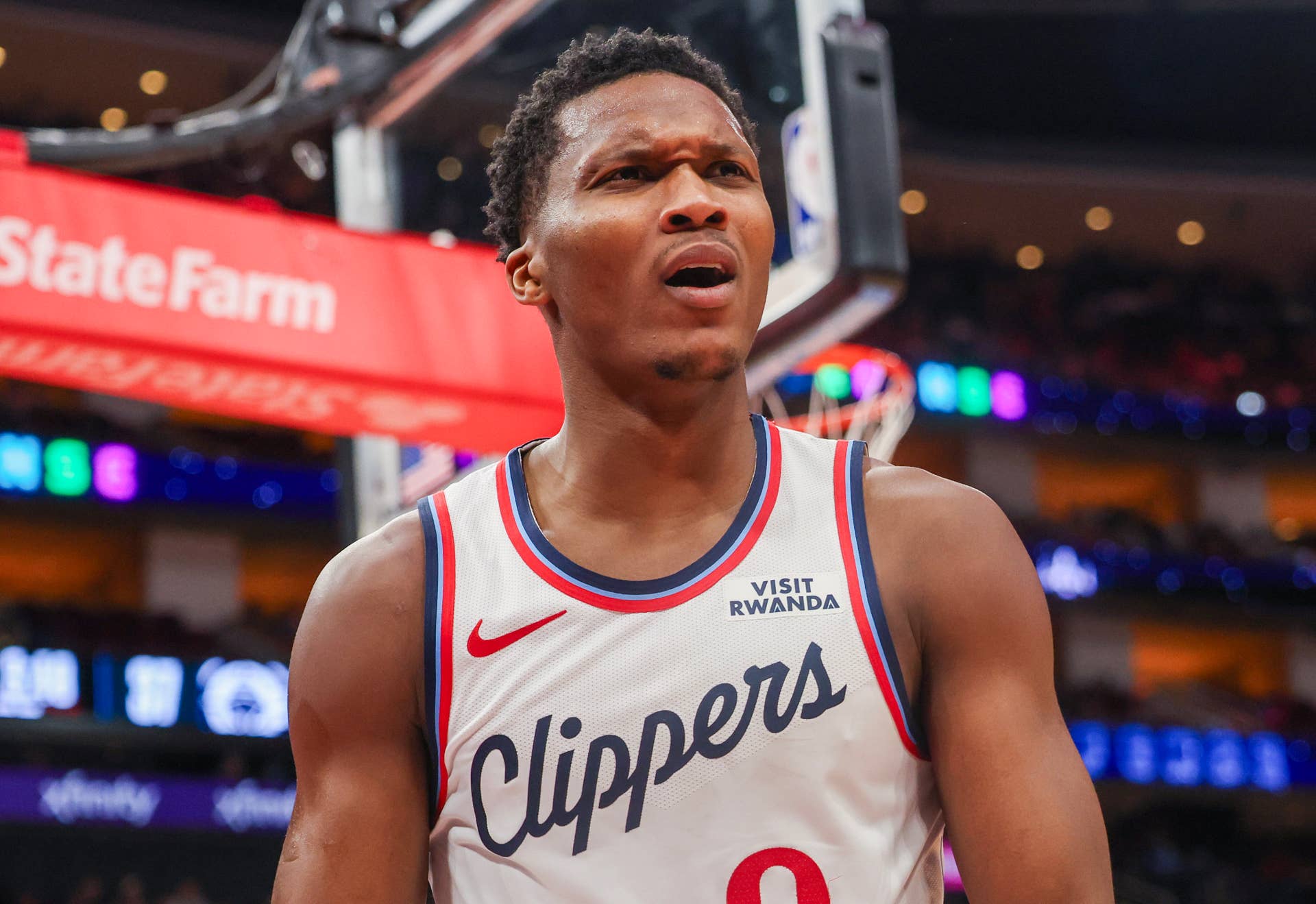
Bennedict Mathurin: Free Throw Volume and Primary Scorer Upside Waiting for the Right Destination
Thomas Shea-Imagn Images
Sixth-Highest Free Throw Attempt Rate in Basketball. The Points Are There. The Minutes Need to Be Too.
Bennedict Mathurin averaged 49.6 free throw attempts per 100 field goal attempts in 2025-26, which was the sixth-highest rate among 182 players with at least 500 field goal attempts, and the second-highest among all non-big men. That is indicative of a physical style of play. By physical, I mean downhill attacks, drawing contact, getting fouled. These are attributes that produce points regardless of whether his jumper is falling. Free throws do not slump. With the Clippers, Mathurin averaged 17.4 points, 5.5 rebounds, 2.5 assists, and 1.0 steal per game across 26 appearances, though he shot just 20.7 percent from three.
The real issue here is the bench role. Before his trade to LA, Mathurin started 24 of 28 games with Indiana and was averaging 17.8 points, 5.4 rebounds, and 2.3 assists. Then he moved to the Clippers and came off the bench in 25 of 26 games. The minutes and opportunity shrank, and his numbers reflected it. A cap-space team like the Bulls, Hawks, Nets, and Pistons have all been named as potential suitors. A move to either of these teams hands him 28 to 32 minutes as a scoring lead immediately unlocks that free throw volume into consistent 18-to-20 point nights. In redraft leagues, do not draft Mathurin before his destination is confirmed. Once a starting role is locked in somewhere new, Rounds 6 to 8 is the sweet spot.
Anfernee Simons, Chicago Bulls: The Backcourt Lead Role That Portland Always Promised and Chicago Just Delivered
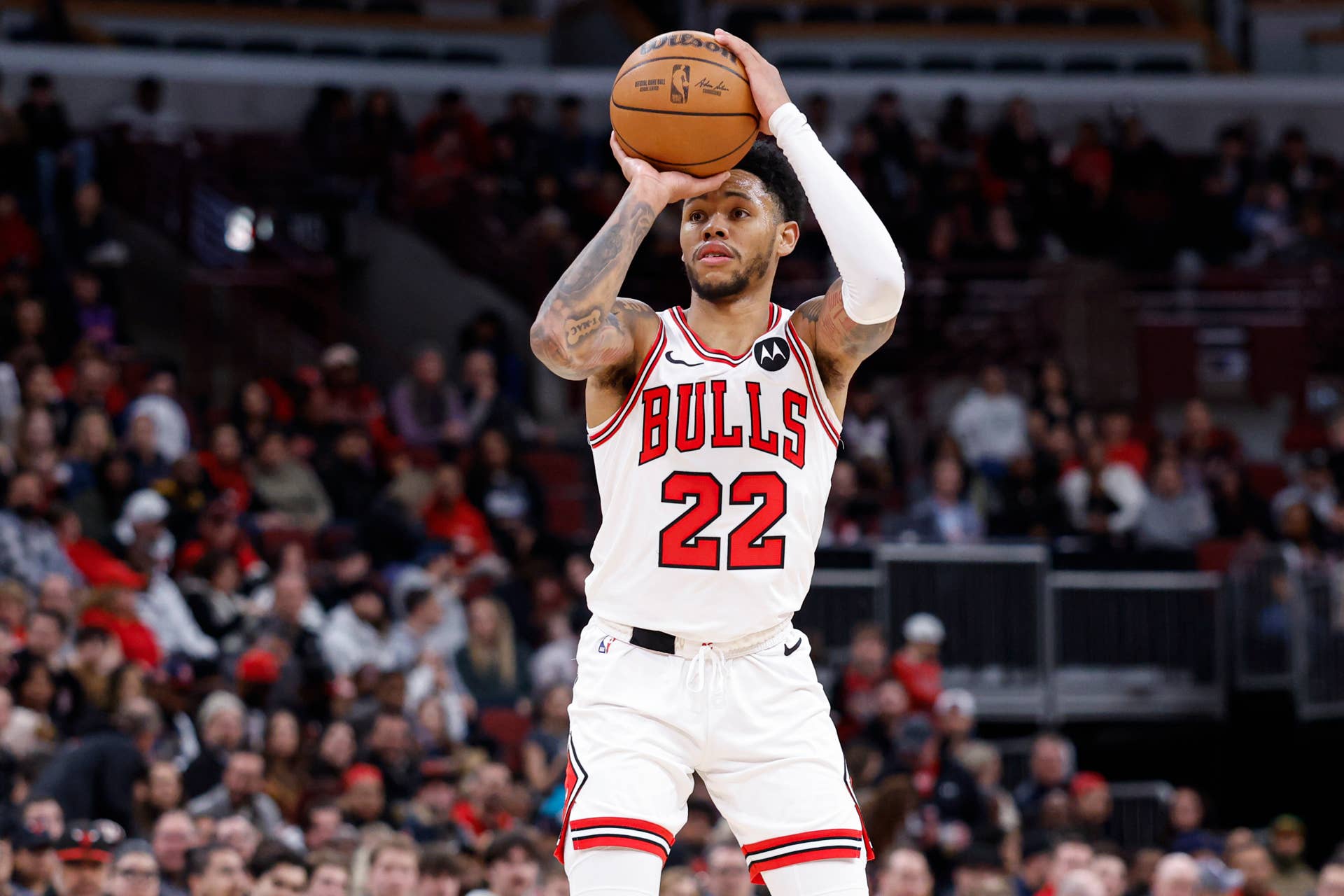
Portland drafted Simons in 2018, developed him slowly, then finally gave him the starting role. He responded with back-to-back 20-plus point seasons as the lead guard, peaking at 21.3 points, 3.8 assists, and 2.7 threes per game in 2023-24. Then Boston traded for him, he embraced a sixth-man role off a championship contender's bench, and Chicago acquired him at the 2026 deadline for Nikola Vučević. In six games with the Bulls, he averaged 15.2 points and 3.0 assists, before a wrist injury ended his season early. The talent was never the question.
Simons becomes an unrestricted free agent in 2026. Chicago is the most logical re-signing destination. The Bulls are rebuilding with cap space and no established primary ball handler alongside Josh Giddey. That is precisely the opening Simons needs. He shot 38 percent from three for his career, dropped 39 points on Boston in January 2026, and has proven repeatedly what happens when he runs an offense with real usage.
Chicago's rebuilding environment, which is filled with no stars demanding the ball, new management prioritizing development, is where a scorer like Simons finally gets uncontested lead guard minutes. Confirm the starting role, then draft him in Rounds 4 to 5. His sixth-man pricing from prior seasons tells you nothing about what Chicago offers him.
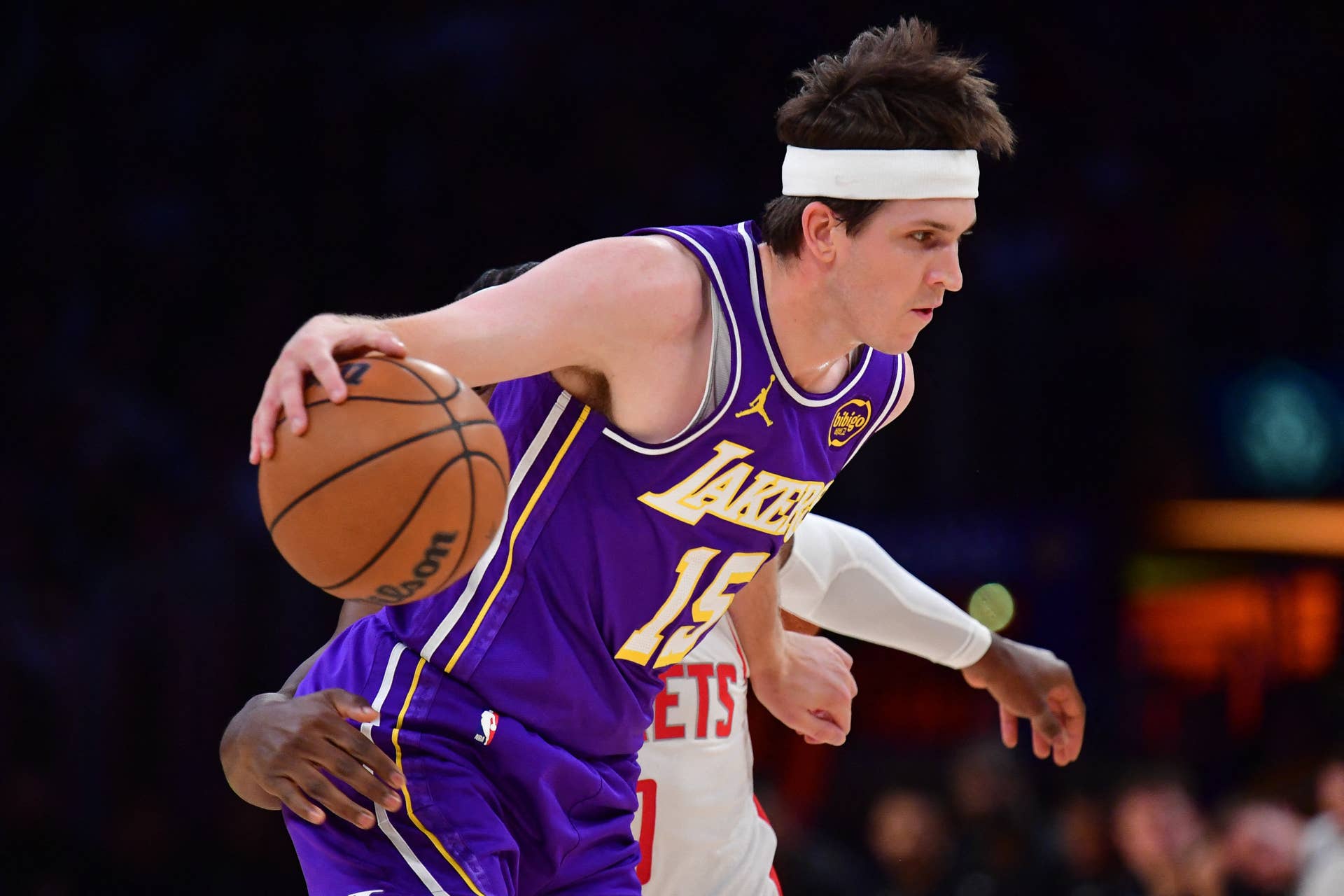
Austin Reaves: The Highest-Stakes Landing Spot Decision on This List.
Gary A. Vasquez-Imagn Images
Austin Reaves averaged 23.3 points on 49 percent shooting, 5.5 assists, 4.7 rebounds, and 1.1 steals per game in 2025-26. Those were career highs across the board. He holds a $14.9 million player option that must be decided by June 29, and every indication is he declines it. The Athletic's Dan Woike reported that multiple league executives expect the Brooklyn Nets to offer Reaves a four-year, $178.5 million maximum contract. The Lakers, meanwhile, can offer a projected five-year, $239 million deal, and league sources believe if Los Angeles gets close to his market value, he stays.
In Los Angeles, Reaves continues sharing the ball with Luka Dončić, who is one of the most possession-heavy offensive engines alive. The counting stats are excellent, but usage has a ceiling. He profiles as a reliable OF2: 20-plus points, five-plus assists, solid threes. In Brooklyn, he becomes the primary ball handler on a rebuilding team for the first time in his career. Detroit could view him as a complementary scorer beside Cade Cunningham, while Atlanta sees another high-level creator next to Trae Young, but Brooklyn is the scenario where usage spikes hardest and fastest. That usage spike is two to three fantasy rounds of value overnight.
Draft instruction: Rounds 4 to 5 if he re-signs in Los Angeles. Rounds 2 to 3 if he lands in Brooklyn or any primary-option role. Reaves has repeatedly stated he would like to play his entire career with the Lakers, but stated preferences and maximum contracts are two different conversations. Do not finalize your draft board until this one resolves. Check how the Austin Reaves free agency decision could ripple through your entire 2026-27 draft board before you lock anything in.
How to Build Your Draft Board Around Free Agency Without Getting Burned
Free agency opens June 30. What happens in the first 72 hours after that is where fantasy leagues are actually won. Every player on this list is talented enough to produce top-60 overall fantasy value, but then, none of them are currently being drafted there. That gap between actual value and current draft price is the entire opportunity.
That should be enough to tell you to stop ranking players by talent. Start ranking them by confirmed role. Those are two completely different things, and the managers who confuse them are the ones reaching in round four for a player who ends up in a backup role.
Here is the board as it stands today. Kessler in Utah stays at Round 6, which means same rotation constraints, same ceiling. Kessler in Chicago or LA jumps immediately to Round 4. Eason in Houston stays at Round 8, he is talented but buried. Eason anywhere else with unchallenged starting minutes moves to Round 7. Mathurin without a confirmed starting role is a waiver wire conversation, full stop. Mathurin as a primary option on a cap-space team is a Round 6 pick with upside. Simons in Chicago with confirmed starting minutes is Round 4 to 5. Reaves is determined entirely by his zip code: Rounds 4 to 5 in LA, Rounds 2 to 3 anywhere else.
The winning move here is having your pre-signing tiers already mapped so that when each deal is announced, you update your board within 24 hours, way before your leaguemates do. Speed matters. Information advantages expire fast in the first week of free agency.
Questions About Instant Starters, Answered
Which 2026 NBA free agents have the highest upside as instant starters for fantasy basketball?
Walker Kessler, Tari Eason, Bennedict Mathurin, Anfernee Simons, and Austin Reaves have the clearest paths to gaining fantasy value through larger roles and increased minutes after free agency.
What happens to Walker Kessler's fantasy value if he leaves the Utah Jazz?
A move to a team that gives him 28 to 32 minutes as a featured center would elevate his value significantly because of his elite shot-blocking production.
Is Austin Reaves worth drafting in fantasy basketball 2026-27, and does his landing spot matter?
Yes. His fantasy value changes substantially depending on whether he remains with the Lakers or signs with a team where he becomes a primary offensive option.
How should I handle Tari Eason in my 2026-27 fantasy draft given his restricted free agency status?
His value depends heavily on role and minutes. A move into an uncontested starting position would make him a stronger mid-round target.
Is Anfernee Simons worth drafting in fantasy basketball 2026-27?
Yes. If he secures a starting role in Chicago, his scoring and three-point production support a meaningful rise in draft value.
When should I update my 2026-27 fantasy basketball draft board for free agency moves?
Draft boards should be adjusted as soon as signings become official because role changes can materially alter player value.


