


Everyone already knows AJ Dybantsa is special. The BYU freshman led the entire nation in scoring at 25.5 points per game, shot 51% from the field, and put up 894 total points, which was the third-most by any Division I freshman ever. That ceiling conversation is over. What dynasty managers actually need to solve heading into 2026-27 is the real analytical challenge: which second- and third-tier Fantasy Basketball 2026-27 dynasty stash prospects represent the most efficient use of a limited roster spot? Not every stash is equal.
A prospect worth rostering is not simply talented, the timeline to real production has to be short enough that holding the spot makes sense. Sitting on a player for three seasons while your competitors stack live contributors is a waste of roster space. Ceiling is already priced in at the top of every rookie draft. The actual market inefficiency comes in terms of timeline clarity and landing spot fit, which most managers consistently underprice.
What Makes a Prospect Worth a Dynasty Stash Spot Before Draft Night
The Three Filters That Separate Stash Value From Ceiling Hype
There are three things that turn a talented prospect into a genuine dynasty stash worth rostering. The first is the timeline. This refers to how many seasons before the player actually starts producing in scoring, assists, rebounds, steals, and the other categories your league counts. For most prospects in this class, a realistic timeline is year two or three before regular run arrives, often sped up by an injury elsewhere on the roster or a coaching change.
The second filter is the situation. Does the landing spot have a clear path to minutes? Minutes matter. Role matters. Category fit matters. A gifted player buried behind two established veterans for 24 months is not a stash, it is a mere placeholder. The third filter is floor, which looks into what happens if development stalls. Can you absorb being wrong, or does it crater your roster?
I do believe that situation outweighs the other two filters. That is because the timeline and floor are both downstream of the situation. A player in a bad landing spot cannot shorten his own timeline no matter how hard he works, and a bad situation dramatically lowers the floor because the path to minutes disappears. Ceiling is already priced in at the top of every rookie draft. That is why managers should prioritize ceiling in dynasty formats, but then opportunity can change quickly in the NBA. The stash market is specifically where situation creates mispricing. Managers consistently overpay for raw ceiling and underpay for a clean, immediate path to production.
Also, stashing before the draft means paying a premium for an unknown landing spot. Waiting until after June 23-24 adds clarity but kills the pricing discount. Fantasy managers in dynasty leagues should get a look at players in Summer League before deciding if they are good stash candidates. If your roster is deep, wait. If you are thin and can absorb a swing on the unknown, then take advantage of the discount. Check out our piece on the 2026 NBA Draft prospects with the highest fantasy ceilings for the full ceiling picture before you make your stash picks.
Tier 1 Stashes: High-Ceiling Prospects With Plausible Year 1 Paths to Minutes
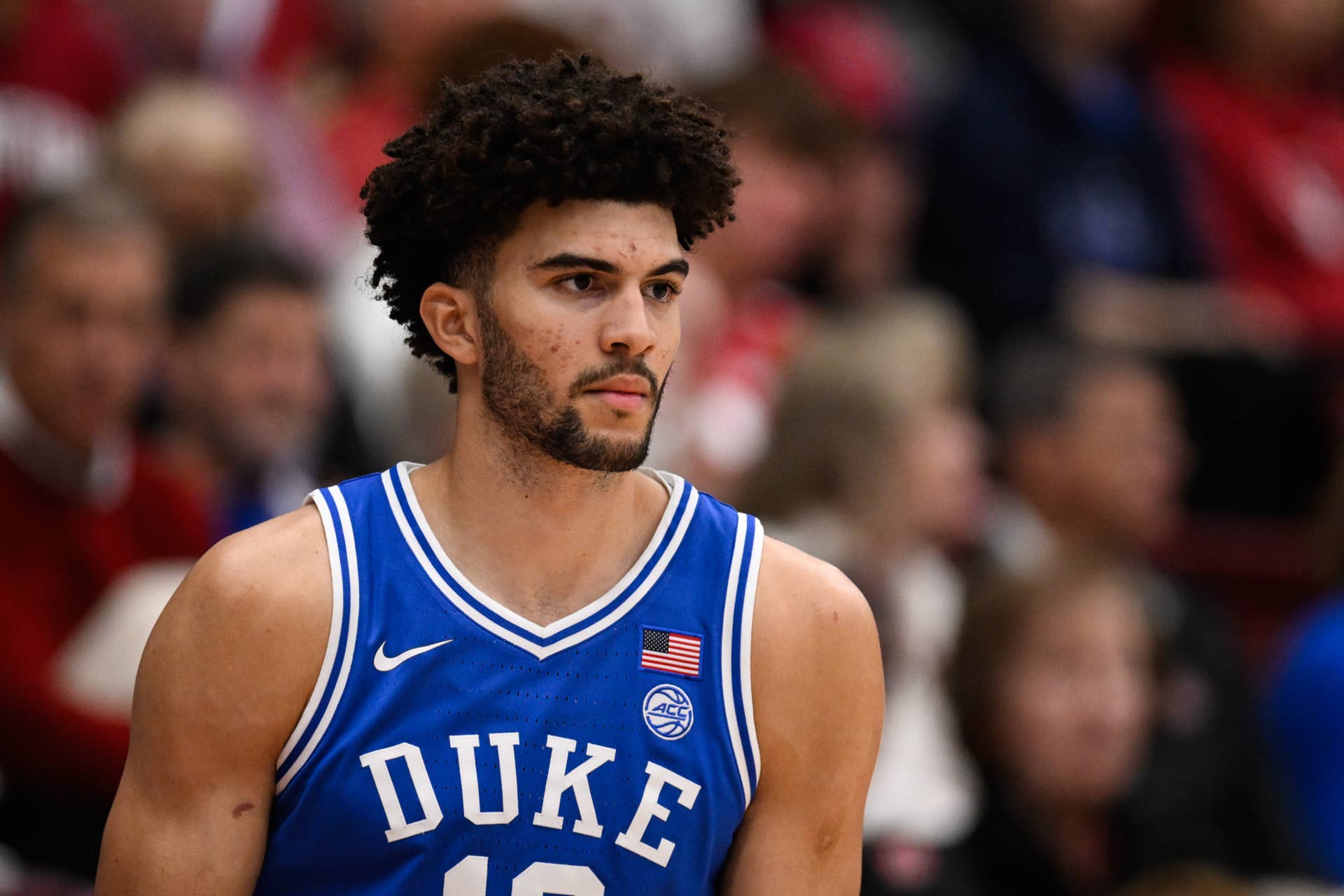
Eakin Howard-Imagn Images
Why Landing Spot Determines Whether Tier 1 Ceiling Becomes Year 1 Production
The draft is done. The top four unfolded exactly as expected: AJ Dybantsa went No. 1 to Washington, Darryn Peterson No. 2 to Utah, Cameron Boozer No. 3 to Memphis, and Caleb Wilson No. 4 to Chicago. No surprises, no drama at the top. Which means dynasty managers can stop guessing and start making actual decisions based on real situations.
Start with Dybantsa in Washington. The Wizards gave him a talented supporting cast on paper. His new teammates include Trae Young, Anthony Davis, Alex Sarr, Kyshawn George, Tre Johnson, Bilal Coulibaly, and Will Riley. But here is the tension every fantasy manager needs to sit with: Trae Young just signed a four-year, $212 million extension in Washington. Young is a ball-dominant guard who averaged 28-plus points and nine-plus assists per game in 2025-26. Dybantsa is a point-forward who needs the ball to generate his fantasy value. They can coexist. Dybantsa's size and off-ball scoring give them a path, but Year 1 usage will almost certainly be capped below what Dybantsa would generate as a true primary option. His dynasty rookie ADP is 1.01 everywhere. That price is correct long-term. For Year 1 fantasy returns, expect a productive but slightly throttled line, something closer to 18-6-4 than 25-7-5, while he learns to operate within a system where Young holds the keys.
Now Peterson to Utah. Peterson should slot immediately into Utah's lineup as the starting shooting guard next to Keyonte George, offering versatility because of his ability to play on or off the ball. Utah already has Lauri Markkanen and Walker Kessler occupying the frontcourt, meaning Peterson is not walking into a star vacuum, he is walking into a structured rotation where his lane is the wing scoring role. That is actually cleaner than it sounds. He has since said an increase in his creatine intake was responsible for his cramping issues at Kansas, which resolves the biggest health concern that shadowed his pre-draft process. Still, he played only 24 games as a Kansas freshman, averaging 20.2 points, 4.2 rebounds, and 1.4 steals on 44/38/83 shooting splits. Those numbers are excellent when healthy. The durability question will follow him until he strings together 60-plus games in an NBA season.
Now Boozer in Memphis. Boozer should immediately slot into Memphis' lineup as the starting power forward next to Zach Edey in the frontcourt, capable of playing in a five-out offense because of his ability to stretch the floor and be a playmaker out of the low or high block. Memphis went 25-57 in 2025-26 and is widely expected to trade Ja Morant this offseason, meaning Boozer is not competing for touches with a franchise cornerstone, he is becoming one. He averaged 22.5 points, 10.2 rebounds, and 4.1 assists at Duke while shooting 55.6 percent from the field and 39.1 percent from three, and did it across all 38 games of his freshman season.
Peterson is the most overpriced Tier 1 prospect relative to his actual Year 1 fantasy probability, and Boozer is the most underpriced. Peterson goes at 1.02 pricing in dynasty rookie drafts and carries a legitimate injury history, a backcourt partner who needs the ball, and a supporting cast experienced enough to limit his touches early. Boozer goes at 1.03 pricing, has zero durability questions, walks into the clearest starting role of the three, and enters a rebuild in Memphis where the franchise needs him to produce now. The situation filter wins again. For a full breakdown of which landing spots create the fastest fantasy paths, this piece on the best landing spots for 2026 NBA Draft prospects is worth reading before you finalize your rookie draft board.
All three belong on dynasty rosters at their current prices. But dollar for dollar, Boozer's Year 1 production floor is the strongest of the three, and any manager paying 1.02 for Peterson should go in with realistic expectations. A strong season is absolutely possible, but a crowded Utah roster and an injury history make it a less certain bet than the price suggests.
Tier 2 Stashes: Second-Round Targets With Underrated Timeline Clarity
Finding Year 2 Breakout Candidates the Market Is Mispricing Now
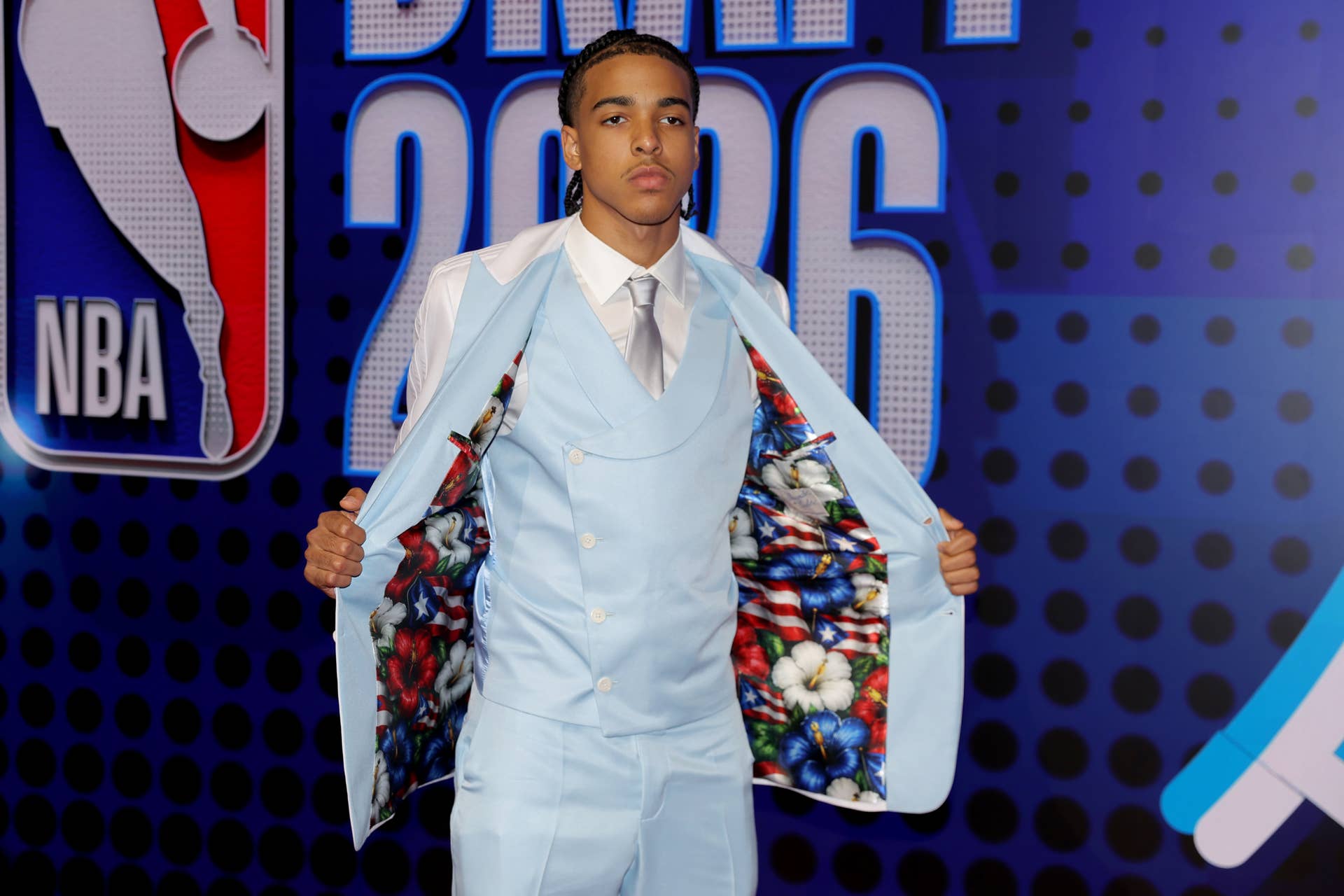
Brad Penner-Imagn Images
Mikel Brown Jr., PG — Brooklyn Nets (Pick No. 6)
Brown will take over as the lead guard on a roster being built around him and Egor Dëmin. That is not speculation about a future role; it is the organizational plan right now. There is no incumbent franchise guard to block him, no star demanding the ball ahead of him. At Louisville, Brown averaged 18.2 points, 3.3 rebounds, 4.7 assists, and 1.2 steals while shooting 41 percent from the field and connecting on 2.6 three-pointers per game despite missing 14 games to a back injury. The skill set that translates fastest in fantasy is the one dynasty managers need most from guards: playmaking combined with aggressive rim pressure. He averaged six assists per game through the first month of his freshman season before shifting to primary scorer, which tells you the playmaking is already NBA-caliber when he is not being asked to carry 35 percent of an offense by himself.
The back injury is the legitimate concern, same as Peterson's cramping history flags a caution, but the Brooklyn situation is cleaner than any other guard landing spot in this draft. Brown will command the point guard role as a starter from opening night because the Nets simply do not have anyone better positioned to run the offense. In dynasty rookie drafts, he is going in the 1.05 to 1.08 range. That is roughly 60 percent of the Tier 1 cost for a player with a similarly direct Year 1 path to assists, points, and steals. That is the value argument. Take it.
Keaton Wagler, SG/PG — Los Angeles Clippers (Pick No. 5)
Wagler is already in the standard dynasty conversation but is being undervalued because managers are fixating on one question: can someone who was a three-star recruit become an NBA contributor, rather than the more relevant question: What does his situation actually look like?
If Kawhi Leonard walks in free agency and Bennedict Mathurin does not re-sign, Wagler could realistically be looking at 30-plus minutes from opening night on a roster suddenly thin on wings and shot creation, making this a top-10 rookie fantasy situation. Both of those roster dominoes are legitimately in play. Leonard is 35 years old and has played 60-plus games in a season only twice since 2019. Mathurin's situation in LA has been lukewarm at best.
What translates fastest for Wagler in fantasy is three-point shooting and the shot creation to generate his own looks without needing the ball full-time. He started all 37 games at Illinois, averaging 17.9 points, 5.1 rebounds, and 4.2 assists while shooting 39.7 percent from three and 44.5 percent from the field. That three-point volume on high efficiency is immediately bankable in nine-category leagues. Wagler also played alongside Darius Garland for much of the draft process. The two can form a dynamic, young backcourt for a franchise hoping to win its first playoff series since 2021, and Garland's role as the primary facilitator means Wagler gets to hunt shots rather than run the offense himself. That is an efficient fantasy profile, not a dependent one.
In dynasty rookie drafts, Wagler lands in the 1.06 to 1.09 range. For a player who could be posting 30-minute nights from day one, that is a discount.
Kingston Flemings, PG — Atlanta Hawks (Pick No. 8)
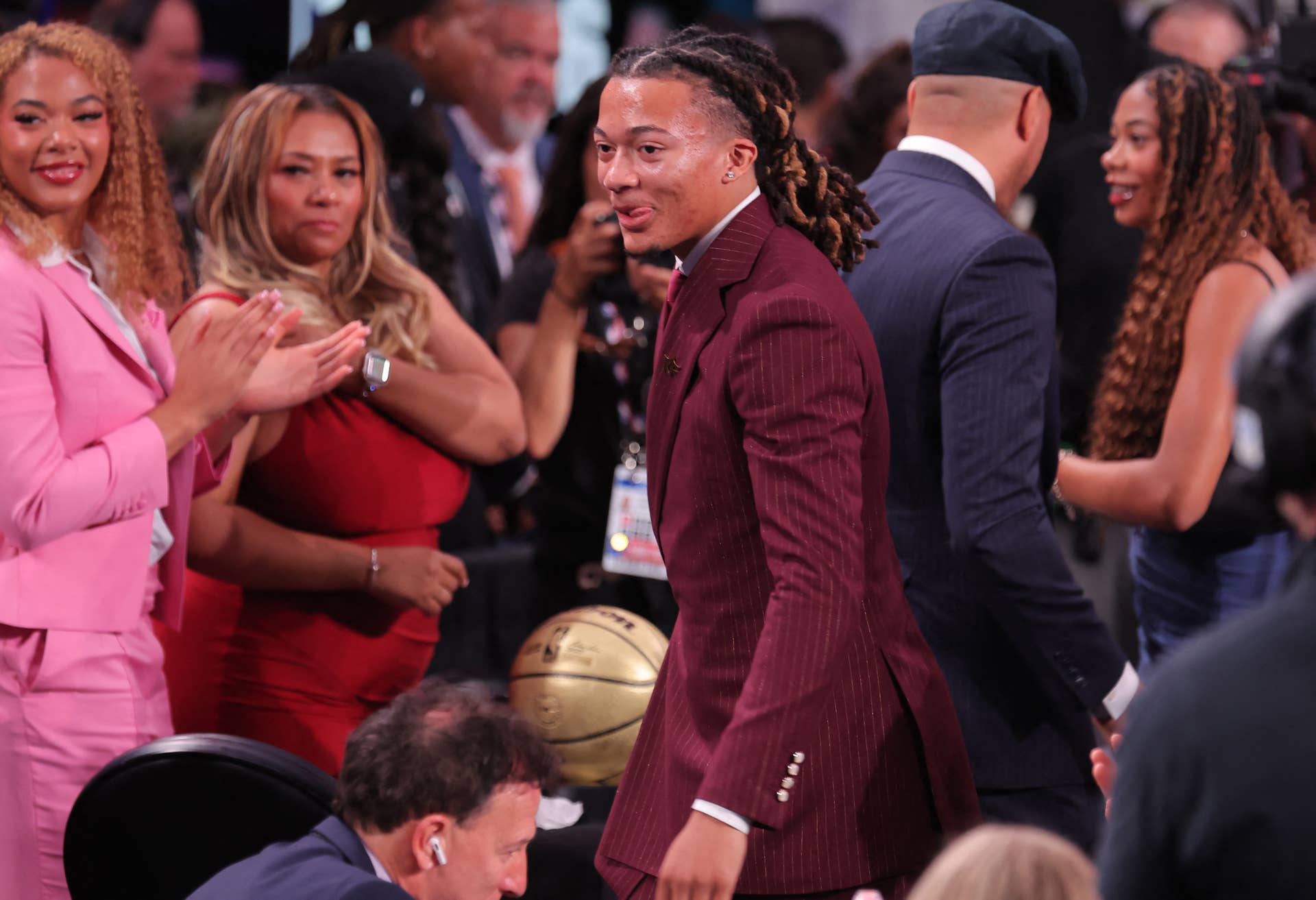
This is the name not getting enough attention in the standard dynasty stash conversation, and the post-draft situation is the reason to care now. Flemings averaged 16.1 points, 5.2 assists, 4.1 rebounds, and 1.5 steals per game at Houston while leading the Cougars in scoring, assists, and steals simultaneously. That is a four-category dynasty box stuffer on a freshman at a program that prides itself on system discipline.
The dynasty community is sleeping on him because Atlanta has CJ McCollum and Nickeil Alexander-Walker in the backcourt. That is fair in Year 1. But read the situation clearly: Atlanta opted for Flemings as the long-term solution at point guard, suggesting the organization prioritized additional playmaking for Jalen Johnson so they do not overtax their All-Star forward. That framing tells you exactly how this team views the player. He is the heir apparent at point guard, not a rotational wing. Atlanta's need for additional playmaking on the perimeter gives him a shot at achieving fantasy relevance as a rookie, and given McCollum's age (he turns 35 in September), the door to primary minutes could open faster than managers are pricing in.
The skill that translates first is defensive statistics. Experts have compared Flemings to De'Aaron Fox: a guard whose steals and assists drive his fantasy value, and that is exactly the production profile Flemings brings. Steals at 1.5 per game in college on a team with multiple high-usage guards around him points toward 1.2-plus at the NBA level from the jump, even in a reserve role. In dynasty rookie drafts, Flemings is currently going 1.09 to 1.13. That is almost half the cost of a Tier 1 pick for a player on a team that has already publicly declared him their point guard of the future.
That gap does not last. Check out the piece on rookie prospects climbing 2026 fantasy basketball draft boards. Flemings is exactly the profile that shows up on those boards as the season approaches and the Atlanta situation becomes clearer.
Stash Now, Cash Later
Dynasty stashing is simple when you realize that you are betting on a player getting minutes sooner than their price suggests. This class makes that bet easier than most. The picks 5 through 8 group landed in the best situations of any second-tier prospects in recent memory. They have open rosters, clear roles, and immediate organizational commitment. And they are going in rookie drafts at roughly half the cost of the top four. That efficiency gap is the whole argument. Before you finalize anything, though, Summer League runs July 9-19 in Las Vegas. Depth charts get real there. Keep checking Athlon's dynasty coverage as those games unfold, that is when the pricing on these names will move.
Questions About Fantasy Basketball Dynasty Stashes, Answered
What is a dynasty stash in fantasy basketball?
A dynasty stash is a player rostered in a dynasty fantasy basketball league primarily for future value rather than immediate production. These players are typically young prospects expected to become meaningful contributors in future seasons rather than the current one.
Which 2026 NBA Draft prospects are the best dynasty fantasy basketball stash targets?
AJ Dybantsa, Darryn Peterson, and Cameron Boozer represent the top tier because of their ceilings and projected roles, while Mikel Brown Jr., Keaton Wagler, and Kingston Flemings offer strong value because of their clearer paths to early minutes at lower acquisition costs.
Should I stash dynasty prospects before or after the NBA Draft?
Stashing before the draft offers a pricing discount but comes with uncertainty about landing spots. Waiting until after the draft provides greater clarity about role and opportunity, though the acquisition cost is often higher.
How do I evaluate timeline risk for dynasty fantasy basketball stash targets?
Timeline risk depends primarily on opportunity, role, and path to minutes. Prospects with clear rotational openings and immediate organizational commitment generally carry less risk than players blocked by established veterans.
How many rookie stashes should I carry on a dynasty fantasy basketball roster?
The ideal number depends on roster depth and league settings, but each stash should justify the opportunity cost of occupying a roster spot that could otherwise be used on an active contributor.
Is AJ Dybantsa worth a top-three pick in a 2026 dynasty rookie draft?
Yes. Dybantsa offers elite long-term upside and remains a worthy top-three selection, though his Year 1 production may be moderated by sharing offensive responsibilities with established veterans in Washington.


