


In a 12-team snake draft, Giannis Antetokounmpo costs you the 4th or 5th overall pick, and you live with that choice for the season. In a 12-team auction draft with a $200 budget, Giannis costs whatever the room decides he is worth. That price gets set by eleven other managers bidding with their guts, not by his actual production. This fantasy basketball auction draft gap between market price and real value is where titles get won. This guide breaks the season into three parts: how to split your $200 before the clock starts, which players the room will overpay or underpay for in 2026-27, and where the cheap, league-winning value hides late in the auction.
The Budget Framework — How to Allocate $200 Before the First Nomination
The Three Tier Rule and Why Most Managers Blow Their Budget in the First Hour
Most auction leagues hand every manager $200 to fill 13 to 15 roster spots. Before bidding starts, split that money into three tiers. Stars get $120 to $130, for two or three anchor players. In 2026-27 that group includes Victor Wembanyama, Nikola Jokic, Shai Gilgeous-Alexander, and Anthony Edwards.
Core contributors get $50 to $60, for four or five players in the $8 to $15 range. Value plays get $20 to $30, for six to eight players bought for $1 to $5 who outperform their price. Most managers blow $150 on two players in the first thirty minutes, then scramble through 8 remaining spots with $15 left.
That is the auction version of drafting the same position in rounds one and two. The manager with $50 left in the final third beats the manager with $10 every time, because $5 players who play like $15 players win leagues.
See how your format changes which players belong in the stars tier versus the core contributors tier of your auction budget.
The Market Mismatches — Who the Room Overpays and Who It Ignores
© Erik Williams-Imagn Images


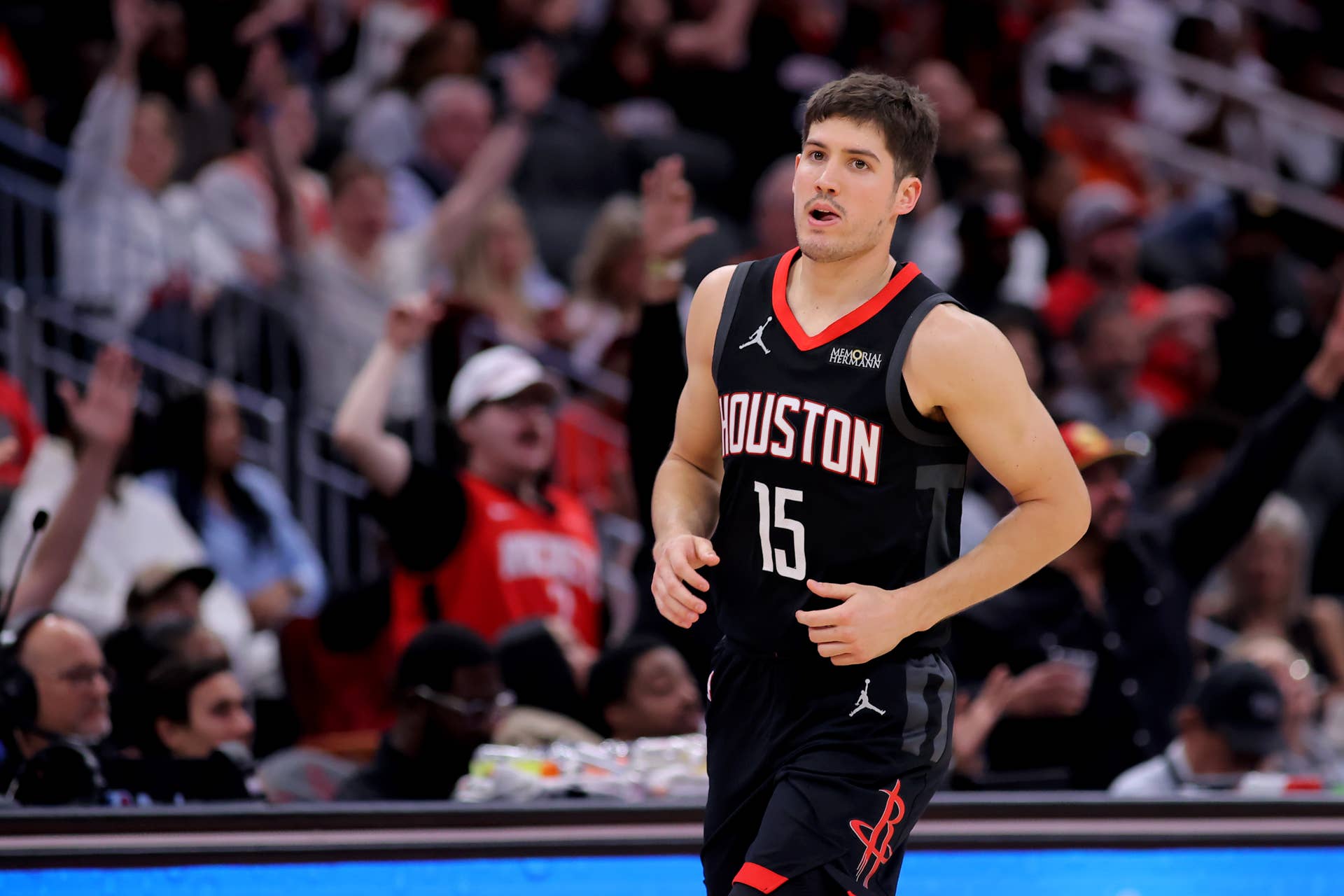
Giannis Costs Too Much in Category Leagues, Sheppard Costs Too Little Everywhere
Giannis is the biggest auction overpay risk in 2026-27 category leagues. His snake ADP sits top-5 to top-8, which pushes auction bids to $60-70 in a $200 budget. But his free throw percentage and zero threes create category damage his ADP ignores. Let a rival pay $65 for 30 points, 10 rebounds, and 6 assists; you can match that without the FT% drag for $45-50, freeing $15-20 for other tiers. See how Giannis's category profile in Miami, and the FT% cost that comes with him, shapes his auction value in category leagues.
Reed Sheppard is the underpay target. Casual managers see 13-15 points per game and bid $12-18. His 39% three-point volume, steals rate, and assist efficiency win categories all season. Bid $22-28 and you beat the room by $6-8 while still profiting by March.
Walker Kessler is the wildcard. His history of labrum injuries suppresses bids to $10-18 despite 12.2 rebounds and 2.4 blocks as a starter. If he lands a starting role, pay $20-25 before the room adjusts.
Nominate Giannis first. You spend $1, drain $65 from a rival, and walk into the middle rounds with a real budget edge.
The Endgame — Where Auction Leagues Are Actually Won
© Mady Mertens-Imagn Images


The Final Third of the Auction and the Five Players Worth Fighting For at $5
The final third of an auction is where titles get won. A player worth $20 early can drop to $4-6 once competitors run dry on budget. If you still have money left here, you get to be the one setting prices, rather than being a leftover buyer.
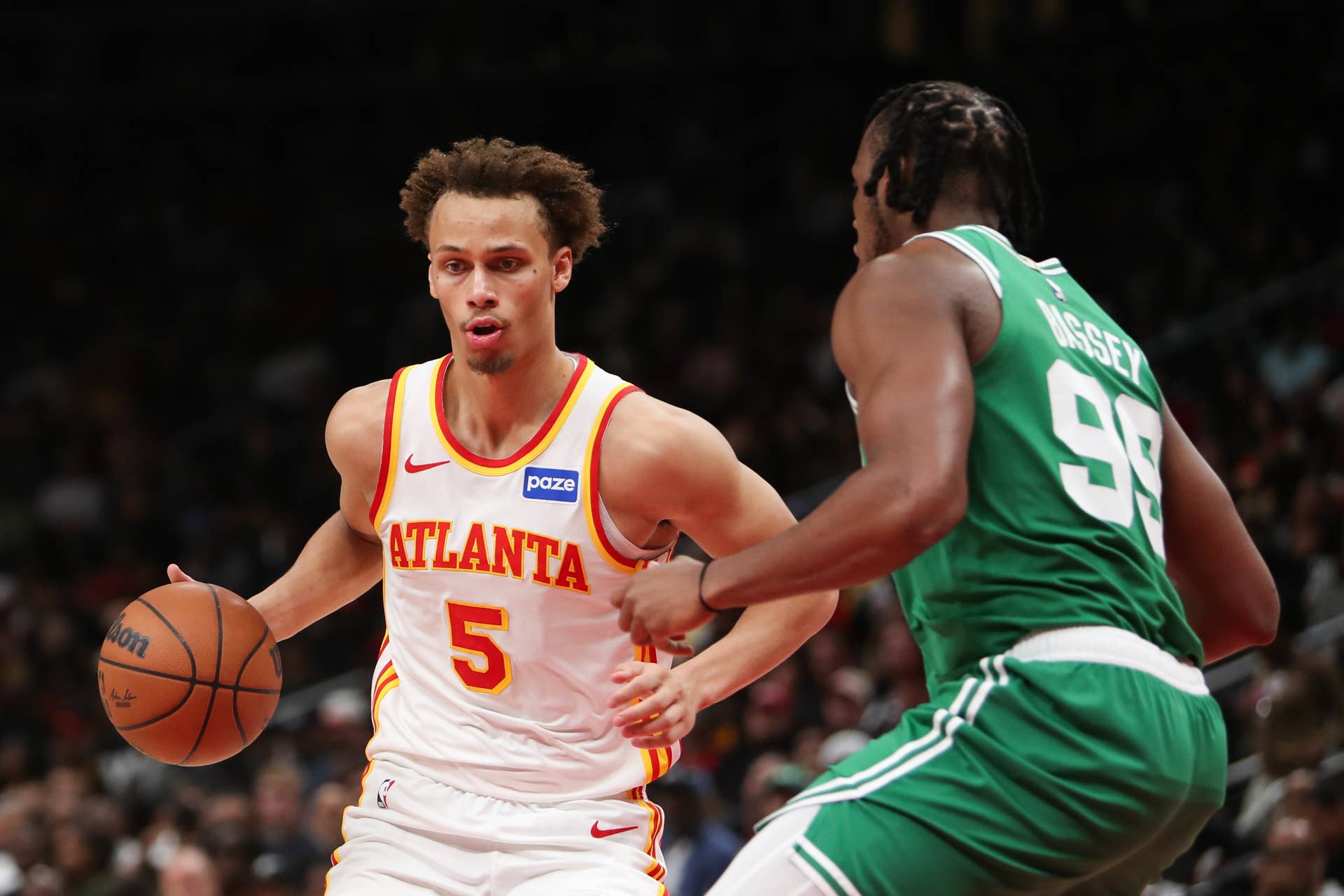
Dyson Daniels fits this perfectly. Modest scoring, elite steals, gets nominated mid-auction, draws $8-14 from two or three managers, then settles around $10 for a true steals anchor.
Five players the market underprices by $6-8 this cycle: Daniels (target $10-12), Jalen Williams (target $14-18), Herbert Jones (target $4-6), Naz Reid (target $8-10), and Onyeka Okongwu (target $9-12). Each wins specific categories, steals, blocks, threes, or assists, at a fraction of star pricing.
Stars anchor volume across categories. Endgame specialists patch the categories stars don't win, like steals or threes. That combination beats both stars-only and bargain-only rosters.
Never forget the $1 floor. Late in the pool, real contributors like Brandin Podziemski go for $1-3 simply because nobody has money left to bid. See which post-Draft confirmed opportunities translate directly to auction endgame value before the room fully adjusts.
Watch Your Prices, Get Value
Snake drafts reward a sharp board. Auction drafts reward a sharp budget. The manager who walks in with a clear tier split, a nomination plan built to drain rivals' money first, and a specific list of mismatches will beat the manager who just bids on names they like. Giannis will cost too much in category leagues. Sheppard will cost too little. Kessler's injury history will keep his price below his production once he starts. And the final third of the room will hand out most of your category-winning roster for $1-10 a player.
Stick to those four rules and your $200 simply does more work. Keep checking Athlon's ongoing 2026-27 Fantasy Basketball coverage for updated auction values as free agency and training camp unfold.
Questions About Auction Drafts, Answered
How do you win a fantasy basketball auction draft?
Winning a fantasy basketball auction draft starts with disciplined budget allocation before bidding begins. Split a $200 budget into stars, core contributors, and value picks, nominate expensive players you do not want early to drain opponents' budgets, and preserve enough money for the final third of the auction, where the best dollar-for-production values typically emerge.
What is the best fantasy basketball auction budget strategy for 2026-27?
A strong starting framework is to allocate roughly $120-130 to star players, $50-60 to core contributors, and $20-30 to value picks. Managers who avoid overspending early and enter the final stages of the auction with meaningful budget flexibility are positioned to secure better values than opponents who have already exhausted their funds.
Is Giannis Antetokounmpo worth his auction price in 2026-27 fantasy basketball?
In category leagues, Giannis Antetokounmpo is presented as an auction overpay because premium bidding reflects his counting stats while overlooking the impact of his free throw percentage and limited three-point production. Letting another manager pay top dollar can create $15-20 of additional budget to strengthen the rest of the roster.
What is Reed Sheppard's auction value in 2026-27 fantasy basketball?
Reed Sheppard is identified as one of the strongest auction bargains. While many managers may value him in the $12-18 range, a target bid of $22-28 is justified because his three-point shooting, steals, and assist efficiency provide category production that exceeds his expected auction cost over a full season.
What is the nomination strategy in fantasy basketball auction drafts?
An effective nomination strategy is to put expensive players you do not intend to roster on the board early. Nominating a player such as Giannis Antetokounmpo can force another manager to commit a large portion of their budget, leaving you with greater financial flexibility later in the auction when better values become available.
Who are the best auction value targets in 2026-27 fantasy basketball?
Reed Sheppard, Dyson Daniels, and Walker Kessler stand out as value targets because their expected auction prices may not fully reflect their category impact. Daniels provides elite defensive production, Sheppard offers efficient category contributions, and Kessler could outperform his price if he secures a starting role.


