


Name this player: Average exit velocity: 91.8 mph. Hard-hit rate of 42 percent. Barrel rate of 13.2 percent. His wOBA (weighted on-base percentage) is .315.
Those numbers belong to the biggest hard-luck player in Major League Baseball, Ke'Bryan Hayes. I won’t tell you that when he’s right, Hayes is a 30/30 player, but he is as clean a positive-regression buy-low candidate as you will find in 2026 fantasy baseball right now. Looking at his full Statcast breakdown and doing the regression math will lead anyone to the exact acquisition strategy that follows below.
The Numbers That Prove Hayes Is Being Robbed
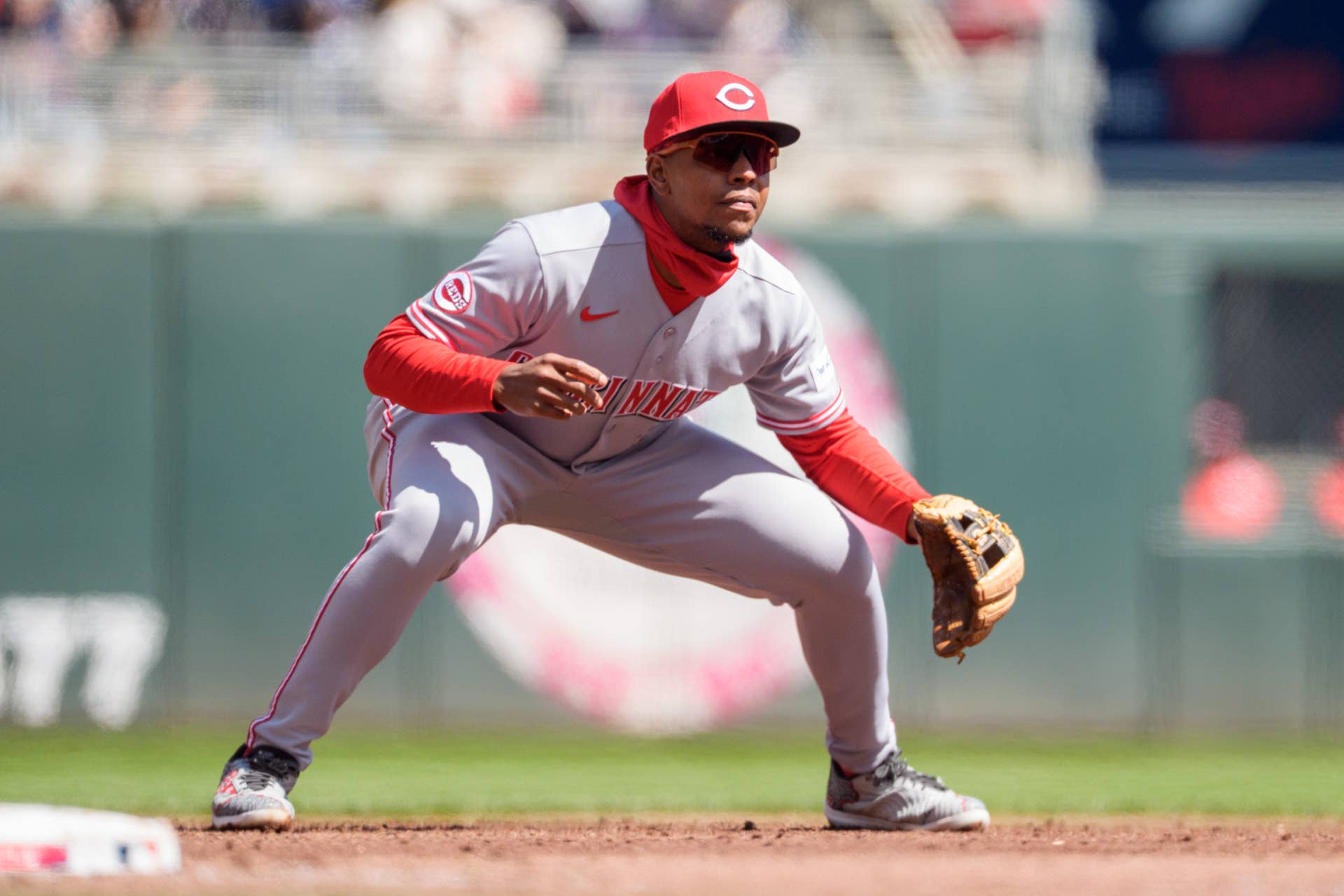
Historic Luck Gap on Contact Quality
Let’s look at Hayes’ numbers first, compared to league average, through May 5.
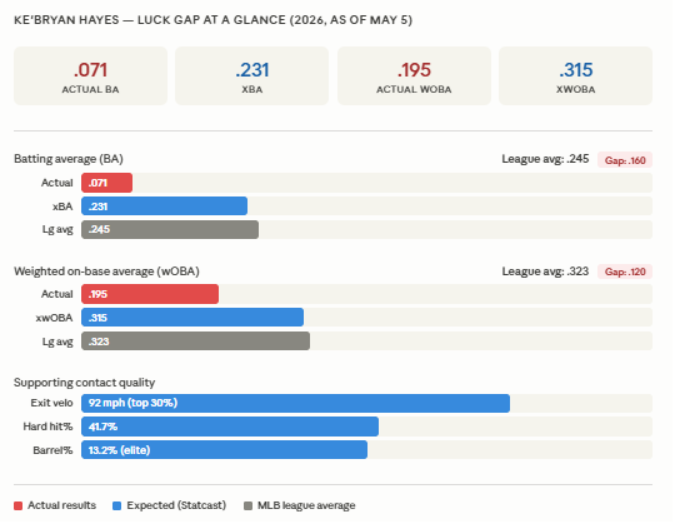
The most significant numbers above are Hayes’ weighted on-base percentage (wOBA) and the expected wOBA (xwOBA). The .120 gap between those two numbers is the largest in the major leagues and suggests that a serious turnaround is overdue.
His xBA of .231 — while still nothing to write home about — is miles higher than his minuscule .071 batting average. But the regression math of xBA and wOBA based on his metrics point directly to a dramatic turnaround any day now.
Hayes’ Historical Performance and Realistic Expectations
To be clear, Ke'Bryan Hayes will never be the MVP of your fantasy team. His career has been marked by disappointment, injuries, and dashed expectations, so he will be on the radar of very few fantasy baseball owners.
Last year, his age-27 season, he played in 152 games, which was by far the highest number he’s achieved. He hit .235 with 5 HR, 49 RBI, and 12 steals. Again, numbers that would only make his mother proud. In 124 games in 2023, he did hit .271 with 15 HR, 61 RBI, and 10 stolen bases—a notable statline.
But that was three seasons ago and through May 5, Hayes is hitting .121 with 2 HR, 3 total RBI, and no steals yet.
Exact 2026 Buy-Low Strategy When and How to Acquire Hayes
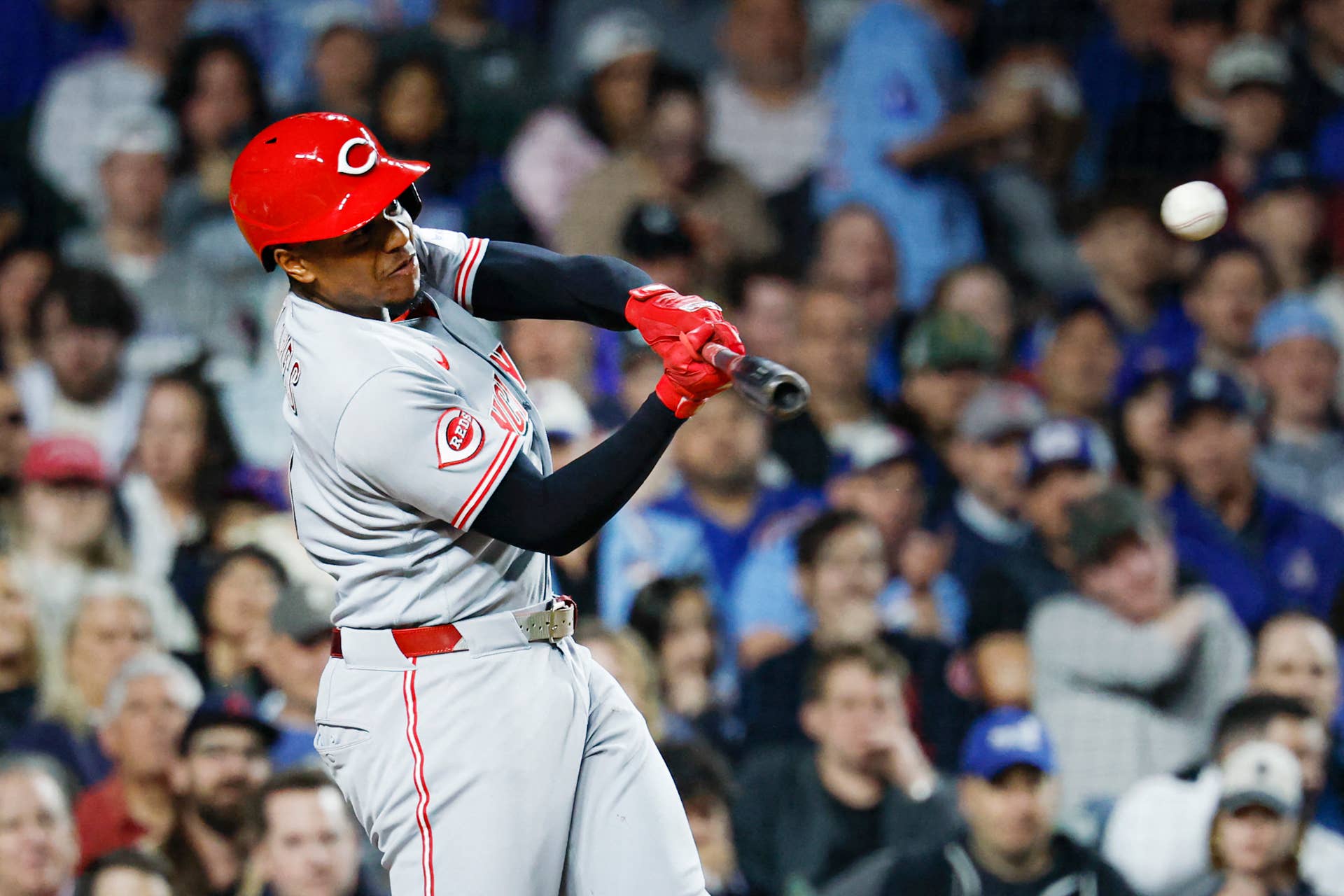
Kamil Krzaczynski-Imagn Images
Trade Targets, and Waiver Priority
Even if you forecast 10 HR and a similar number of steals, which wouldn’t be bad backup numbers on your team at 3B, Hayes is showing other negative signs.
His BABIP of .123 (.300 career) reflects many things. His ground-ball rate has plummeted from 49 percent to 34.7 percent. As you might guess, his fly-ball rate has jumped to 48 percent from 32.5 percent. His launch angle has more than doubled to 17.4 degrees from 8.5 degrees last season. The 17.4 is higher than even 2023’s 13.2 mark. His 91.3 exit velocity is up, but still below the 2023 mark of 92.2 mph.
Clearly Hayes is intentionally hitting more fly balls in hopes of returning to a 15-home run season. His 12 percent barrel rate is about what you’d like to see from someone who can hit the long ball.
Assuming the Reds coaching staff is on board with the fly-ball-heavy approach, don’t expect Hayes to be benched for performance, so he’s worth a sneaky stash if you have a deep bench and a thick skin. Particularly if your league permits daily lineup changes and Hayes enjoys a 3-hit night or slams 2 HR in one game, I would not be surprised to see a hot streak unfold.
The Bottom Line on Ke’Bryan Hayes
Ke'Bryan Hayes is being robbed by the largest luck gap in baseball right now. Even if he fully reverses that luck to even league average (though I’d expect the pendulum to swing above league average for at least a little time), it will be notable to you and others in your league.
If you’ve already picked him up, been teased by teammates, and he goes on a one-week tear, you’ll be able to sell high on him and fill a longer-term need on your team.
Hayes won’t win you a fantasy championship, but can be a key temporary piece of the puzzle if you time it right.
The Key Questions on Ke’Bryan Hayes, Answered
Why is Ke'Bryan Hayes' batting average so low despite strong expected metrics?
His .071 actual BA sits 160 points below his .231 xBA. That is the widest gap in baseball and is not sustainable.
Is Ke'Bryan Hayes a legitimate buy-low candidate in 2026?
Yes. This is one of the cleanest positive-regression opportunities you will find all season.
When should I add or trade for Hayes?
Now, before his hits start falling and his trade value doubles overnight.
What are the biggest risks with buying low on Hayes?
Minimal. His batted-ball quality is so strong that even modest regression will produce strong results.
How much should Hayes' production improve?
Expect his wOBA to climb toward .290 and his batting average to normalize well above .200 once the luck evens out.
Is Hayes worth rostering in shallow 10- or 12-team leagues?
Absolutely. His upside once the luck evens out makes him a must-add even in shallower formats.


