


Every fantasy manager already knows how to read a wOBA-versus-xwOBA gap. That number tells you when a hitter got unlucky, a batted ball that should have been a double turning into a lineout, and the fix is patience.
HardHit% versus wOBA is a blunter, more useful question: is this guy actually hitting the ball hard, full stop, regardless of what the model expected from any single swing. When a hitter's exit velocity numbers rank near the top of the league and his batting line still looks replacement level, that is not luck. That is a hitter whose raw power has not found its shape yet, and the fix depends on figuring out why.
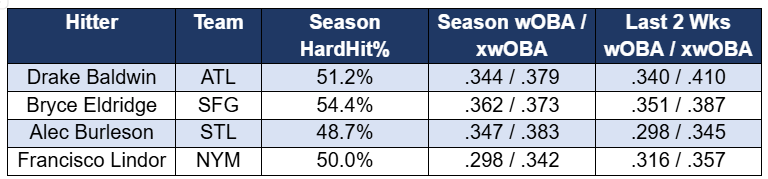
Four names clear that bar right now through games played July 12. Each one is still sitting on a real gap between how hard they are hitting the ball and what the box score shows for it, and each one has a slightly different reason the two have not lined up yet.
Drake Baldwin Is Hitting Rockets Into the Ground
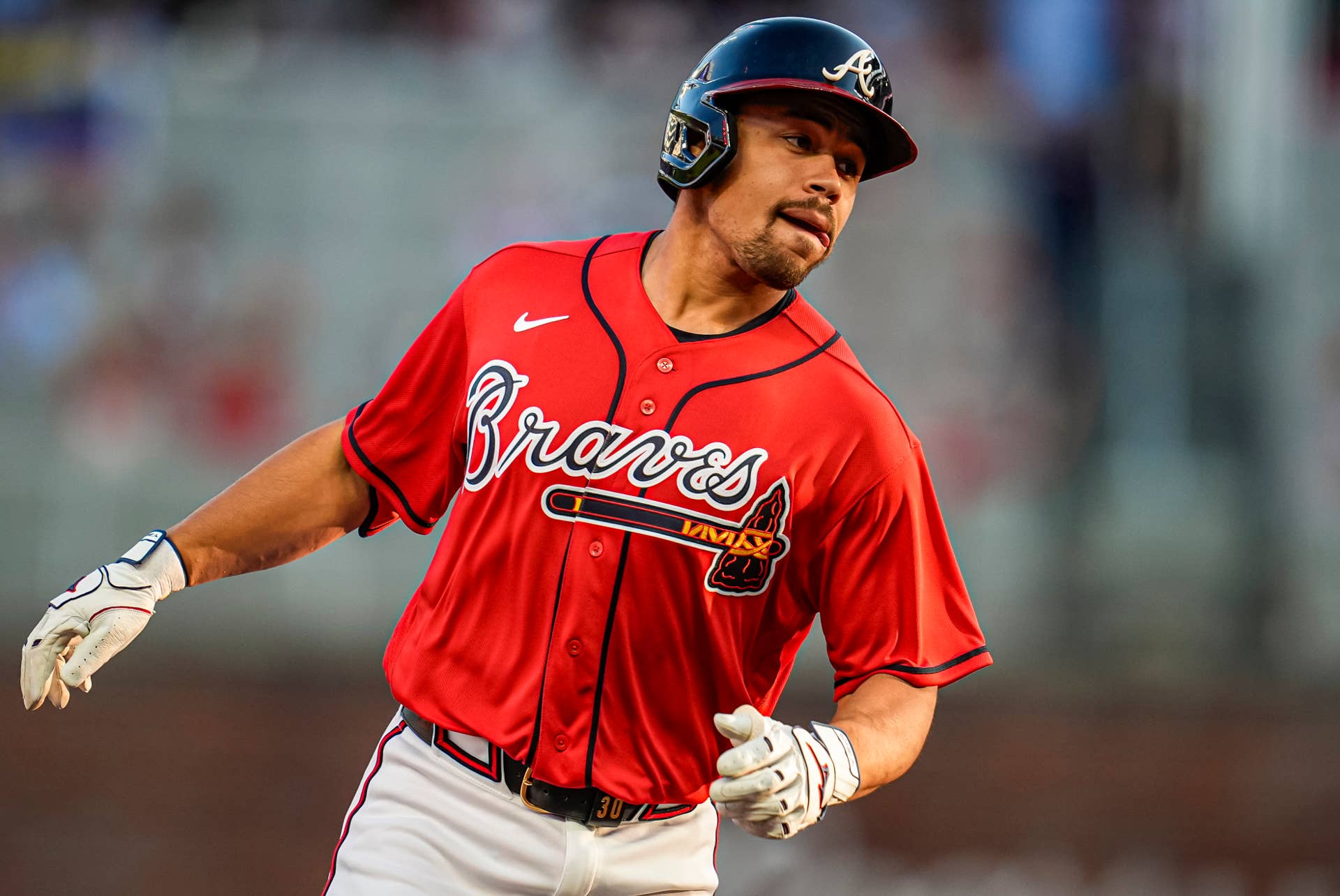
Dale Zanine-Imagn Images
Baldwin's exit velocity says he belongs in the same neighborhood as the game's best power hitters, a 51.2 percent hard-hit rate that ranks inside the top 25 in baseball, and his .344 wOBA does not remotely reflect it. The gap actually widened over his most recent two weeks, a .340 wOBA against a .410 xwOBA, even as his hard-hit rate climbed to 57.9 percent. The batted-ball data tells you why. His ground-ball rate sits at 45.5 percent, well above league average, which means a real chunk of his hardest-hit contact is getting mashed directly into the dirt instead of the gap. Elite exit velocity on a grounder is still an out most of the time. Atlanta's catching situation gives him the playing time to work through it, and if his launch angle climbs even a couple of degrees, the power numbers catch up fast.
Bryce Eldridge Is a Rookie Whose Price Has Not Caught Up to the Sample
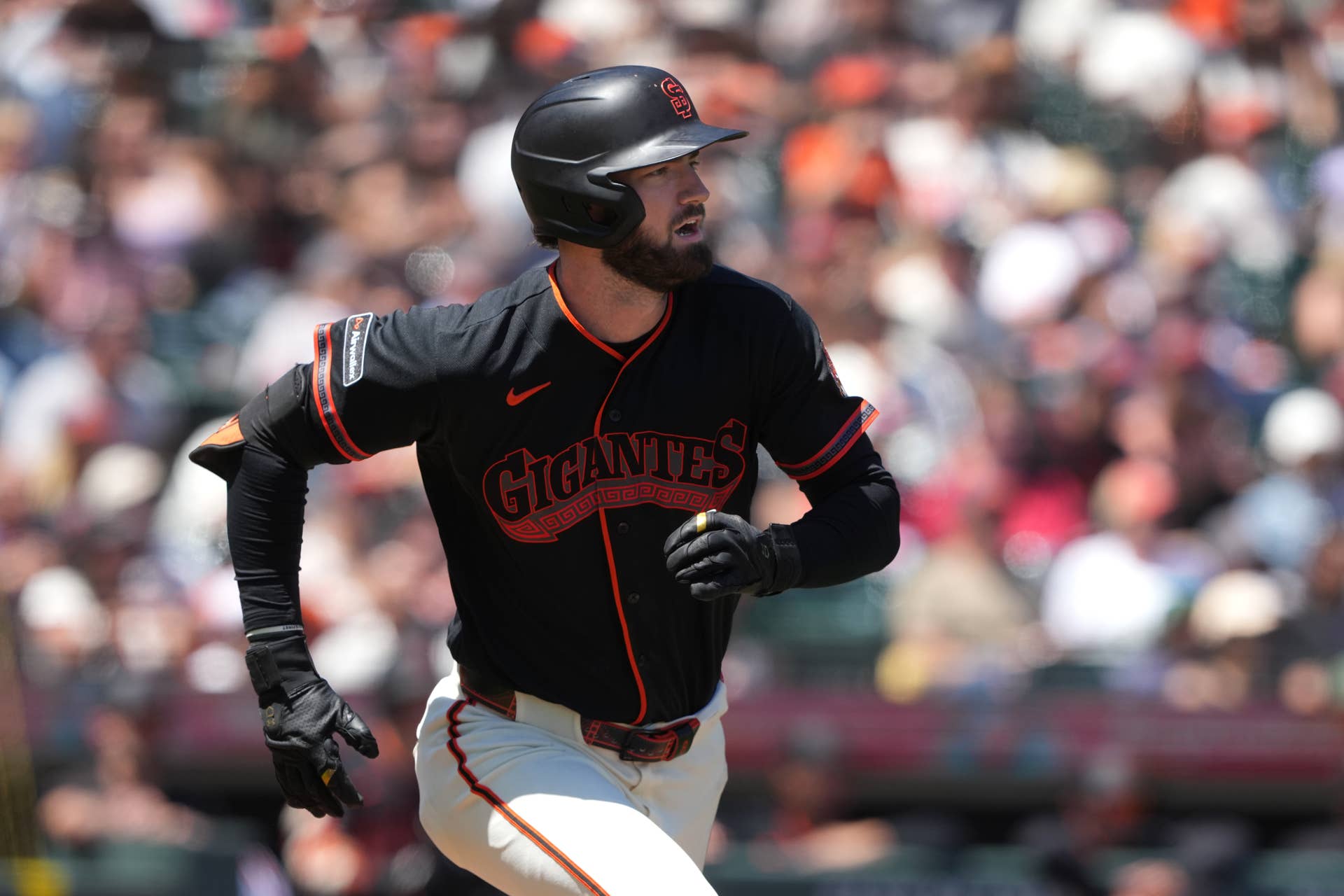
Darren Yamashita-Imagn Images
Eldridge ranks eighth in baseball in hard-hit rate at 54.4 percent, a number that belongs next to established sluggers, not a 217-plate-appearance rookie. His season-long wOBA-xwOBA gap is modest, about a point below expected, but his most recent two weeks show it widening, a .351 wOBA against a .387 xwOBA. Nothing about his underlying shape looks broken, a healthy pull rate and a reasonable ground-ball mix, which is usually the tell that this is a small-sample lull rather than a real mechanical issue. A crowded San Francisco outfield and a limited track record have kept his price down. The exit velocity says that will not last, and rookies who hit the ball this hard this consistently tend to get expensive fast once the counting stats catch up.
Alec Burleson's Contact Quality Is Real, and So Is the Ground-Ball Problem
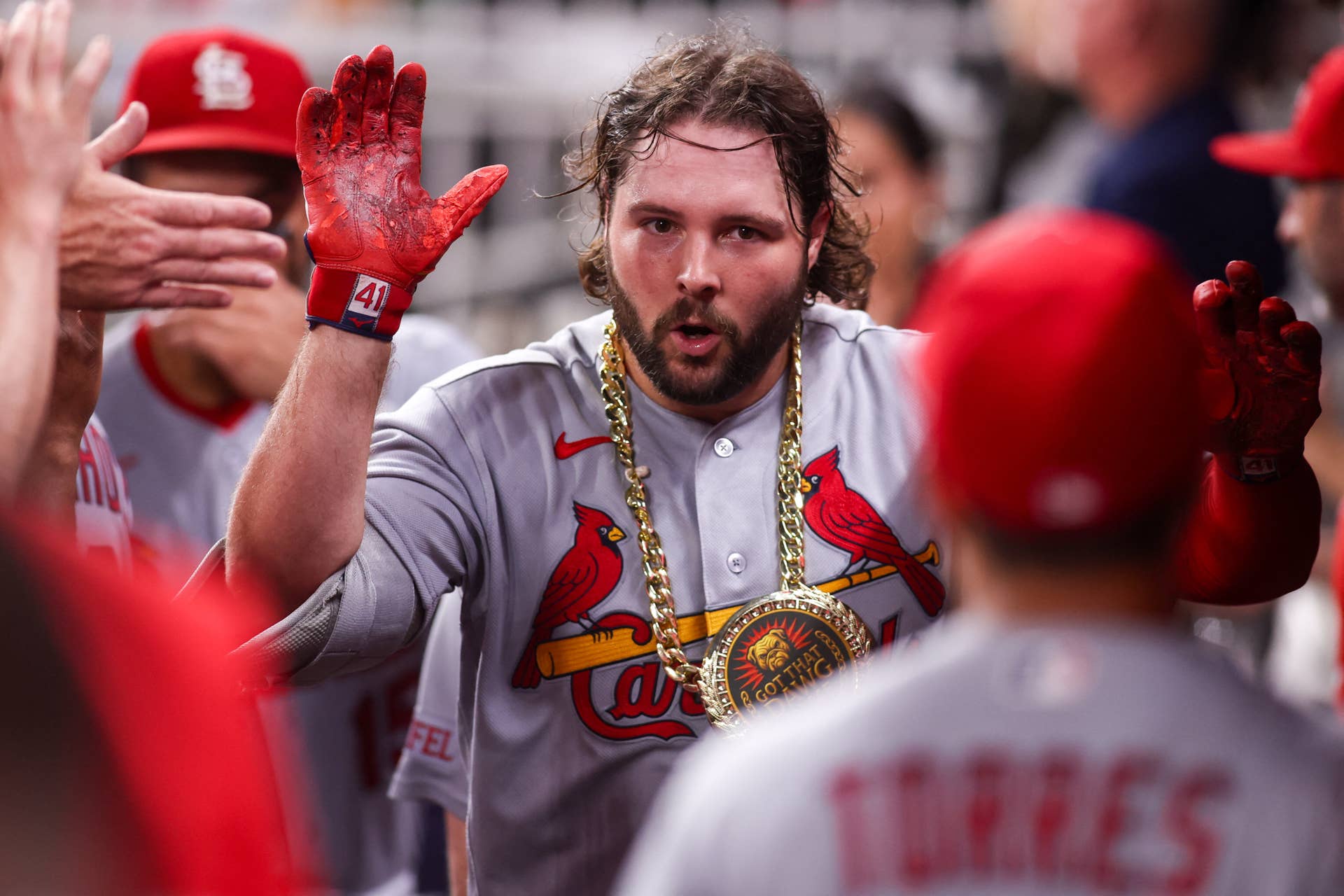
Brett Davis-Imagn Images
Burleson's story rhymes with Baldwin's. A 48.7 percent hard-hit rate is comfortably above average, and his .347 season wOBA against a .383 xwOBA is a real, sustained 36-point gap, not a one-month blip. His most recent two weeks are worse, not better, a .298 wOBA against a .345 xwOBA, which rules out the idea that this one is already correcting on its own. His pull rate sits near 50 percent and his ground-ball rate is elevated for a hitter with this kind of exit velocity, the same shape problem as Baldwin, hard contact finding the shortstop instead of the gap. St. Louis keeps running him out there every day. If the swing plane adjusts even slightly, the home run total moves with it.
Francisco Lindor's Barrel Rate Is the Real Story Here
Mandatory Credit: Vincent Carchietta-Imagn Images
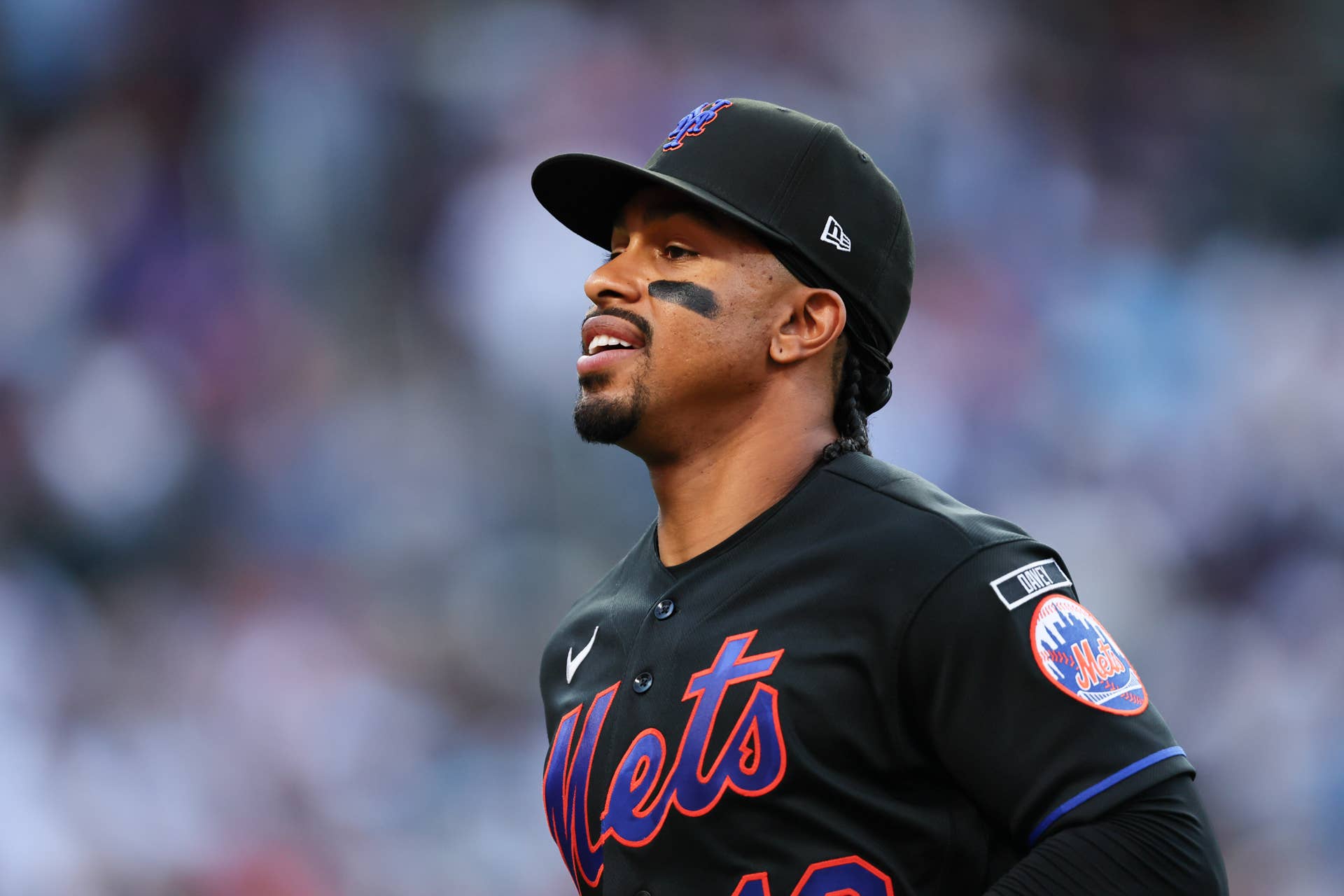
Lindor is the one name on this board you already know, and the exit velocity data says you should be paying attention for the right reason. His hard-hit rate sits at an even 50 percent, but his barrel rate, the more selective measure that requires both elite exit velocity and the right launch window together, is the lowest of the four names here at 8.7 percent. That is the tell. He is squaring up plenty of baseballs hard, but not always at the angle that turns hard contact into a barrel, and a .298 wOBA against a .342 xwOBA is the result. His plate appearances are lighter than the other three names here, so confirm his health and playing time are fully settled before pricing in a complete correction. But the raw ingredients, the bat speed and the exit velocity, have not gone anywhere.
Have You Reached A Verdict?
None of these four are broken. All four are hitting the ball as hard or harder than most of the league and getting a batting line that does not show it, for four slightly different reasons: two ground-ball problems, one small sample still building trust, and one barrel-rate gap on an established star. The wOBA-versus-xwOBA crowd will tell you these guys are unlucky. The exit velocity tells you they are early. Buy before the batting average catches up to the Statcast page, because once it does, so does the price.
Questions About Buy-Low Players, Answered
What is the difference between a HardHit% gap and a wOBA/xwOBA gap?
A wOBA/xwOBA gap measures whether a specific set of batted balls got unlucky outcomes. A HardHit% gap measures whether a hitter is making hard contact at all, regardless of the model's expectation, which can point to a swing-shape issue rather than simple bad luck.
Why is Drake Baldwin's contact quality not showing up in his batting line?
His ground-ball rate is elevated for a hitter with this much exit velocity, so a real share of his hardest-hit contact is being hit directly into the ground instead of finding the outfield gaps.
Is Francisco Lindor's low barrel rate a red flag?
It explains the gap rather than erasing the opportunity. His hard-hit rate is elite, but his barrel rate lags the other three names on this board, meaning some of his hard contact is not landing in the ideal launch window yet.
Which of these four is the safest buy-low target?
Alec Burleson offers the most established sample size and everyday playing time, while Bryce Eldridge carries more risk and more upside as a rookie still building a full-season track record.


