


For years, the sporting world has looked at the high dropout rates of young girls in football through a narrow lens. But according to Emma Hayes, the legendary manager who led the USWNT to Olympic gold, the issue isn't just about biology; it’s about a system that was never built for them in the first place.
Statistics show a staggering trend of over 60% of girls who are playing football at age 11 drop out by the time they hit 12 or 13. Hayes argues that the conversation needs to go much deeper if this is to be tackled.
Emma Hayes Wants a Change in the System
Hayes highlights a critical disconnect between the physical realities of young athletes and the support systems surrounding them.
"It's not as simple as we're going through puberty. Yeah, that matters. It would be ideal if our coaches are equipped to deal with that, and parents who are equipped to deal with something that's quite shocking," she explains. She shares a deeply personal memory to illustrate the isolation many young girls feel.
"I remember when I got my period I was mortified. It happened during a football match and I remember hiding in the toilet going, 'Oh, I can't go back out there. How do I tell my dad this?'"
This lack of relatability is why Hayes is a staunch advocate for more female representation in coaching. She believes we need leaders who can not only empathize with these experiences but also provide the specific guidance needed to navigate them without leaving the sport behind.
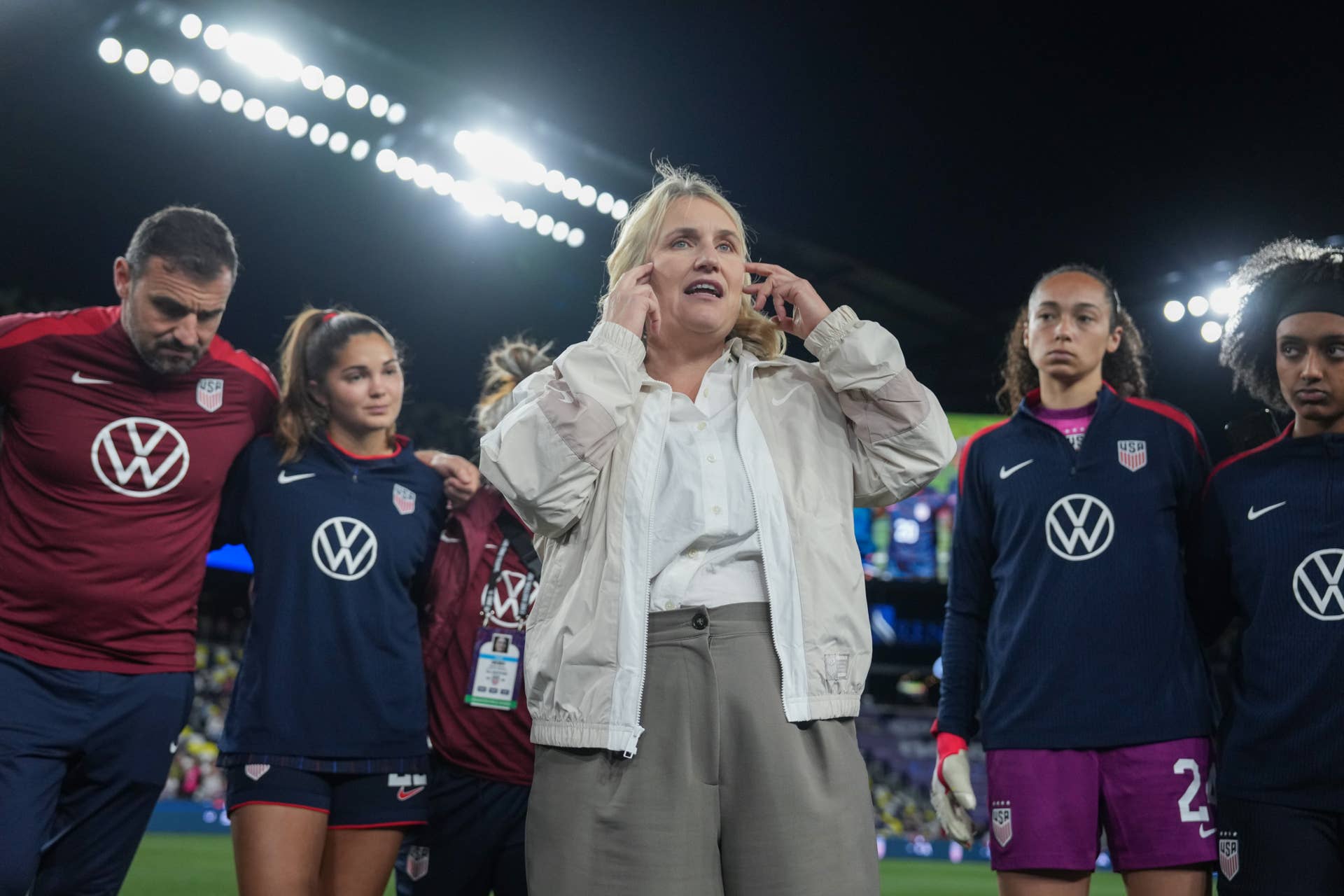
Photo by Brad Smith/ISI Photos/USSF/Getty Images
The most striking part of the argument from Hayes is her call to change the way youth sports are organized. She believes that the current system is built for boys and men, which doesn't always work for the different needs of young girls.
"I say this all the time, maybe we have to think about how we model our leagues and the competitions so that it's slightly different," she suggests.
Hayes proposes a more flexible, inclusive approach to keep girls engaged, questioning why we can't create leagues with teams of 25 where some might come one week and some the other. She also advocates for co-coaching teams that utilize multiple parents to share the responsibility and provide a variety of mentors. By recognizing that some girls want to play seriously while others just want to enjoy the game without it being their entire identity, the sport can accommodate everyone.
“Why can't we create leagues where we have, I don't know, teams of 25? But some might come one week, some might come the other. Why not? Why don't we have co-coaching teams so that you don't have one coach, you have three? And it might be three mums. One mum can come one week, one mum the next. That's how you're going to keep them in. Stop designing it through the men's lens."


