


I want East Potomac Golf Links to become a better golf facility.
There is enormous potential on that property, and meaningful investment in its courses, practice areas and infrastructure could be very good for public golf in Washington. A stronger golf course, better conditioning and improved facilities are not things I oppose. Quite the opposite.
My concern throughout the redevelopment of East Potomac has been what happens to the public part of public golf, and whether improving one use of federal parkland ultimately comes at the expense of people who have been using the same property in other ways for years.
New reporting has made that question considerably larger.
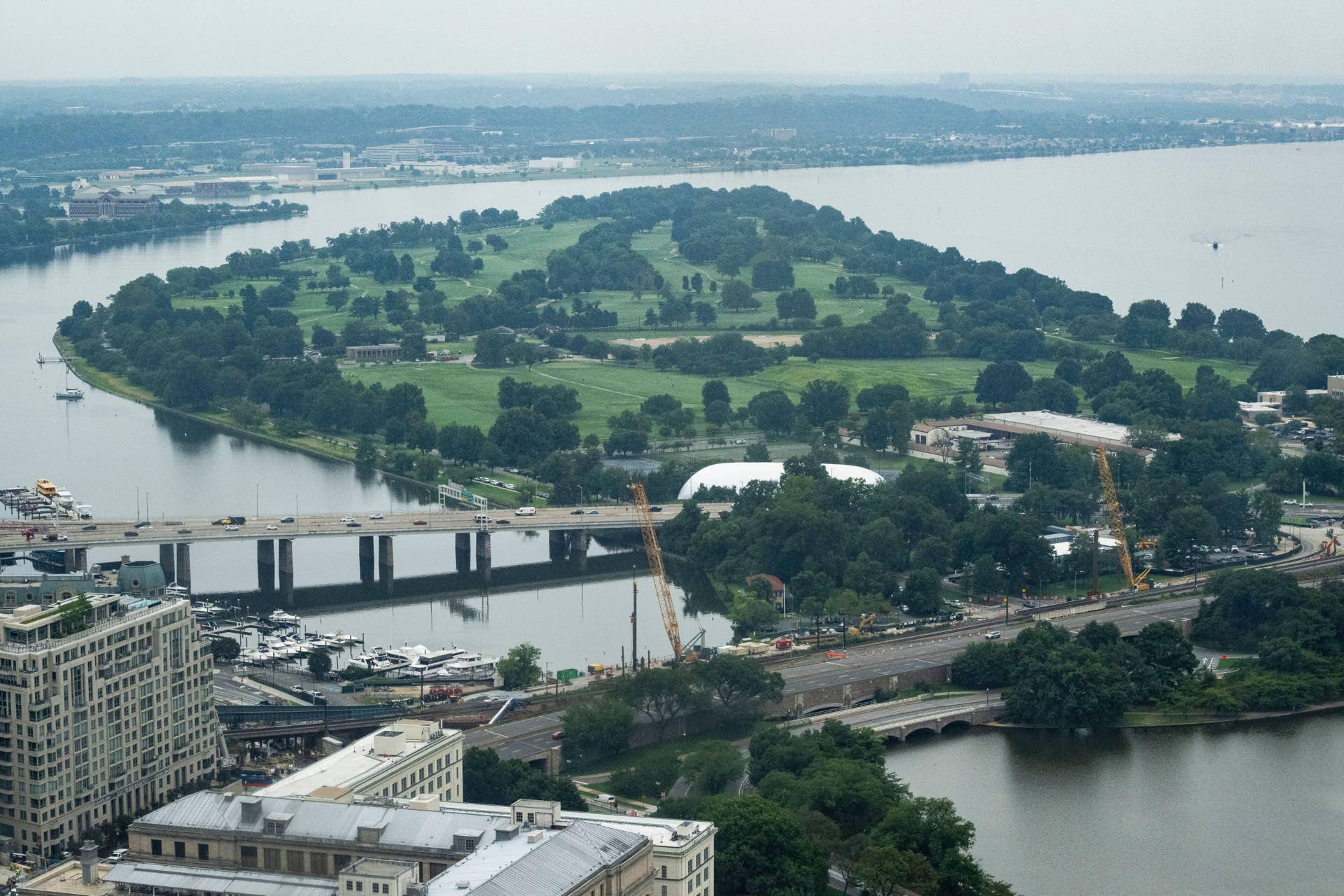
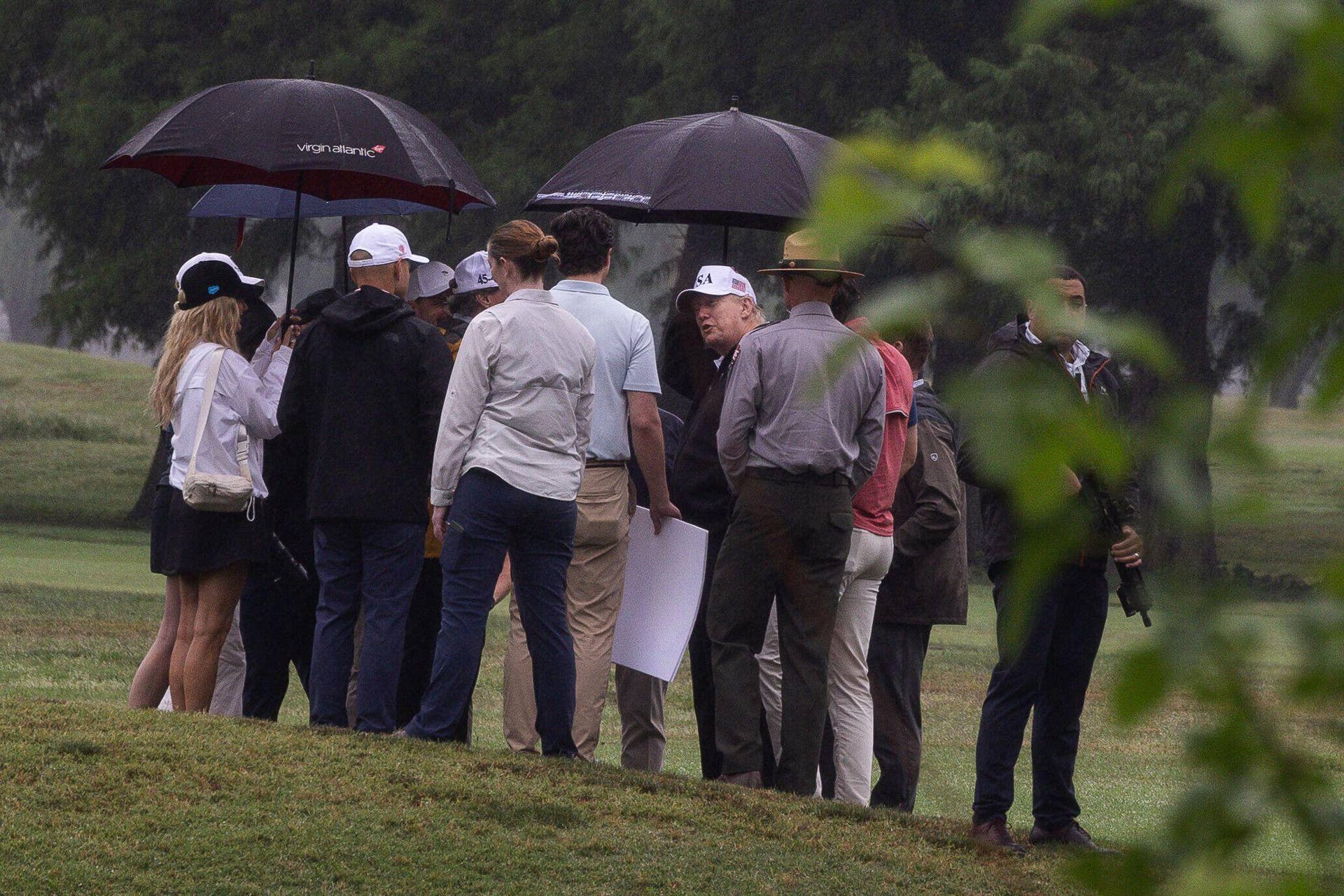
The Washington Post reports that President Donald Trump wants Ohio Drive removed from the Hains Point peninsula, allowing a redesigned East Potomac course to extend toward the water. The Post cited two people familiar with Trump’s discussions and reported that the road was absent from plans Trump carried during a June visit to the property. The White House has not released a final plan establishing what will happen to Ohio Drive, and the Interior Department has not publicly resolved the road’s future.
That distinction matters.
What has been reported about Trump’s preference is not the same thing as an approved final design.
- President Donald Trump reportedly wants Ohio Drive removed so golf holes can extend toward the water.
- The road was absent from plans Trump carried during a June visit, The Washington Post reported.
- A Fazio Design concept released publicly in May appeared to retain a perimeter route around Hains Point.
- The National Park Service has previously redesigned portions of Ohio Drive to better accommodate vehicles, cyclists and pedestrians.
- Whether Ohio Drive remains in any form.
- Whether runners and cyclists receive a continuous replacement route.
- How waterfront and vehicle access would work.
- Whether major public events would need to change routes.
- How expanded golf use would coexist with the other established uses of Hains Point.
East Potomac Can Be Better Golf Without Losing Its Identity
Graeme Sloan/Sipa USA) Credit: Sipa USA/Alamy Live News
This is now my third trip through the East Potomac issue for Athlon Sports.
The first centered on stewardship. East Potomac is public golf on federal land, and whoever improves it inherits a responsibility larger than building attractive golf holes.
The second examined the contracting process and the promises surrounding affordability, access and the future operation of the property.
Those questions remain.
But none of my concerns about East Potomac come from believing the golf course should remain frozen in time.
I would like to see better golf there. I can appreciate exactly why a golf architect would look at Hains Point, see the water surrounding the peninsula and imagine holes using that setting more dramatically. Any golf professional who has spent time around course design can understand the appeal of bringing the Potomac and Washington Channel more directly into the playing experience.
That is a golf argument worth having.
The problem begins if creating those holes requires removing a heavily used public route without first showing people what replaces it.
Ohio Drive Is Already Part of the Park
The roughly three-mile Hains Point loop serves runners, cyclists, walkers, anglers, birders, families and other park visitors. Major events, including the Marine Corps Marathon and Credit Union Cherry Blossom 10 Mile, also use the area.
This is not some incidental strip of asphalt sitting unused beside the golf course.
The National Park Service has previously invested in making Ohio Drive work better for multiple forms of recreation. In 2022, NPS approved changes that converted one vehicle lane along 2.5 miles of the loop into a protected, bidirectional shared-use path for cyclists and pedestrians while keeping another lane open to motor vehicles. The agency said the project was intended to improve safety while preserving a broad range of uses at East Potomac Park.
That history is important.
The federal government was recently redesigning Ohio Drive around the idea that cars, runners, cyclists and other visitors could coexist there.
Now one reported version of the golf redesign could remove the road altogether.
That deserves an explanation.
The Public Has Seen More Than One Picture
There is another reason clarity matters.
Interior Secretary Doug Burgum publicly shared a Fazio Design concept for East Potomac in May. That rendering showed a championship course exceeding 7,600 yards from the back tees, along with other golf improvements. The Ohio Drive loop appeared to remain around the peninsula, and Hains Point itself appeared largely untouched.
The Washington Post’s latest reporting describes something different.
Trump reportedly wants the road eliminated so the golf course can extend toward the water, and the plans he carried during his June visit appeared to omit Ohio Drive.
Maybe those ideas can be reconciled.
Maybe the final design includes a new continuous path somewhere else on the peninsula. Perhaps golf holes reach the shoreline while runners and cyclists receive an equally useful route. There may be engineering or design work underway that has not yet been made public.
That information matters before anyone declares what the finished property will or will not become.
The problem at the moment is that the public does not have it.
The Usage Numbers Need Context
The Washington Post’s reporting also included numbers illustrating how much activity takes place around Hains Point.
A Virginia Tech model estimated approximately 1,100 bicycle and pedestrian passages on an average day near the southern end of the peninsula, roughly 500 by bicycle and 600 on foot. Those are passages, not unique people. Someone completing multiple laps can be counted more than once.
Strava reported approximately 80,000 recorded outings around the loop last year and roughly 192,000 total passes. Those figures capture only users who recorded and uploaded an activity.
National Links Trust, which operates East Potomac Golf Links, told the Post that its three courses hosted 124,500 rounds in 2025, an average of approximately 341 per day.
I would not put 1,100 passages next to 341 golf rounds and pretend we have discovered which group deserves the property more.
The measurements are fundamentally different.
A golfer can occupy the course for several hours during one round. A cyclist can cross the same measuring point multiple times during one workout. Strava captures only part of the recreational population. None of those numbers measures the value of one activity against another.
They do establish something useful, though.
Golf is not the only significant public use taking place at Hains Point.
That should be part of the design conversation.
Better Golf Should Be Able to Survive Hard Questions
The administration has promoted the redevelopment as an opportunity to create championship-quality golf while keeping local access affordable. The May Fazio concept was presented with comparisons to major public facilities such as Bethpage and Torrey Pines.
I like the ambition behind making public golf better.
Golf has too often treated “municipal” or “public” as permission for facilities to be tired, underfunded or unimaginative. There is nothing wrong with believing East Potomac can offer something considerably better than what golfers have known there before.
But public golf carries an obligation that a private development does not.
The land has other users.
Extending holes toward the water might produce a more interesting golf course. I can understand the architectural attraction immediately. If accomplishing that requires eliminating Ohio Drive, however, the government should be able to explain where runners and cyclists go, how anglers and families retain access, how major public events are affected and why that tradeoff represents the best use of federal parkland.
Those are not anti-golf questions.
They are the questions that should come with improving golf on a piece of public property shared with thousands of other people.

National Links Trust Facebook
My position on East Potomac has not changed since I first wrote about the redevelopment.
Make the golf better.
Invest in it.
Give Washington a public golf facility worthy of the location.
But “better” should eventually be measurable by more than how good the routing looks on a rendering.
At Hains Point, the final design also has to explain what happens outside the ropes.
PGA of America Golf Professional Brendon Elliott is an award-winning coach and golf writer who serves as Athlon Sports Senior Golf Writer. Read his recent “The Starter” on RG.org, where he is their Lead Golf Writer. To stay updated on all of his latest work, sign up for his newsletter or visit his MuckRack Profile.


