


De’Von Achane was the leading rusher and pass catcher for the Miami Dolphins in 2025.
Despite that, his workload could increase this season.
During an appearance on “The Rich Eisen Show,” Dolphins coach Jeff Hafley said Achane could have games this season in which he touches the ball more than 40 times.
“I just gave Achane a heads-up this morning, and I told him, ‘You better be in good shape,’” Hafley said. “I told him there might be some games when I have to pick him up and carry him back to the locker room because he’s going to be so tired.”
Last season, Achane finished with a career-high 238 carries, rushing for 1,350 yards and eight touchdowns. He also registered 67 catches for 488 yards and four touchdowns.
During the interview, Hafley joked that he told Achane not to tap his helmet to come out of the game for a breather.
“I told him, ‘I don’t ever want to see one of these head taps all year,’ and he looked me right in the eye and he said, ‘You’ll never get that head tap from me,’” Hafley said. “I said, ‘Don’t worry, buddy. After you touch the ball 40, 45 times, I might have to pick you up and carry you back into the locker room.’”
Dolphins view Achane as a foundational piece
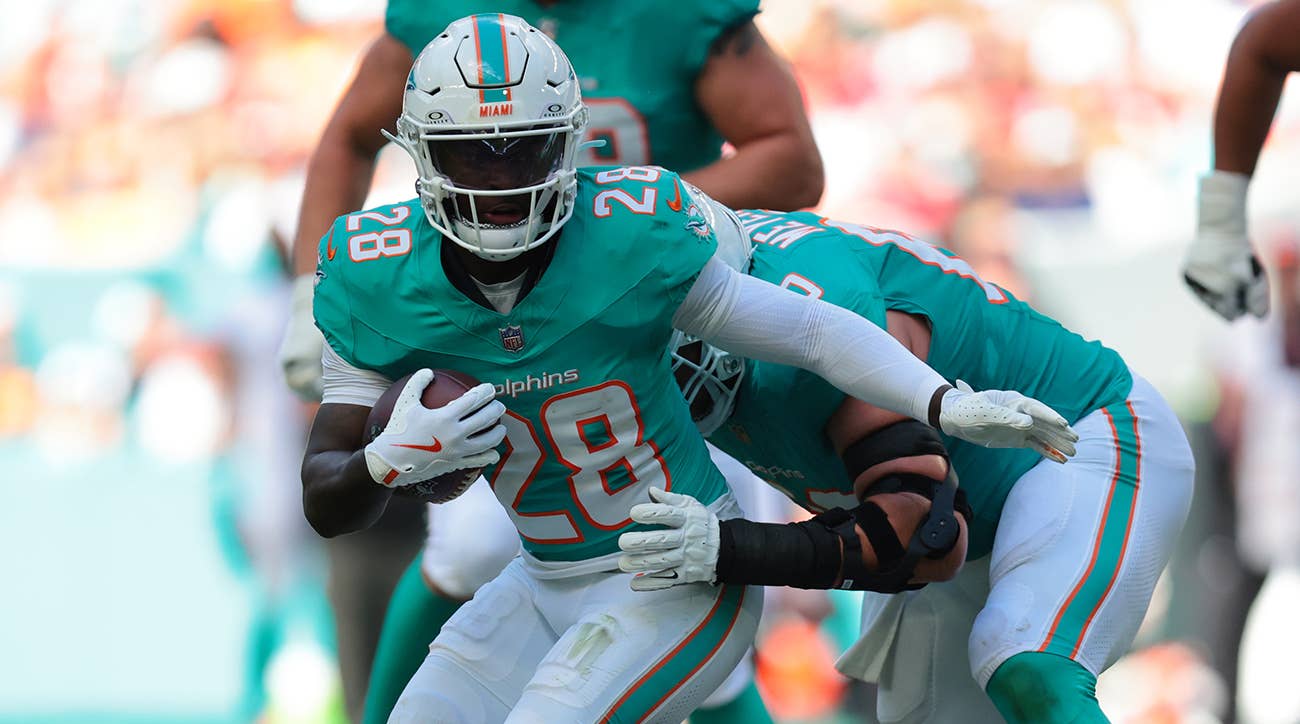
Sam Navarro-Imagn Images
The Dolphins are under a new regime with Hafley and general manager Jon-Eric Sullivan. But that hasn’t stopped them from wanting to make Achane their cornerstone player for years to come.
Miami signed Achane to a four-year, $64 million contract extension that included $32 million guaranteed. With so many changes to the Dolphins’ roster, Achane will be a star player in their offense alongside Malik Willis, whom Miami signed to a three-year, $67.5 million contract in March.
Considering the questions surrounding Miami’s receiving corps, the Dolphins may need Achane on the field as much as possible. Malik Washington and rookie Caleb Douglas are listed as the team’s top two receivers, but neither is a proven No. 1 option at the NFL level.
Hafley won’t run Achane into the ground. But the star running back could be on the field more often as a decoy, drawing less attention to the Dolphins’ other offensive players.


