


The 2026 Formula 1 season is three races old, and Mercedes has won all three. But it's not just the wins that stand out; it's how they're doing it.
In her Japanese Grand Prix strategy debrief, F1 TV strategy analyst and former Ferrari race strategist Ruth Buscombe highlighted a pattern that is becoming impossible to ignore: every single Mercedes victory this season has come after a safety car pit stop. And according to Buscombe, that is no accident.
Mark Thompson/Getty Images
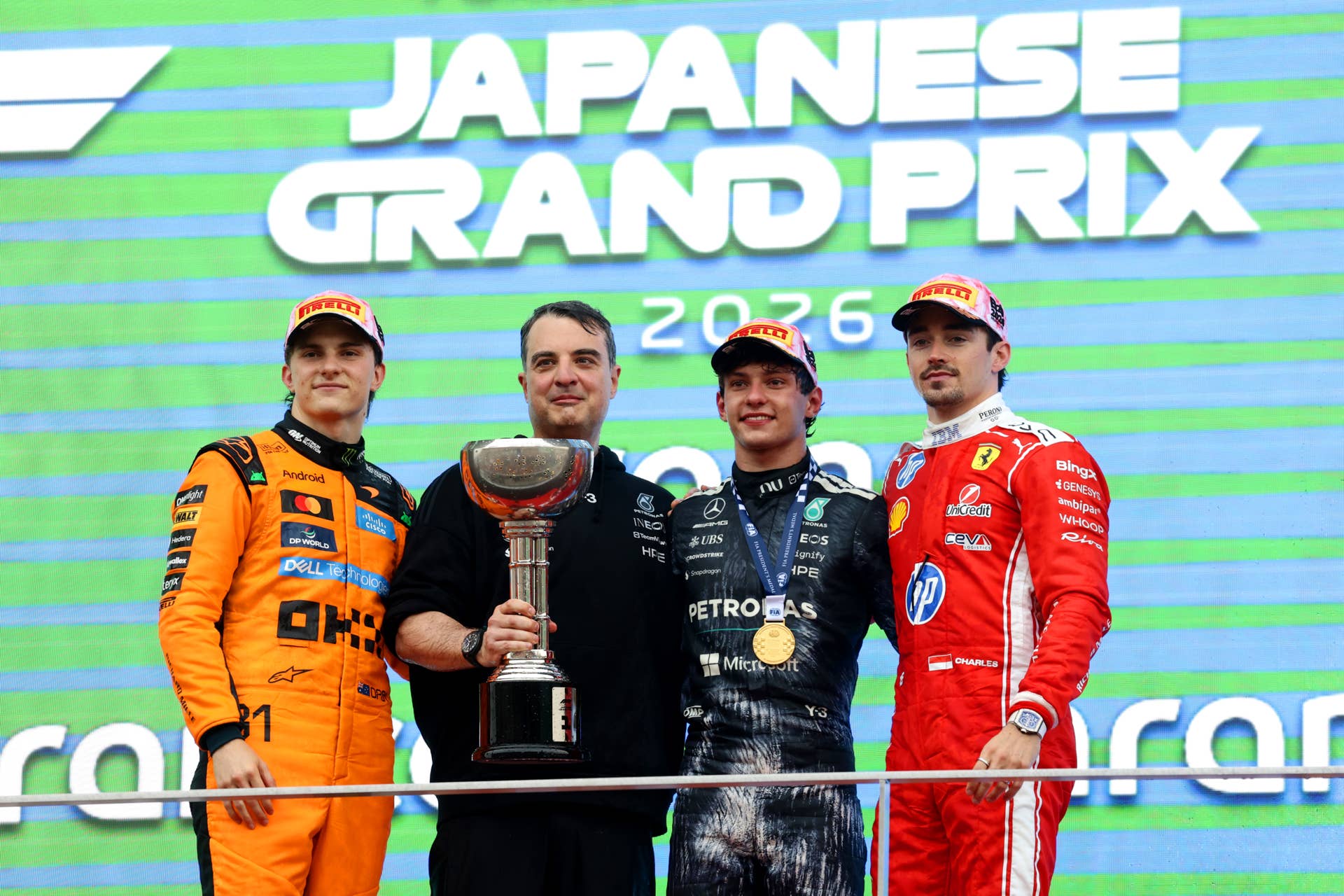
The data across the three races tells a clear story. In Australia, George Russell won with Charles Leclerc (P3) finishing 15.5 seconds behind. In China, Kimi Antonelli took the win with Lewis Hamilton (P3) crossing the line 25.3 seconds back. In Japan, Antonelli won again, with Oscar Piastri finishing 13.7 seconds adrift.
In each case, the winning Mercedes pitted under the safety car, saving roughly 10-11 seconds compared to a green flag stop, and came out in race-winning position.
Stay Out, Build the Gap, Take the Free Stop
According to Buscombe, the strategy is deliberate and repeatable. Mercedes' approach follows a clear sequence: keep the car out, build a gap large enough to absorb a pit stop, and then take the free stop when the safety car arrives.
"Stay out, build the gap, take the free stop, control the restart," Buscombe explained in her debrief. "McLaren already committed their lead car before the safety car window opens. When the opportunity arrived, Piastri was not in a position to benefit."
Toshifumi KITAMURA / AFP via Getty Images
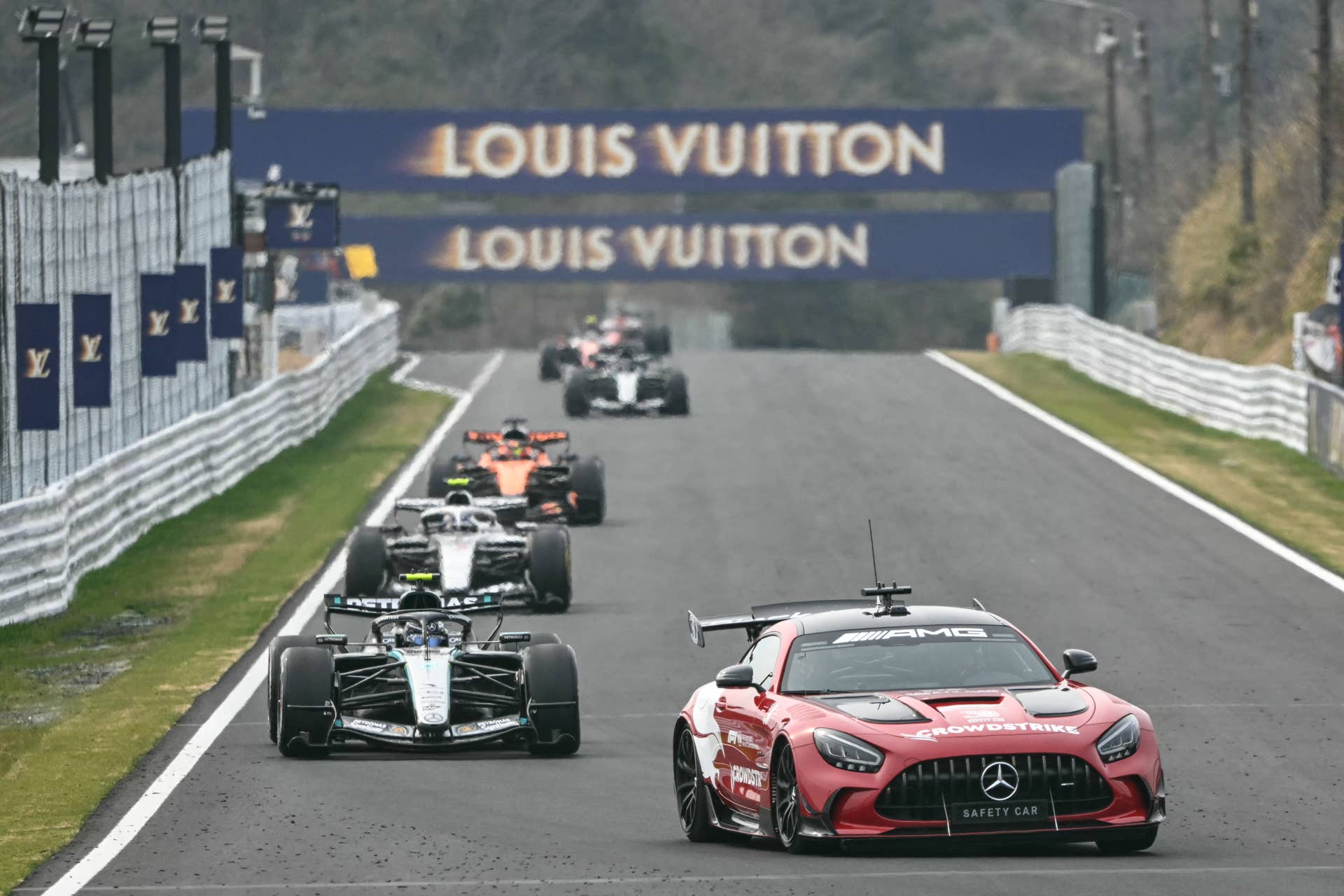
At Suzuka, this played out in the most clinical way yet. Antonelli stayed out while cars around him pitted, quietly building a 22.6-second gap to Leclerc. When Oliver Bearman's crash brought out the safety car on lap 22, Antonelli pitted and lost only around 10.5 seconds instead of the usual 22 seconds under green flag conditions, coming out in P1.
The Deployment Advantage Behind It All
What makes the strategy work is not just patience; it's the car underneath it. The former Ferrari race strategist pointed to a structural performance advantage in Mercedes' ERS deployment as a key factor, particularly at high-speed circuits.
At Suzuka, telemetry showed Antonelli was faster through the S-curve complex, through 130R, and down the main straight, where the Mercedes clocked 312 km/h compared to McLaren's 309 km/h. Under the 2026 regulations, teams run a single locked ICE mode per session. However, ERS deployment remains free, and that is where the performance gap appears to live.
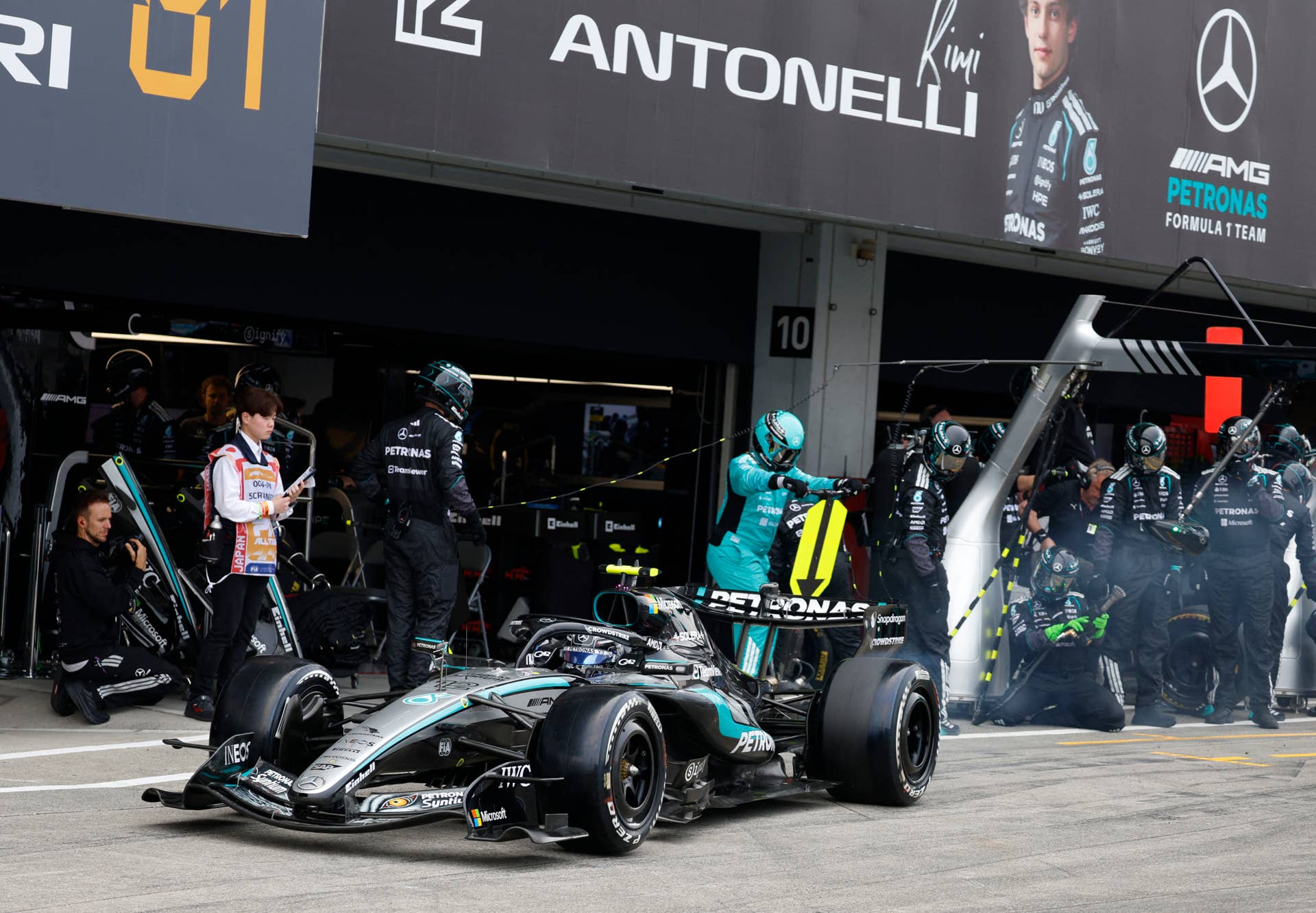
Photo by FRANCK ROBICHON / POOL / AFP via Getty Images
Notably, the FIA's engine convergence mechanism means that if any manufacturer's advantage extends beyond 2%, rival teams receive an additional development token to close the gap. Whether Mercedes is operating above or below that threshold, Buscombe noted, is "the quiet conversation that is happening in the background."
Mercedes Has Built a System, Not Just a Streak
Three races, three safety cars, three Mercedes wins. Buscombe was direct: "Coincidence? No. Not in my opinion." The strategy only works because the car can execute it. With five weeks until the next race, rival teams know exactly what is coming. The harder question is whether knowing is enough.