


Dan Le Batard and his friends have been peeling back the layers of information surrounding the car accident San Francisco 49ers head coach Kyle Shanahan - and to them (and many others), it's starting to stink.
On the latest episode of The Dan Le Batard Show, Le Batard and the other members of the team expressed some doubt over the facts as they've been presented.
“I was not aware until Kyle Shanahan spoke to some local reporters yesterday that you could get into an accident at 20 miles an hour that would cause 40 stitches in your face, break your nose, break your hand, and cause a concussion so severe that you couldn’t work for weeks,” Le Batard said when the topic got brought up.
“He was not on his phone. That would be a crime. That would make him liable. That would be problematic criminally, if he’s admitting, so what he has said is that he was fishing around for his phone.”
“Pretty handy excuse,” Greg Cote said.
https://www.youtube.com/live/75FObEm-TaY?si=lAmejX-vhtUUb3xZ
Le Batard specifically took issue with Shanahan not owning up to being responsible for the accident at first when the official report listed the other driver at fault. He found the amount of time that elapsed from the time of the accident to the announcement to be suspicious.
“When coaches get in trouble, we like to sniff around. When it smells like coverup or conspiracy, we do so more. A head coach injuring himself in an accident where he gets 40 stitches, breaks his ribs, breaks his nose, and breaks his hand, and — this is the key part — can’t do his job right now because he’s got a concussion says that he was going 20 miles an hour, says that the accident was his fault now. That the report is wrong, which as soon as I see that, I’m like, ‘OK, what did the police do here? So what happened here?’" Le Batard said.
"In the 11 or 13 days of silence since the accident, plenty of people wondered, ‘Well what else is here?’ Now he’s explained it, and to me, it feels like there are more questions than there were before this started because he’s volunteering, ‘Hey, this is my fault.’ Volunteering that why?
"You didn’t volunteer that from the beginning. You’re volunteering it now. Why are you volunteering that now? What are you afraid we’re gonna find out in that report — or what should have been that report — that you’re saying, ‘No, no, no, no, my bad!’ But 13 days later.”
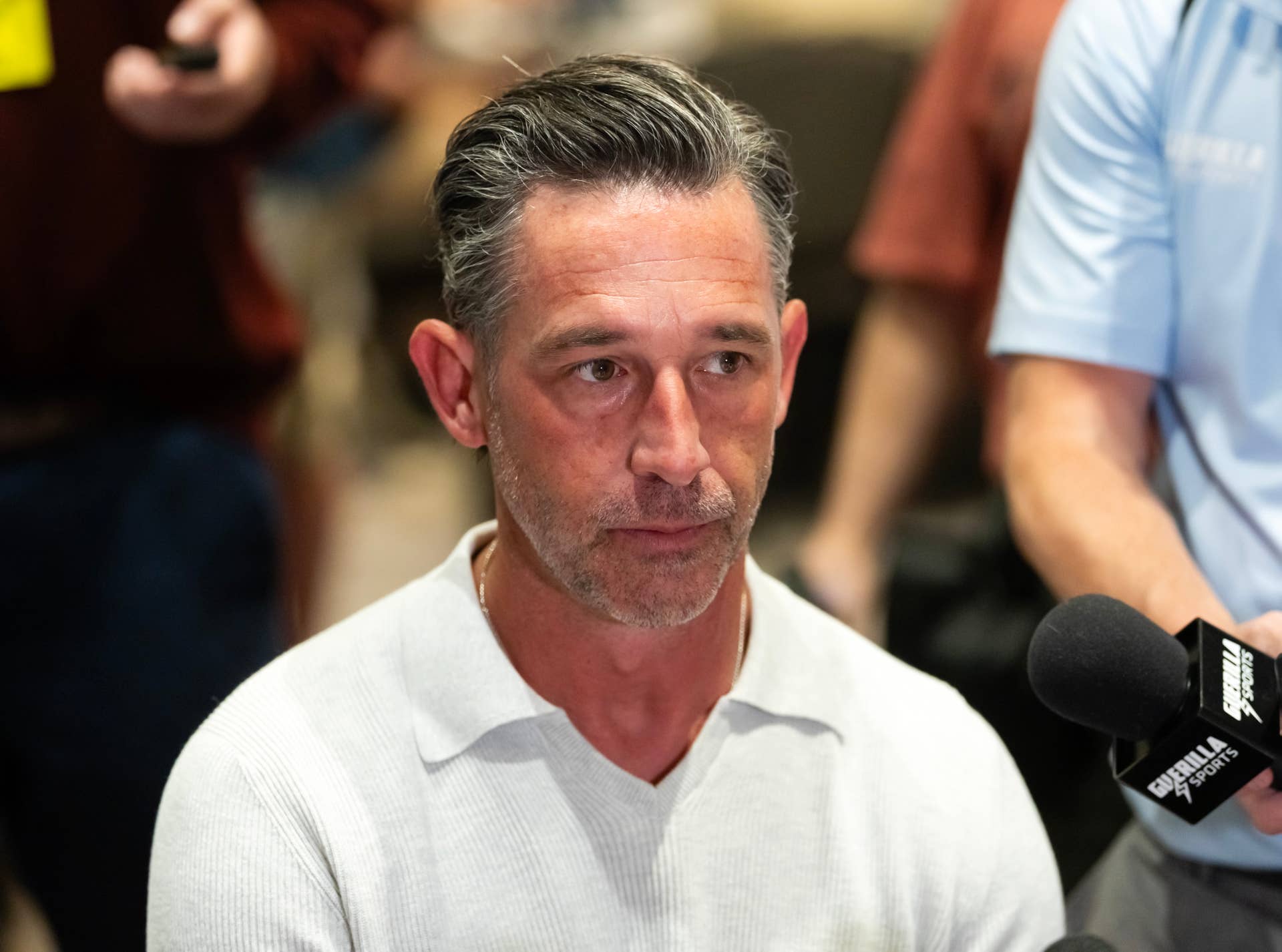
© Mark J. Rebilas-Imagn Images.
The Impact on Journalism
The discussion transitioned into a larger one about the state of sports journalism and the utter ineffectiveness of getting to the truth of things.
"There is no obligation in sports to cover this stuff like journalists,” Le Batard lamented. “ESPN made that so, but there’s not actually that responsibility. We can leave these people alone. We can cover them the way we did many years ago when none of this stuff was on limits. It was all off limits. And I think the athletes and the power brokers would prefer it that way. The power always prefers that you can’t actually shame them with the truth, but now that we’re in an age where the truth doesn’t actually shame and you realize the power of the press isn’t much of a power if when we tell the truth, it doesn’t cause shame if you can just get around it.
“I’ll just deny it. I’ll say I was driving 20 miles an hour. I will say that it’s my fault now — the accident is my fault — and I’ll make it look like accountability when, no, you were kind of forced out into the light on this one.”
It certainly does feel like we live in a post-shame era sometimes.


