


It was already a big moment on the slopes one that had Team USA celebrating and the pressure of the early days of Milan-Cortina finally easing a bit. After years of hard work and training, Breezy Johnson had just delivered a breakthrough performance that put her name firmly in the spotlight.
But while most of the attention naturally stayed on the medal itself, Johnson’s focus quickly shifted elsewhere. In the hours after the race, she shared a quiet, personal message on her Instagram stories that hinted at just how many people stood behind that result singling out one figure in particular whom she credits for helping with the tiny, often invisible details that can mean the difference between standing on top of the podium and missing it by fractions.
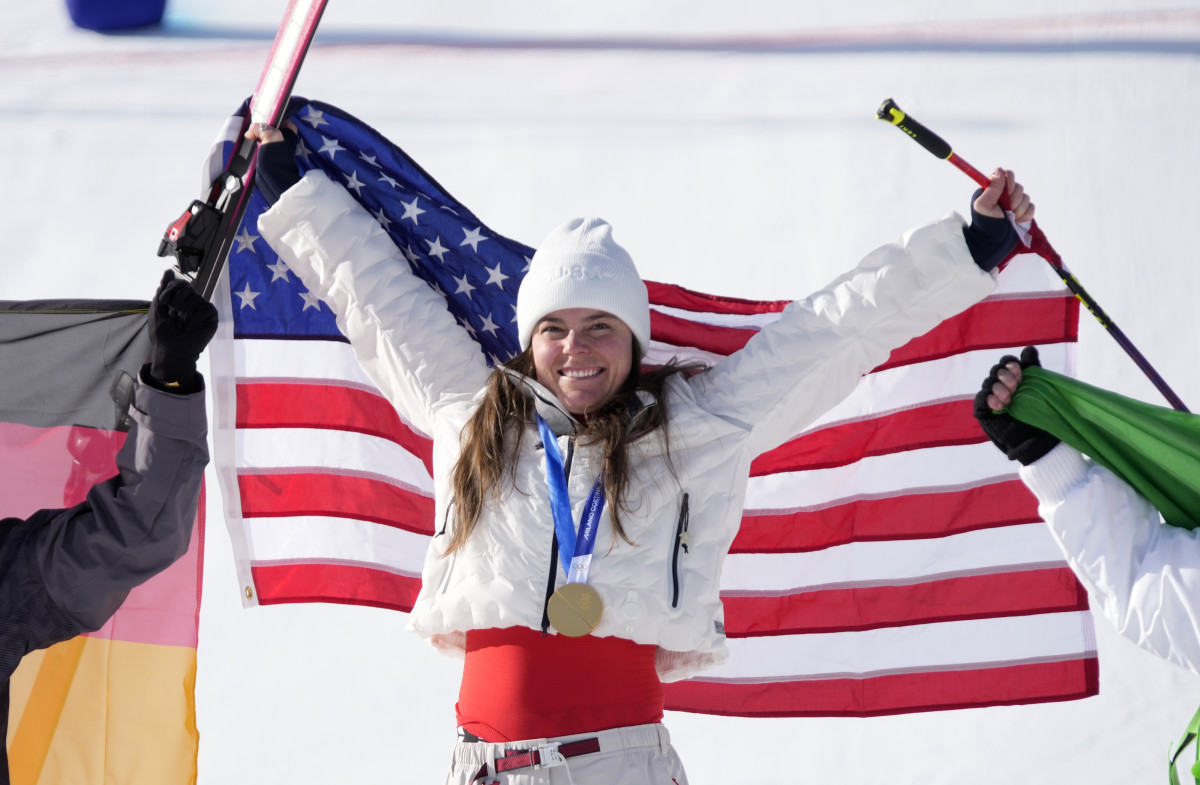
Credit: Michael Madrid-Imagn Images
Johnson took to her Instagram account to share an image with Aleš Sopotnik, with a caption that said, “I owe this man so much, he is like a second father for me. I have to start by thanking you my yoda Aleš.”
For the uninitiated, who is Aleš Sopotnik? He’s the man working quietly behind Breezy Johnson’s race-day speed, the ski technician whose job is to make sure her equipment is as fast and reliable as it can possibly be.
While fans see the athlete charging down the course, Sopotnik is usually out of sight, spending hours before and after runs experimenting with ski setups, adjusting edges, picking the right wax for the snow, and fine-tuning every small detail that could affect performance.
It’s not exactly a glamorous role. Most of the work happens late at night in ski rooms or early in the morning on freezing slopes, testing how different skis react in changing conditions. Over time, that constant grind builds a close working relationship with the athlete.
For Johnson, that means having someone who not only understands her equipment but also knows how she thinks before a race; someone who can keep her steady when the pressure is high. In a sport decided by split seconds, that behind-the-scenes support can make all the difference.