


The first tee at Bernardus is not the first hole at Bernardus this week. Solheim Cup organizers moved the start to the club’s regular third hole and will finish on the normal second. The switch places Bernardus’ regular 18th, a reachable par 5 with water tight to the left, at No. 16 in the Cup routing. Two demanding par 4s wait behind it.
That order tells us more about the course than a list of yardages. At approximately 6,598 yards and a par of 72, Bernardus is not long enough to push the world’s best women into survival golf for three days. It can still make them uncomfortable. The trouble often sits beside a tempting option, and the correct choice can change as soon as an opponent finds sand, water or the middle of a green.
Friday morning gives position a blunt meaning. In foursomes, the player who hits the drive does not play the next shot. A tee ball that stops in a poor angle hands her partner the water carry; a bold drive near a green may hand over an awkward recovery. Four-ball changes the calculation that afternoon because a partner’s ball can provide cover. Bernardus will not ask the same thing of a pairing in both sessions.
Watch the Club Choice at No. 1
The opening hole is Bernardus’ regular No. 3, and the wind may decide whether driver ever leaves the bag. A helping breeze brings the green into range. When it blows the other way, the fairway bunker makes long iron or hybrid a reasonable choice. In foursomes, that tee shot belongs to two players. Laying back means handing a partner a wedge from the fairway, which may be precisely what they discussed before reaching the tee.
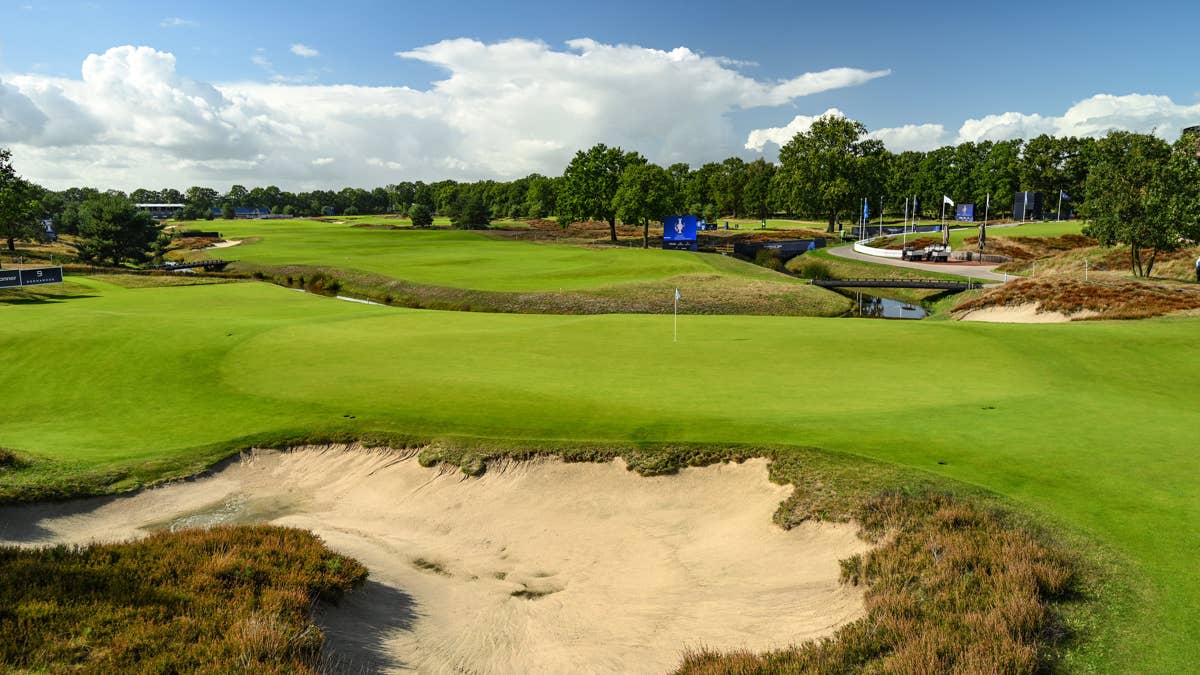
Two par 5s appear within the first five holes, at Nos. 2 and 5. Water complicates the second shot at the fifth. Three holes later, the short par-4 eighth lets a player drive toward the green or stop before the left fairway bunker. Those are inviting holes, but they do not last.
The ninth is a narrow par 4 that commonly plays into a wind from the left. Then comes another par 5 before Bernardus begins a four-hole run that should slow the rush of birdies. The 11th is a long par 3 with sand and water right. Nos. 12 through 14 demand position from the tee because the approach angles, water and pronounced green contours can make a small miss much more expensive.
This is where foursomes pairings could be exposed. Alternate shot is hard enough when both golfers are playing from comfortable yardages. A missed fairway at Bernardus can leave one partner trying to carry water from a poor lie, or asking her to attack the wrong level of a green. On the card, it is one team error even when the uncomfortable shot changes hands.
The golfer on the tee is choosing her partner’s approach. A safe drive is only useful if it leaves the intended angle and yardage.
One ball in position can release a partner to challenge a reachable green, a water line or a tucked hole location.
A conservative target can become the aggressive play once an opponent finds a bunker, misses an angle or brings water into the hole.
Fine Fescue Changes the Recovery Shot
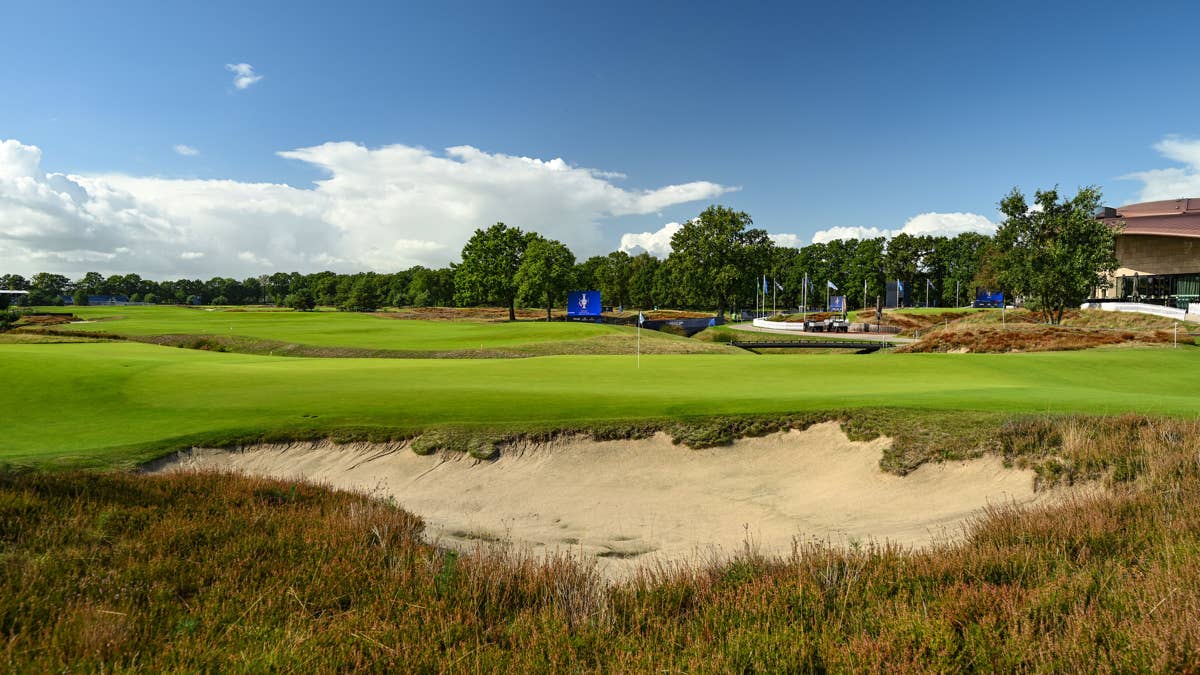
Bernardus’ heathland is young. The property was agricultural land before the course was constructed, and Phillips’ design built its character from sand, dunes, heath grasses and water across approximately 85 hectares in North Brabant.
The playing surfaces support the design. The greens are fine-fescue dominant and sand based, while fescue also dominates the tees, fairways and approaches. There are 69 bunkers, and water comes into play on seven holes. Another 37 hectares are kept as natural area instead of maintained rough.
The most interesting number on the agronomy sheet may be 5 millimeters, the listed cutting height for the greens. The approaches, tees and fairways are listed at 9 millimeters. Tight fescue around an elevated green leaves little cushion under the clubhead. A putter, low-running wedge or lofted shot can all be reasonable. The lie, slope and landing space settle the matter.
Course superintendent Niall Richardson’s staff also expects the greens to change during a competition day. As the fescue dries, the surfaces can firm and quicken. That could leave the afternoon four-ball session with a different set of recovery shots and stopping points than the morning foursomes saw, even before wind or a passing shower enters the calculation.
The crew behind those surfaces includes 21 agronomy employees and 70 tournament volunteers. Preparation also required moving approximately 60 semi-mature trees to accommodate spectator traffic. Those trees now stand elsewhere on the property, while the walking routes have the room needed for the galleries.
The Regular 18th Moves to No. 16
Cup No. 15 is Bernardus’ regular 17th, a par 3 played from a sheltered tee. The player may not feel the same wind that is moving the ball above the water. A left hole location brings that water closer to the line. Match position should settle how much of the flag is worth taking on.
At No. 16, the players step onto the regular 18th tee. A helping wind and the kick from a firm fairway can put the par-5 green within range. The water follows the left side. Long and right is no bargain, either, because the bunker shot runs downhill toward the hazard. Before choosing a club for the second, a player will look across the hole to see what her opponent has left.
The routing puts the last par 5 at 16 and leaves two par 4s. There is no matching birdie hole waiting at the end for a player who gives one away. She must take it back on the 17th or on a closing hole that has been the hardest at Bernardus in tournament play.
The preferred approach angle at No. 17 comes from the left side of the fairway, where a bunker also waits. On 18, water left and bunkers right squeeze the drive. The next shot is played to a small green with a deep swale on the left and water on the right. Miss the fairway there, and the hole offers no comfortable direction for the recovery.
Bernardus hosted the Dutch Open from 2021 through 2023, so the club has experience preparing for elite competition. The Solheim Cup will ask something different of it. Holes will be conceded, strategies will change with the position of another ball, and several matches may never see the carefully arranged finish.
Those that do reach the 16th will find the green may be reachable and the water plainly visible. Knowing the yardage will be the easy part. The opponent’s ball may determine whether taking it on makes any sense.
PGA of America Golf Professional Brendon Elliott is an award-winning coach and golf writer who serves as Athlon Sports Senior Golf Writer. Read his recent “The Starter” on RG.org, where he is their Lead Golf Writer. To stay updated on all of his latest work, sign up for his newsletter or visit his MuckRack Profile.


