


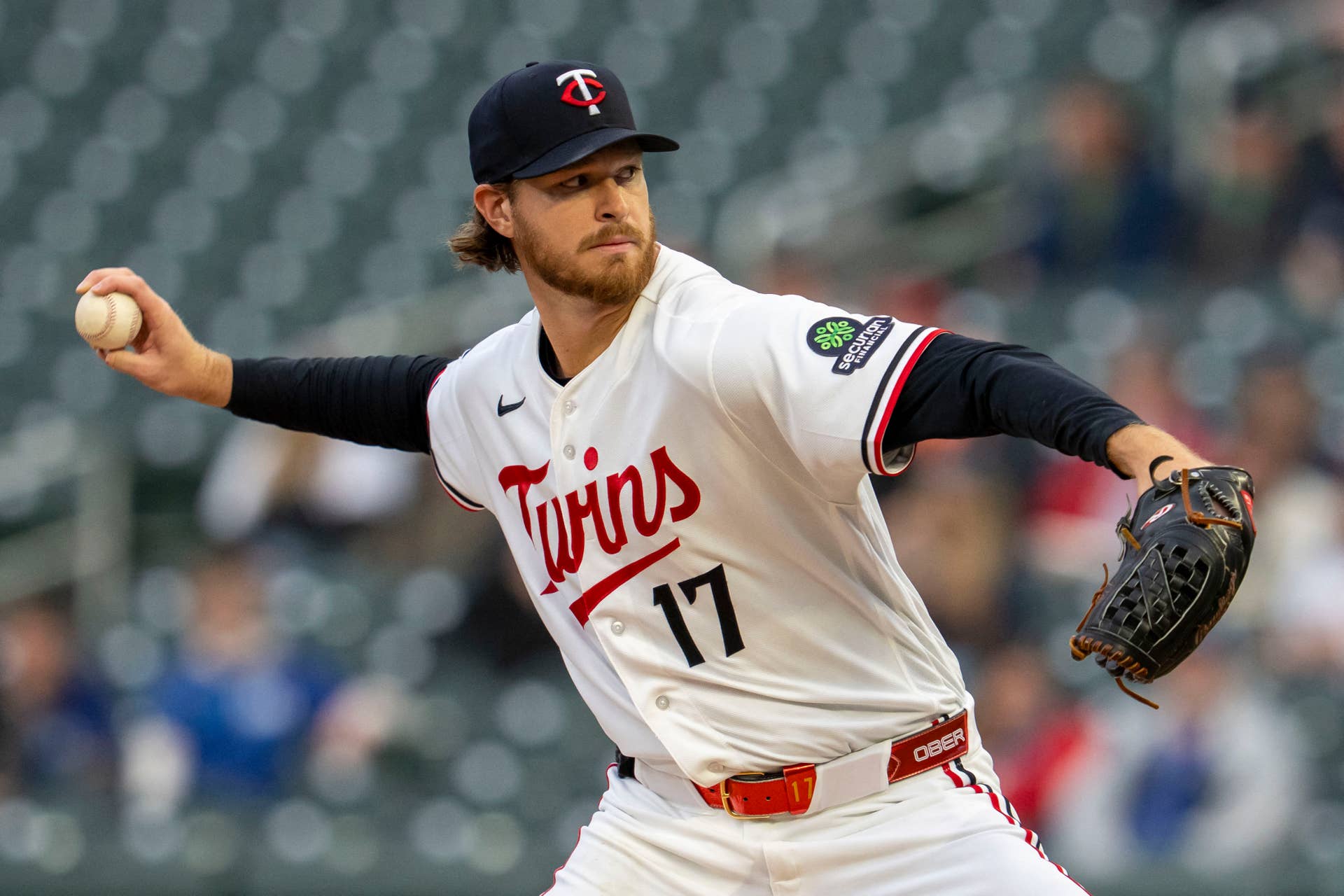
Bailey Ober threw a two-hit shutout against the Miami Marlins on May 12. He needed 89 pitches. Zero walks. Seven strikeouts. He didn't allow a hit after the fourth inning.
Ryan Jeffers, who caught every one of those 89 pitches, said it best afterward: "We were talking — if under 100 is a 'Maddux,' we're going to have to name under 90 an 'Ober.'"
That quote should be pinned to every fantasy waiver wire. Because if you're in a league where Bailey Ober is still available in mid-May 2026, the window to add an SP3 for free is closing. Fast.
The Historic Efficiency of "An Ober"
Jesse Johnson-Imagn Images
Let’s Revisit Greg Maddux For a Second
A "Maddux" — the industry shorthand for a complete-game shutout on fewer than 100 pitches — is already one of the rarest individual pitching performances in baseball. In 2025 alone it happened just 3 times (Nathan Eovaldi, Tarik Skubal and Sonny Gray). One of those (Gray) matched Ober at 89 pitches.
Greg Maddux, unequivocally stated, was a genius. In his career, he faced 20,421 batters and went to a 3-0 count on exactly 310 of them. Consider, of those 310 hitters, 177 were intentional walks, which means just 133 of them were unintentional. For context, that’s 0.65 percent of all batters faced enjoyed a 3-0 count.
(My favorite Maddux stat is actually not a pitching number. Maddux owns the major league record for total seasons with at least one stolen base without being caught: 10. He only stole 11 bases in 14 attempts but in 10 distinct seasons he swiped one without getting caught. You can bet your buddies $100 bucks that they won’t guess that, even if you give them 100 guesses.)
The Ober Comp
Ober didn't just throw a Maddux. He threw the second-most efficient shutout in Twins franchise history since pitch-tracking began in 1988. Only Bill Krueger's 85-pitch complete game in April 1992 was more economical. This was Ober's third career complete game, and both of his nine-inning outings have come in at exactly 89 pitches. That's not a coincidence. That's a signature.
His opponent that night was Eury Perez, a 6-foot-8 flamethrower averaging 98.1 mph on his fastball. Ober averaged 88.8 mph. The contrast was not subtle. And yet Ober was the one finishing on eight pitches in the ninth inning while Perez was in the clubhouse after six. This is why the box score alone doesn't capture what Ober does. He doesn't beat hitters with overwhelming stuff. He beats them with decisions — their bad ones, which he manufactures through pitch sequencing and location.
Efficiency of this kind reflects something real and largely sustainable: an ability to generate early contact, work ahead in counts, and avoid the deep counts that inflate pitch totals. For fantasy purposes, efficiency translates directly to workload. A pitcher who regularly hits 95 pitches by the sixth inning is a quality start liability. A pitcher who throws 89 pitches in nine innings is a 200-inning pitcher. Check the 2026 fantasy baseball pitcher rankings and you'll find that innings durability is one of the most undervalued categories in roto and points leagues alike.
Why Ober's Low Velocity Is Overstated
Jesse Johnson-Imagn Images
Changeup Command Is the Real Story
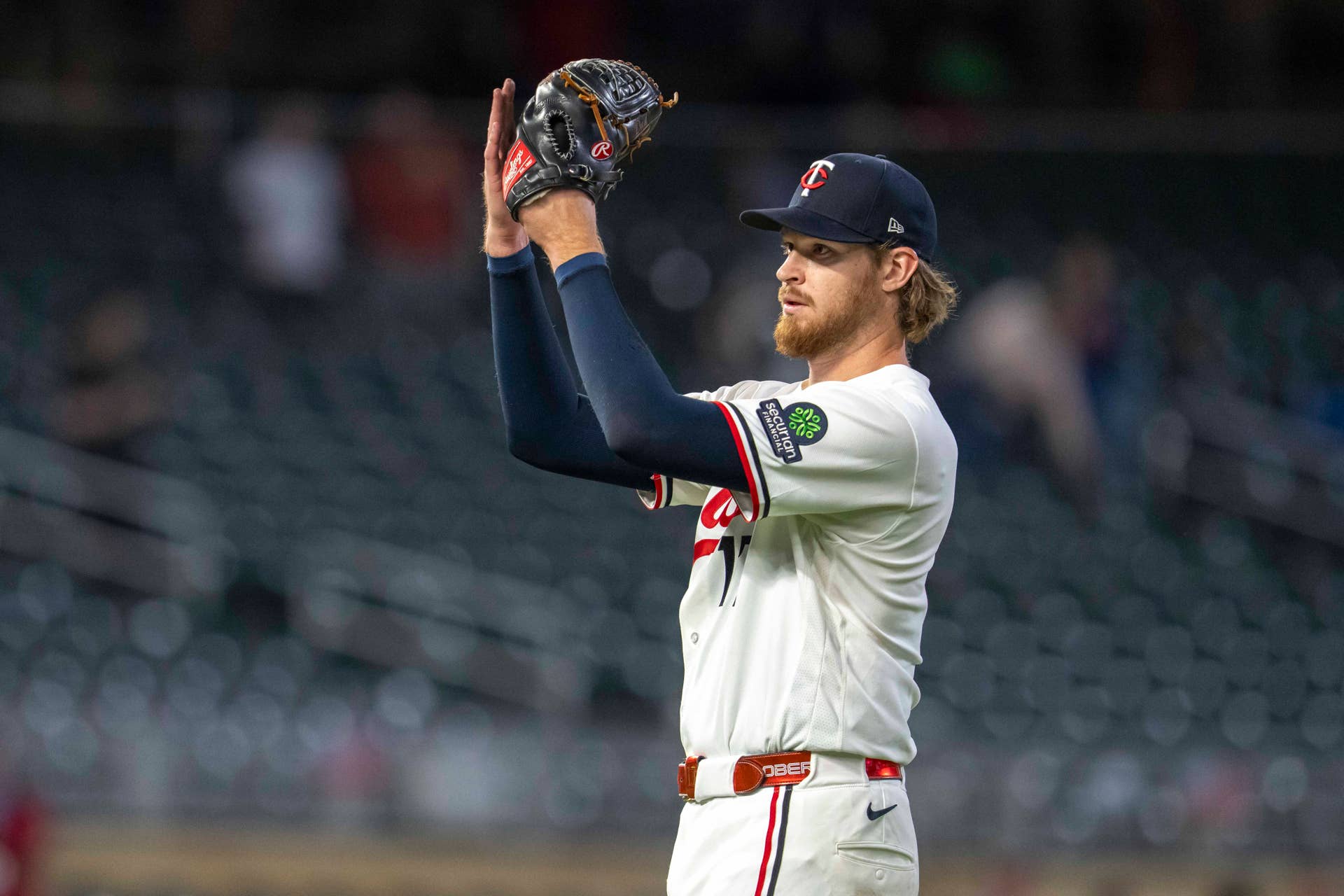
Ober's four-seamer averaged 88.8 mph in the shutout, and that number is representative of where he lives in 2026. He hit 90 mph exactly three times in 89 pitches. The fastball is not a weapon.
It doesn't have to be.
In 2024, Ober posted a career-best season: 178.2 innings, 191 strikeouts, a 27.1% strikeout rate, and a 3.81 FIP across 30 starts. His WHIP finished fourth among qualified AL pitchers at 1.00. His strikeout-to-walk ratio ranked seventh. None of that happened because he was blowing hitters away. It happened because his changeup, which he threw over 36% of the time in 2025, generated the second-most strikeouts on any single pitch in baseball — 84 Ks, behind only Cristopher Sanchez.
The changeup works for the same structural reason it always has: it looks like the fastball until it doesn't. When you're throwing 88-89 mph, the separation between your fastball and your changeup is narrow in absolute terms but still plenty of gap in terms of hitter reaction time, especially when the location is precise. Twins pitching coordinator Pete Maki told FanGraphs that Ober's changeup command is top-notch: ""The location of the changeup has been a lot more crisp and sharp." That's the development that matters most right now.
His 2026 arsenal has also added a firm cutter-slider hybrid that plays off both the fastball and the changeup, giving him a genuine third option against right-handed hitters. The result is a pitcher who wins through tunneling, sequencing, and the kind of contact management that low walk rates tend to predict better than strikeout rates. Anyone worried about fantasy baseball regression to the mean in 2026 should note that Ober's profile is built on process, not luck-dependent outcomes. His BABIP has been stable because his pitch mix generates soft contact by design.
Fantasy Strategy — Why You Should Take the Ober Now
Jesse Johnson-Imagn Images
Add, Trade, and Roster Guidance
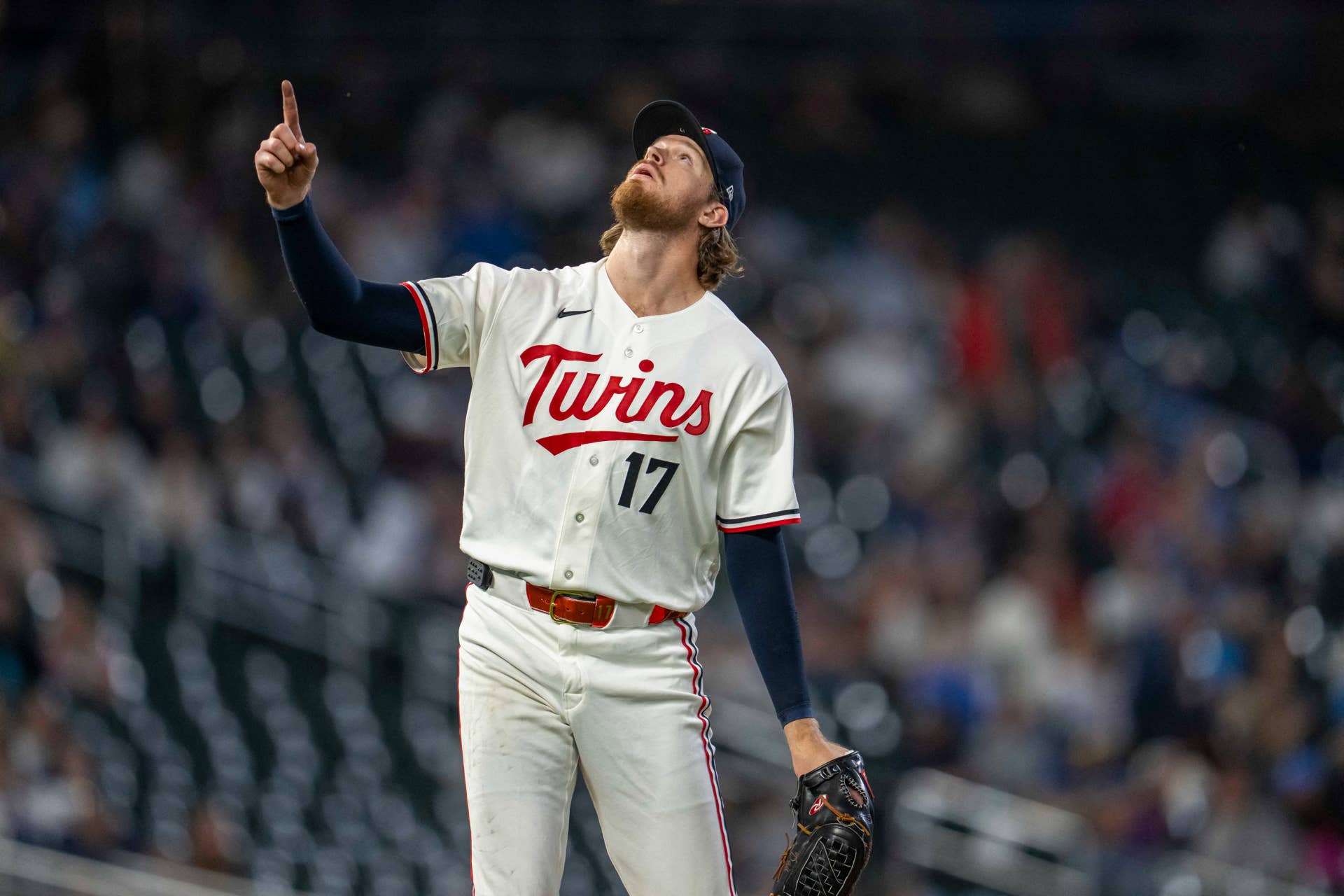
The market hasn't caught up to Ober yet, and that gap is the opportunity.
Part of why he's available is that the Twins don't generate much national attention. Part of it is the velocity number, which reads ugly on a surface-level scan. Part of it is that he had a rough stretch in 2025 — a seven-earned-run outing against Texas in June that scared off some managers — and that recency bias lingers. But the underlying profile has been consistent and strong, and the 89-pitch shutout is the kind of event that eventually forces the market to reprice.
Standard 12-team leagues: Add him immediately if he's on the wire. He's an SP3 with SP2 upside in a healthy season. If he's rostered, a mid-tier prospect or secondary piece can move him.
Deeper leagues (14-team or more): Ober should already be rostered in these formats. If he isn't, this is an emergency add.
Points leagues: Ober's profile — deep into games, low walk totals, reasonable strikeout rate — is directly points-optimized. His durability is the key. A pitcher with 175-plus innings and a sub-2.0 BB/9 accumulates points at a steady rate all season without the boom-or-bust variance that hurts fantasy managers who chase high-K arms.
Start/sit: Start him with confidence at home. He hasn't lost at Target Field yet in 2026, and his command profile plays better in parks that don't inflate fly-ball damage.
The rest-of-season outlook is an ERA in the mid-3.00s, a walk rate under 2.0 per nine, and somewhere between 165 and 185 innings if he stays healthy. The risk factors are real: he's had injury interruptions before, the HR/FB rate can spike when his command slips, and the Twins lineup provides modest run support most nights. None of that changes the risk-reward calculus on the waiver wire.
Ober is a pitcher who wins in ways that don't show up until you look closely. His fastball doesn't announce itself. His changeup doesn't make highlight reels. He just works quickly, throws strikes, and finishes games. Ryan Jeffers didn't shake him off once in 89 pitches. That's what command actually looks like.
They're calling it an Ober now. Go get one.
Bailey Ober Questions, Answered
What made Bailey Ober's recent start historic?
Ober threw a two-hit shutout against the Marlins on May 12 using only 89 pitches, making it just the second time a Twins pitcher has completed a shutout on fewer than 90 pitches since pitch tracking began in 1988.
Is Bailey Ober's low velocity a major concern in 2026?
Despite averaging 88.8 mph on his fastball, Ober's elite changeup command neutralizes the velocity gap — he generated the second-most strikeouts on a single pitch in all of baseball in 2024 using that changeup.
Should I add Bailey Ober off waivers right now?
Yes — Ober is a legitimate SP3 still sitting on waivers in most leagues, and the 89-pitch shutout is the kind of performance that triggers a market reprice within days.
What are Bailey Ober's realistic 2026 projections?
Expect an ERA in the mid-3.00s, a walk rate under 2.0 per nine innings, and between 165 and 185 innings if he stays healthy.
Which league formats benefit most from adding Ober?
Points leagues benefit most directly, since his durability, low walk totals, and ability to pitch deep into games generate steady point accumulation without the boom-or-bust variance of high-strikeout arms.
How long will Bailey Ober remain available on waivers?
A complete-game shutout on 89 pitches tends to move the needle fast — add him now or expect him gone within the week.


