


The Belgian Grand Prix weekend at Spa-Francorchamps is always an emotional one as Formula 1 remembers Anthoine Hubert, the talented French driver who died in a Formula 2 race at the circuit in 2019.
Hubert was considered one of France's most promising young talents. He won the 2018 GP3 Series title and then moved up to Formula 2 with Arden and joined the Renault Sport Academy, which is a step towards Formula 1. Unfortunately, his career was prematurely ended on August 31st, 2019, in the Formula 2 Feature Race at Spa-Francorchamps.
What Caused Anthoine Hubert's Fatal Crash at Belgian GP?
The crash happened on lap two of the race when the pack was making its way through Raidillon, one of the quickest parts of the track.
The accident started when Giuliano Alesi's rear right tyre burst, causing his car to hit the barriers and scatter debris on the track. Ralph Boschung slowed and turned toward the run-off area to avoid the wreckage as drivers approached the scene.
Hubert arrived shortly after with poor visibility and contacted Boschung's vehicle. Hubert's front wing was damaged in the collision, and his car went into the tire barriers. His car hit the barriers and bounced back across the track into the race track.
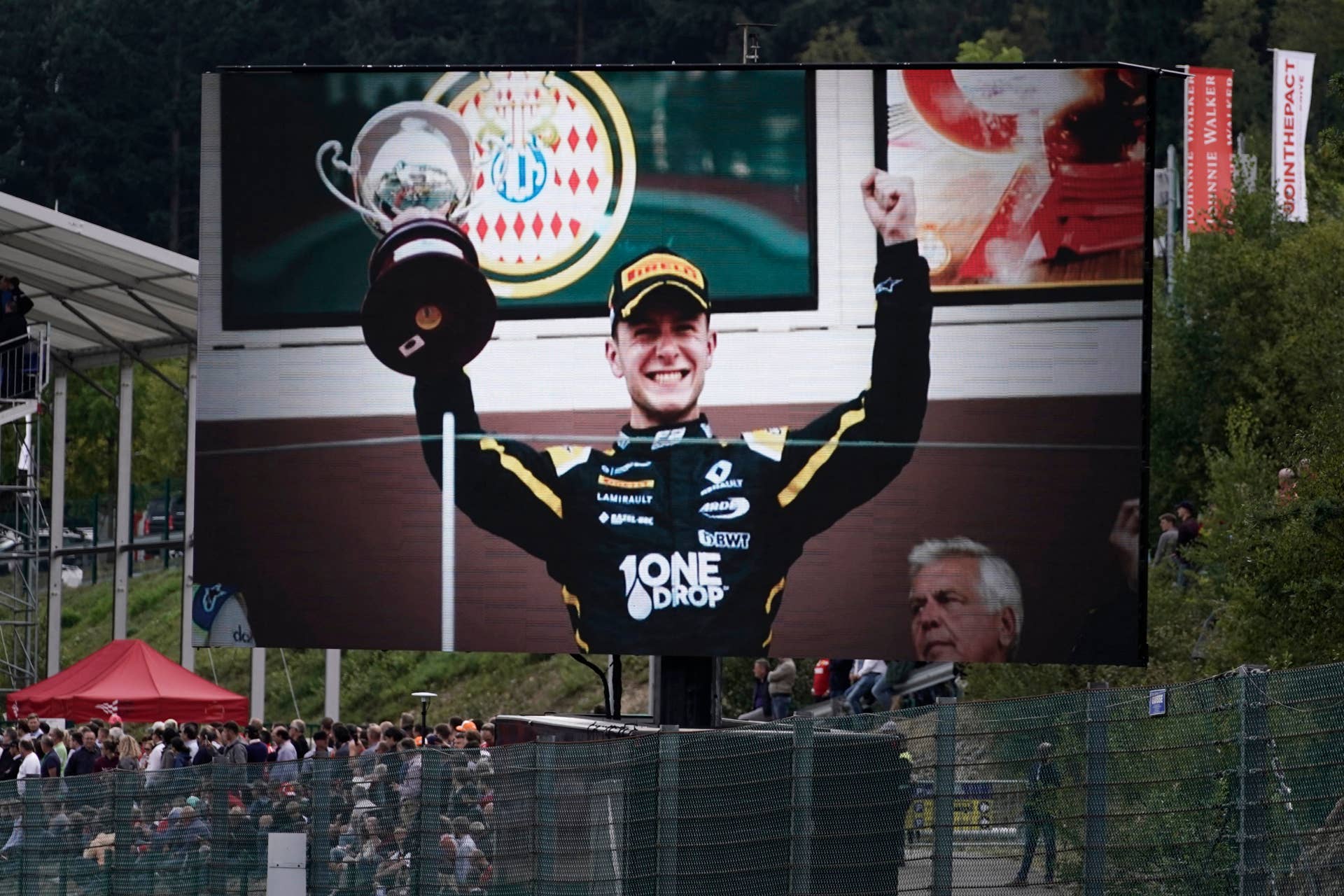
(Photo by Kenzo TRIBOUILLARD / AFP via Getty Images)
Juan Manuel Correa, who also had debris from Alesi's accident in his vehicle, was not able to avoid the stationary Hubert's car. Correa collided with the side of Hubert's car at high speed in a devastating impact.
After a thorough investigation, the FIA determined that Hubert suffered "non-survivable trauma" as a result of the forces involved in the collision. The governing body found there was no single cause of the accident and determined that no driver was solely responsible.
How Anthoine Hubert's Legacy Changed Motorsport Safety
Hubert's death had a profound impact throughout the motorsport community, particularly on close friend Pierre Gasly, who continues to pay tribute to him whenever Formula 1 returns to Spa. The next day's Formula 2 Sprint Race was cancelled in a gesture of respect.
The FIA's investigation led to several safety recommendations for Formula 1, Formula 2, Formula 3, Formula 4, and Formula E. These included additional testing of barrier performance, accident data, and car design to minimize the risk of similar high-energy side impacts.