


The Setting
Tom Fazio has spent five decades shaping some of the world’s most celebrated golf courses. Shadow Creek. World Woods. Multiple Pinehurst layouts. More than 300 courses bear his signature. Yet when asked about Nauka Golf Club, the 79-year-old architect doesn’t hesitate: it ranks among the top three he’s ever built.
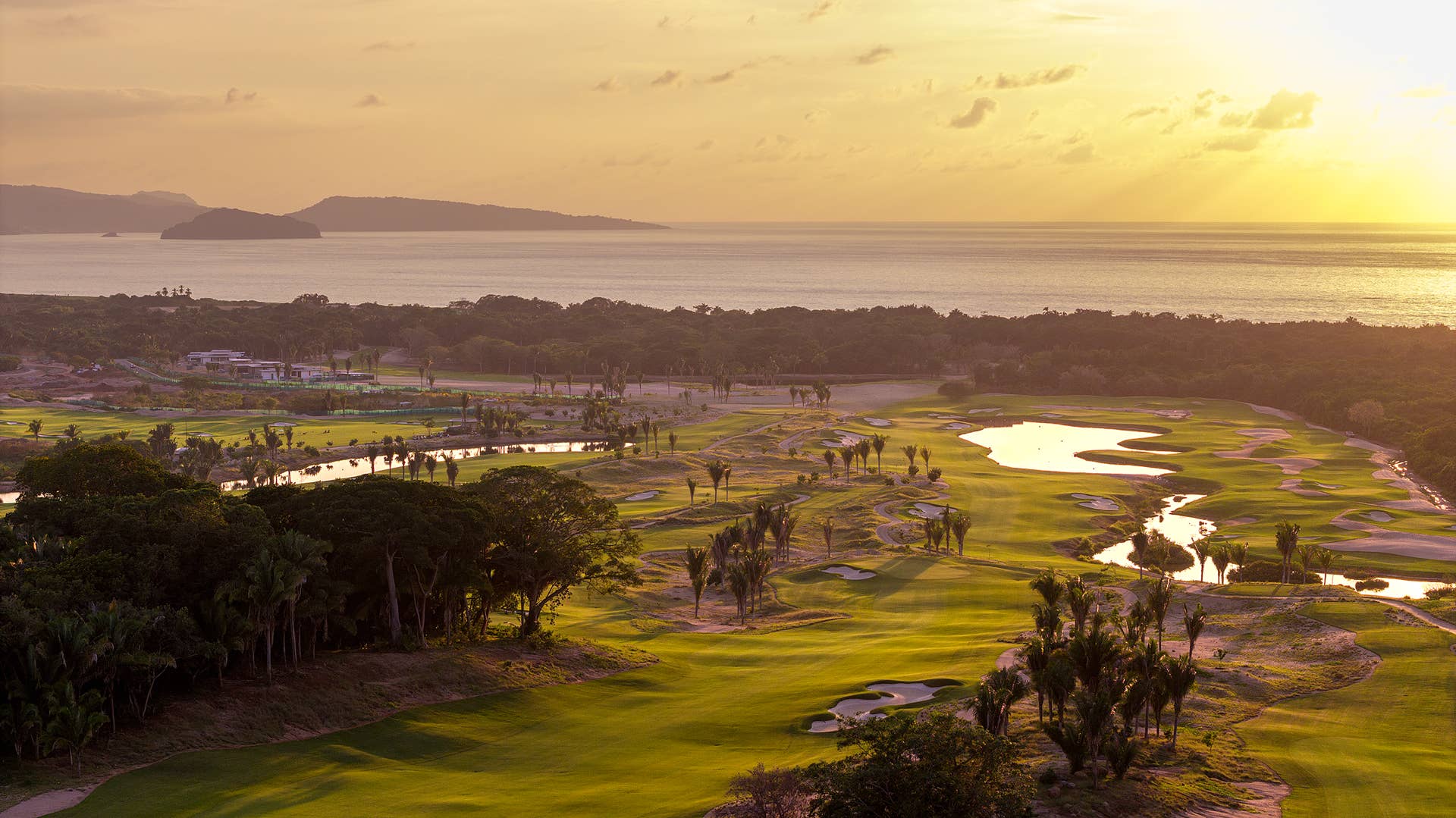
What makes this new private club in Mexico’s Riviera Nayarit so special? Start with 920 acres of raw, untouched Pacific coastline that developer Jaime Fasja handed over with a simple directive: create something extraordinary. Add 60 million cubic feet of sand dredged from marina construction. Then give Fazio the freedom to route holes through volcanic cliffs, old-growth jungle, mangrove estuaries and 4.3 miles of oceanfront property.
The result, which opened in October 2025, is a course unlike anything else in Mexico, and perhaps anywhere.
Four Courses in One
Nauka doesn’t reveal itself all at once. The experience unfolds in chapters, each with its own character and challenge.
The opening stretch eases you in with a reachable par 5 before the terrain starts to assert itself. By the third hole, a short par 4, you’re navigating drives around deep bunkers with a towering Parota tree standing sentinel in the fairway. The fifth climbs upward through a striking fusion of dunes and jungle to a green with severe tiers that punish imprecise approaches.
The sixth hole, a 518-yard par 4 from the championship tees, plays as the course’s longest and most demanding two-shotter. This downhill dogleg left requires both power and precision, and walking off with par feels like a genuine accomplishment.
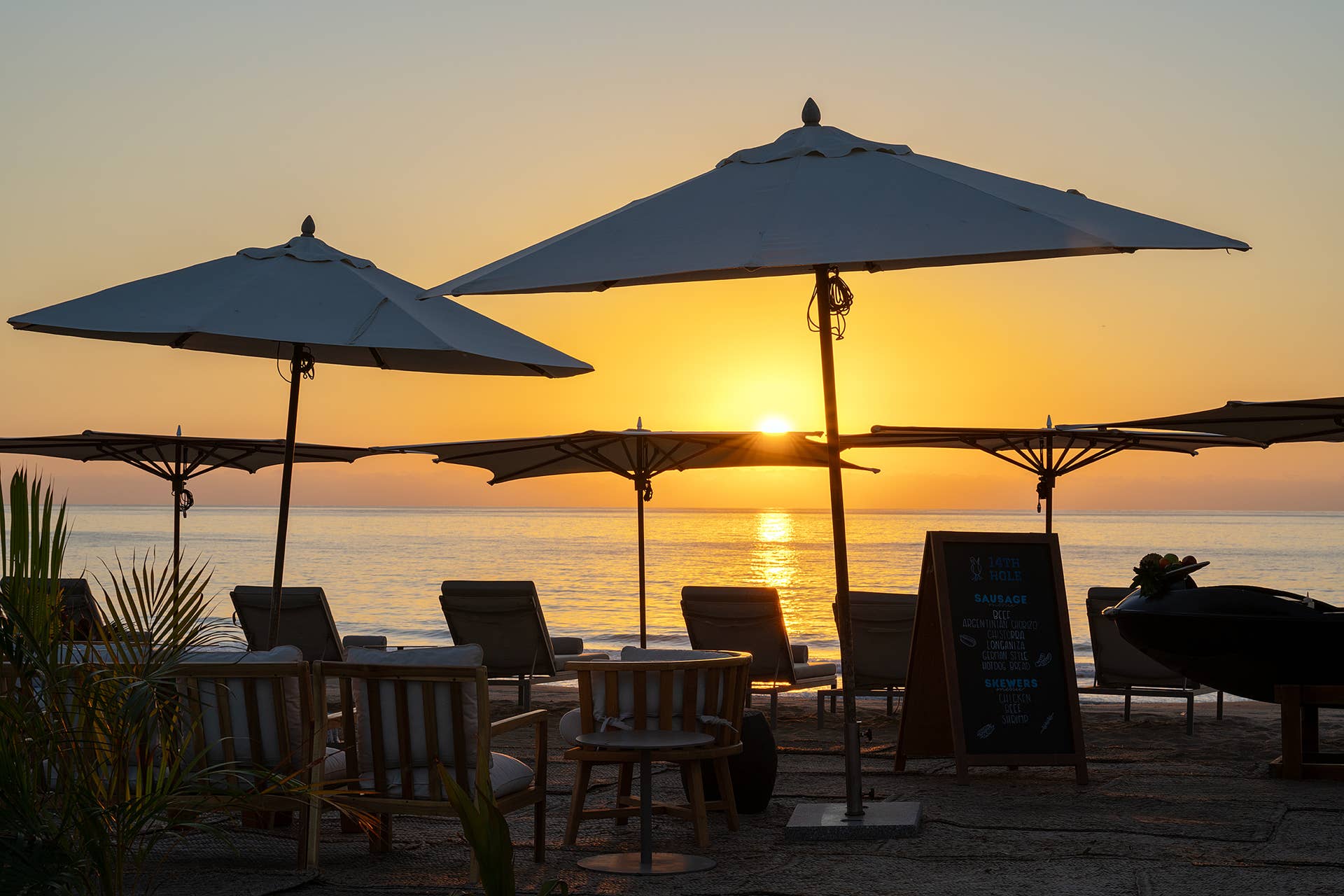
But it’s the back nine where Nauka truly distinguishes itself. Three consecutive holes, the 14th, 15th and 16th, trace the Pacific shoreline for nearly a mile. The 14th is a par 3 where the tee boxes sit directly on beach sand, your feet sinking slightly as you settle into your stance. The shot plays across an estuary to a green with waves crashing just beyond it, close enough that salt spray drifts across the putting surface on windy days. The staff keeps towels and cold drinks at the tee, and most groups strip down for a quick dip in the ocean between shots. It’s the kind of moment that makes you forget you’re keeping score.
Built on Sand
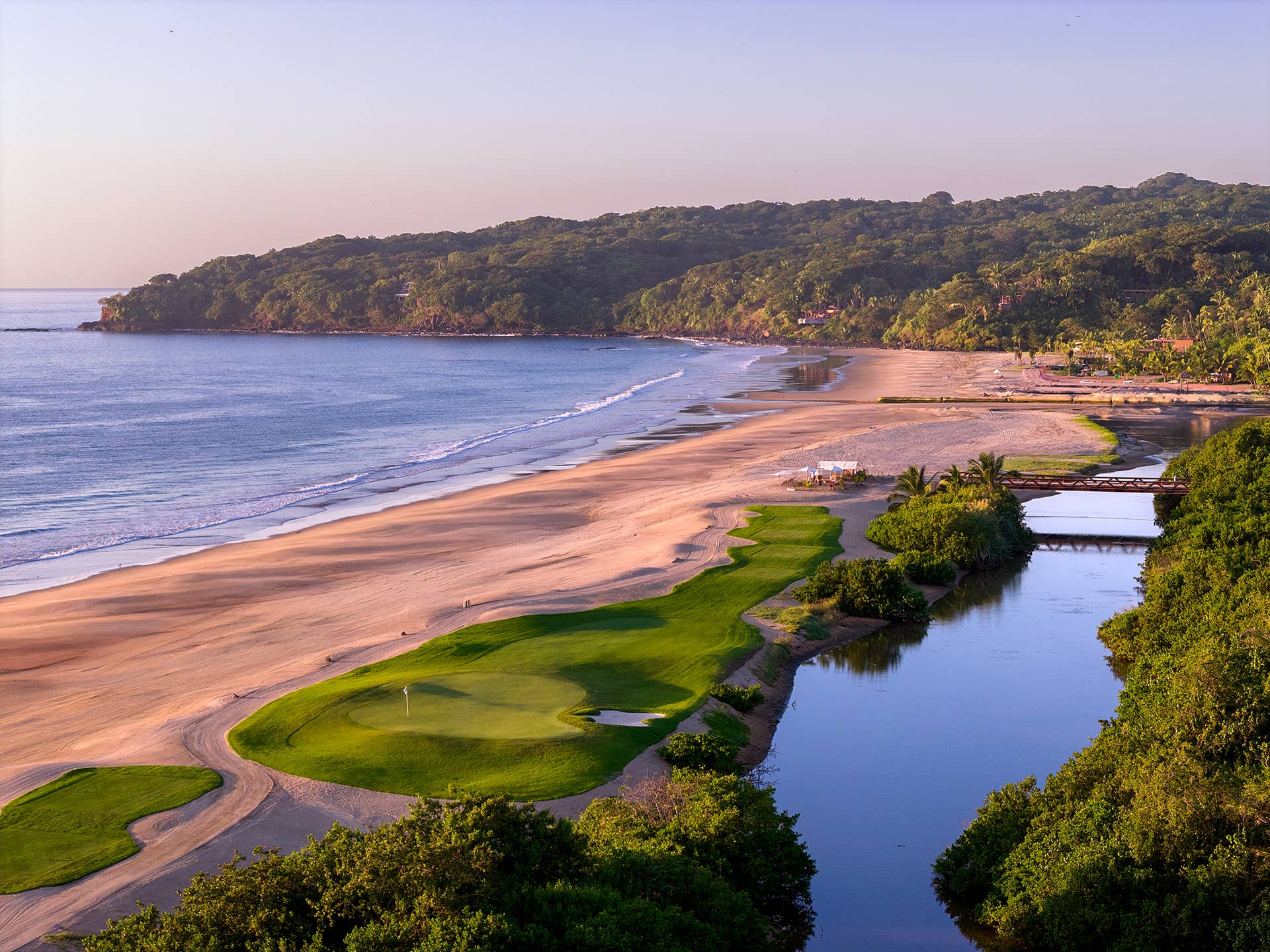
The construction narrative reveals why Fazio’s expectations ran so high. When Fasja’s team dredged the deep-water marina, they created a mountain of sand, 60 million cubic feet of it. Rather than haul it away, they offered it to Fazio.
For a designer who’s built his reputation on meticulous drainage and conditioning, this was like handing Michelangelo a fresh block of Carrara marble. Fazio’s crew used the sand to cap every fairway and green to a depth of five feet, an extraordinary specification that ensures flawless drainage and pristine turf regardless of weather.
Halfway through the design process, Fazio spotted a problem. The routing felt constrained through the front nine. An adjacent 40-acre parcel, just beyond the property line, would solve everything. He approached Fasja with the request, calling it “the cherry on top of the cake.”
Two weeks later, Fasja had acquired the land. Those 40 acres now form critical sections of the third, fourth and fifth holes, transforming what might have been a weakness into one of the course’s most compelling stretches.
“That really made it happen,” Fazio said. “That really made it work.”
More Than Just Golf
Mark Birnbaum, the New York restaurateur behind Catch and a partner in LIFE Properties International, has orchestrated the culinary and hospitality experience. His influence shows everywhere.
The Nest, a clubhouse perched on a hillside overlooking the eighth green, serves what Birnbaum calls “elevated comfort food with a Mexican soul.” The signature item is the Burger-Dilla, exactly what it sounds like, a cheeseburger wrapped in a grilled flour tortilla. The dessert bar runs six feet long and features a rotating selection of house-made ice creams, churros with dipping sauces, and a tres leches cake that arrives at the table still soaking. Down at the Nauka Beach Club, the menu emphasizes fresh-caught seafood and vegetables grown in the property’s organic gardens.
For wellness, there’s a 15-acre sanctuary woven through the mangroves. Bamboo structures connected by sandy paths house treatment rooms offering everything from massage therapy to Temazcal, a traditional indigenous sweat lodge ceremony.
And for those who want to keep playing after dark, The Booby Trap, a lighted 9-hole par 3 course also designed by Fazio, provides the perfect evening diversion.
Who’s Playing
From the back tees, Nauka measures 7,602 yards and presents a stern test for accomplished players. Several touring professionals have already purchased homesites, drawn by both the lifestyle and the opportunity to practice on a championship-caliber layout during their downtime.
“These guys are on tour and on their off days coming down to practice and work on their game,” Birnbaum says.
But the course offers five tee boxes, making it playable for golfers of varying abilities. Choose the right set for your game, and Nauka becomes challenging without being punishing, the hallmark of thoughtful design.
Access to this private enclave comes primarily through membership, though there is one alternative. Siari, a 91-room Ritz-Carlton Reserve that opened this fall, occupies a corner of the property. As just the ninth Ritz-Carlton Reserve worldwide, it offers guests limited tee times at Nauka along with five on-site restaurants and a private beach club.
The Bigger Picture
Fasja insists Nauka represents something beyond typical resort development. When you’re working with five miles of pristine coastline, volcanic geology and protected jungle, the approach demands respect for the landscape.
“It’s not about creating volume,” Fasja said. “It’s about creating legacy.”
The club has adopted the Blue Footed Booby as its symbol, a distinctive seabird with bright blue feet that nests primarily in the Galapagos Islands. The Pacific coast of Riviera Nayarit represents one of the only other places these birds establish colonies, drawn to the rocky outcroppings and protected waters. There’s a reason certain species choose certain places. The booby knows what it’s looking for.