


Tiger Woods won 82 times on the PGA Tour. Jack Nicklaus won 73. Sam Snead won 82.
Masashi “Jumbo” Ozaki won 94 times on the Japan Golf Tour.
Never heard of him?
That’s precisely the point.
Golf history has a strange way of sorting its legends. A handful of names survive every generation. Nicklaus, Woods, Palmer, Hogan, Snead. On the women’s side, Sorenstam, Whitworth, Wright and Lopez still carry immediate recognition.
Then there is another group.
They won dozens of tournaments. They collected majors. They beat some of the biggest names the game has ever produced. Every golfer on this list is in the World Golf Hall of Fame.
Yet mention them around a modern golf crowd and there is a decent chance somebody reaches for a phone.
This is not an attempt to compare victories across tours and eras as if every tournament were equal. They were not. No honest comparison turns 94 wins in Japan into 94 wins on the PGA Tour.
That is not the argument.
The argument is that 94 is far too many wins for a golfer to become an afterthought.
These five players represent one of the more fascinating disconnects in golf history: the difference between being great and remaining famous.
Masashi “Jumbo” Ozaki: 94 Wins and a Giant in Japan
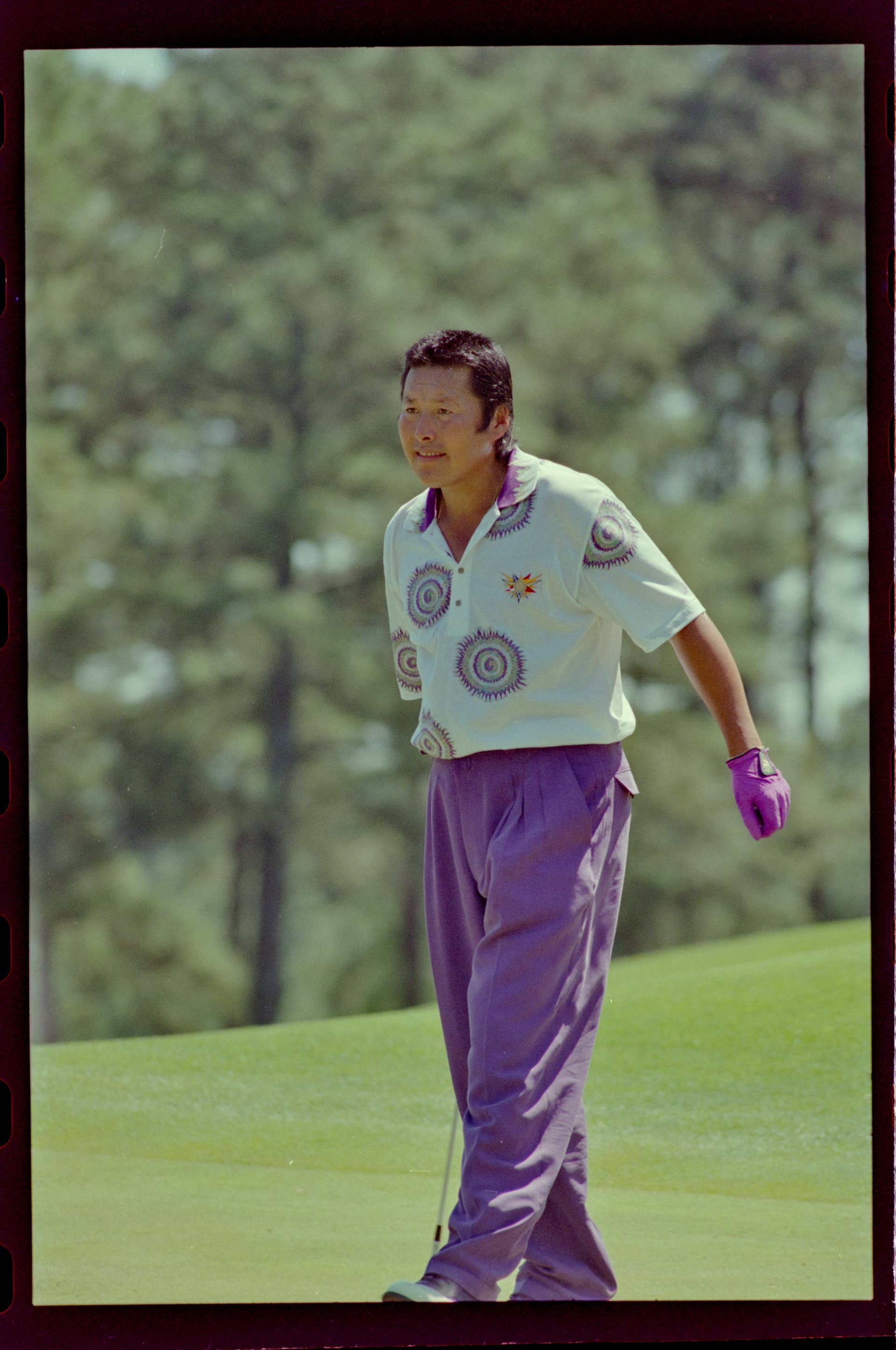
Ozaki is the perfect place to start because his résumé almost sounds like a typo.
It isn’t.
The Japan Golf Tour credits Ozaki with 94 victories since the tour system began in 1973, the most in its history. He also led its money list a record 12 times.
Ninety-four.
For perspective, Woods and Snead share the official PGA Tour record with 82 victories. Again, the tours cannot simply be placed side by side and treated as equivalent. But winning professional golf tournaments anywhere 94 times requires a level of sustained dominance almost impossible to comprehend.
Ozaki was not some regional curiosity who never tested himself elsewhere, either.
He made more than 80 PGA Tour starts, reached No. 5 in the world ranking in 1996 at age 49 and recorded top-10 finishes in three majors: tied for eighth at the 1973 Masters, tied for 10th at the 1979 Open Championship and tied for sixth at the 1989 U.S. Open. He also played for the International Team in the 1996 Presidents Cup.
What Ozaki never did was win in the United States.
That mattered to the way much of the American golf audience remembered him.
In Japan, there was no such problem.
Ozaki became one of the central figures in the growth of professional golf there, eventually joining the World Golf Hall of Fame in 2011. He died in December 2025 at age 78 after a battle with colon cancer. The Japan Golf Tour’s tribute described a player whose name appeared throughout its record book because of a level of dominance the organization’s chairman said he had never witnessed from anyone else.
That is quite a legacy for a golfer many American fans could not pick out of a lineup.
Hisako Higuchi: A Pioneer With 72 Career Victories
If Ozaki exposes the geographic blind spot in the way golf history is often told in America, Hisako “Chako” Higuchi makes the point even more forcefully.
The JLPGA credits Higuchi with 72 career victories, 69 in Japan and three overseas. She won the JLPGA Championship nine times and the Japan Women’s Open four times.
Then she did something no Asian golfer had done before.
Higuchi won the 1977 LPGA Championship, becoming the first Asian player, male or female, to win a major championship. The LPGA recognizes that victory as one of the landmark moments in its history.
She closed with a 69 and won by three strokes.
The victory produced a ticker-tape parade in Tokyo. Decades before Japanese stars became regular fixtures across the international golf landscape, Higuchi had already broken through one of the sport’s largest barriers.
Her American exposure was relatively limited. Beginning in 1969, Higuchi played the LPGA Tour part time for 10 years, according to the World Golf Hall of Fame. The most LPGA events she played in one season was 15, although she still finished 10th on the money list in 1976.
Judy Rankin once summarized what made Higuchi so dangerous in wonderfully simple terms: “If you made a mistake, she would be there.”
In Japan, people reportedly stopped and applauded when they saw her walking the streets of Tokyo. She later became one of the most important administrators in Japanese women’s golf and was inducted into the World Golf Hall of Fame in 2003.
Think about that contrast.
Seventy-two victories. A major championship. A pioneer who changed what was possible for Asian golfers.
And to a significant portion of today’s American golf audience, almost no name recognition at all.
Betsy Rawls: 55 LPGA Wins and Eight Majors
Betsy Rawls is different from Ozaki and Higuchi.
There is no geography to explain why Americans might have lost track of her.
Rawls was one of the greatest American golfers ever.
She won 55 LPGA Tour events and eight major championships. Her major haul included four U.S. Women’s Opens, two LPGA Championships and two Women’s Western Opens.
Four U.S. Women’s Opens alone should make a golfer nearly impossible to forget.
Only Mickey Wright has matched Rawls’ four victories in the championship. Rawls won hers in 1951, 1953, 1957 and 1960.
Her 1959 season was ridiculous even by the standards of the LPGA’s early giants. Rawls won 10 times that year, including two majors, and captured the Vare Trophy.
Perhaps the most remarkable part of her story is how late it began.
Rawls did not start playing golf until she was 17. Four years later, she had already won the Texas Amateur. By 1951, she was a professional and a U.S. Women’s Open champion.
Her contribution continued long after the trophies stopped coming. Rawls became a tournament administrator, worked with the USGA and in 1980 became the first woman to officiate at the men’s U.S. Open. She received the USGA’s Bob Jones Award in 1996 and had been inducted into the World Golf Hall of Fame nine years earlier.
She was not simply a champion from a distant era.
She helped build the infrastructure of the women’s professional game.
Rawls died in 2023 at age 95, and the raw numbers attached to her obituary still demanded a double take: 55 wins, eight majors, four U.S. Women’s Opens.
For a career that large, her place in everyday golf conversation has become surprisingly small.
Lloyd Mangrum: 36 PGA Tour Wins After Surviving a War
There are forgotten champions.
Then there is Lloyd Mangrum.
Mangrum officially won 36 times on the PGA Tour, a total that would make almost any modern professional’s career look modest by comparison. He won the 1946 U.S. Open, led the Tour money list in 1951 and captured the Vardon Trophy in 1951 and 1953.
And golf was only half of his story.
Mangrum’s career was interrupted when he entered the U.S. Army during World War II. He served as a staff sergeant in the Third Army, broke his arm when a jeep overturned during the invasion of Normandy and later suffered shrapnel wounds during the Battle of the Bulge.
He returned home with four battle stars and two Purple Hearts.
Then he returned to tournament golf against Ben Hogan, Byron Nelson, Sam Snead and Jimmy Demaret.
In 1946, at the first U.S. Open played after World War II, Mangrum tied Nelson and Vic Ghezzi after 72 holes at Canterbury Golf Club near Cleveland. The championship required a 36-hole playoff before Mangrum finally prevailed.
He kept winning.
Mangrum captured six PGA Tour events in 1948 and finished among the top 10 in 21 tournaments that season, according to the World Golf Hall of Fame. He later lost the 1950 U.S. Open to Hogan in another three-man playoff at Merion.
His Masters record was also exceptional. In 20 appearances, Mangrum recorded 12 top-10 finishes.
Thirty-six Tour wins. A U.S. Open. Two Vardon Trophies. A remarkable Masters record.
Two Purple Hearts.
Mangrum has one of the strongest cases on this list for a career that deserves far more attention than it receives.
Leo Diegel: The Man Who Finally Stopped Walter Hagen
Leo Diegel gives us one final reminder that golf’s record book gets murkier the farther back we travel.
Even his official victory total requires a footnote.
The World Golf Hall of Fame credits Diegel with 30 PGA Tour victories between 1920 and 1934. The PGA Tour’s current online player database lists 28 career wins. Rather than choose whichever number looks better, the discrepancy is worth acknowledging as one of the recordkeeping complications that accompanies professional golf from a century ago.
The part that does not require any interpretation is this:
Leo Diegel won consecutive PGA Championships in 1928 and 1929.
And what he did to win the first is an important piece of golf history.
Walter Hagen entered the 1928 PGA Championship having won four consecutive titles and 22 straight matches in the championship’s match-play format.
Diegel beat him.
The PGA of America’s championship history credits Diegel with defeating Hagen, 2 and 1, to snap that 22-match streak before eventually beating Al Espinosa, 6 and 5, in the final.
A year later, Diegel won the PGA Championship again and beat Hagen along the way again. In four Ryder Cups, including the inaugural matches in 1927, the World Golf Hall of Fame says Diegel lost only once.
He was also one of the great iron players of his era and good enough to contend repeatedly beyond the PGA Championship. Diegel finished in the top four seven times across the U.S. Open and Open Championship without winning either.
Walter Hagen remains one of the first names mentioned when the formative giants of American professional golf are discussed.
The man who finally stopped his historic PGA Championship run is considerably harder to find in the conversation.
That may be the larger lesson running through all five careers.
Golf history is not necessarily a meritocracy of memory.
Geography matters. Major championships matter. Television matters. The era in which a player competed matters. So does whether the next generation continues telling the story.
Ozaki, Higuchi, Rawls, Mangrum and Diegel did their part.
They won.
Again and again and again.
All five eventually reached the World Golf Hall of Fame, which means golf formally decided that their careers belonged among the most important in the game’s history.
The surprising part is how many fans still need an introduction.
Never heard of Jumbo Ozaki?
Now you have.
The more remarkable question is why 94 wins required an introduction in the first place.
PGA of America Golf Professional Brendon Elliott is an award-winning coach and golf writer who serves as Athlon Sports Senior Golf Writer. Read his recent “The Starter” on R.org, where he is their Lead Golf Writer. To stay updated on all of his latest work, sign up for his newsletter or visit his MuckRack Profile.


