


While it’s great that the transfer portal has allowed so many smaller-school prospects to show what they can do at bigger programs and increase their draft stock as a result, every draft class still has its share of successful players who come from those smaller colleges.
According to a March, 2025 ESPN study, since the new transfer portal rules allowing players to transfer once without sitting out a season went into effect for the 2021 NCAA season, the rate of players transferring at least once before their scouting combines has skyrocketed from 8.4% in 2021 to 38.2% in 2025. One catalyst was an alteration to the transfer rule in 2024 that allowed players to transfer as many times as they wanted as long as they met academic requirements.
The majority of those players are not moving to smaller programs.
Still, every draft class has its share of small-school, underrated prospects who are more ready for the NFL than people may think, and here are 12 such prospects invited to the 2026 scouting combine who could easily see their stocks rise dramatically in Indianapolis.
(All advanced metrics courtesy of Pro Football Focus unless otherwise indicated. All prospect height and weight measurements are unofficial until they're measured at the scouting combine).
Cole Payton, QB, North Dakota State
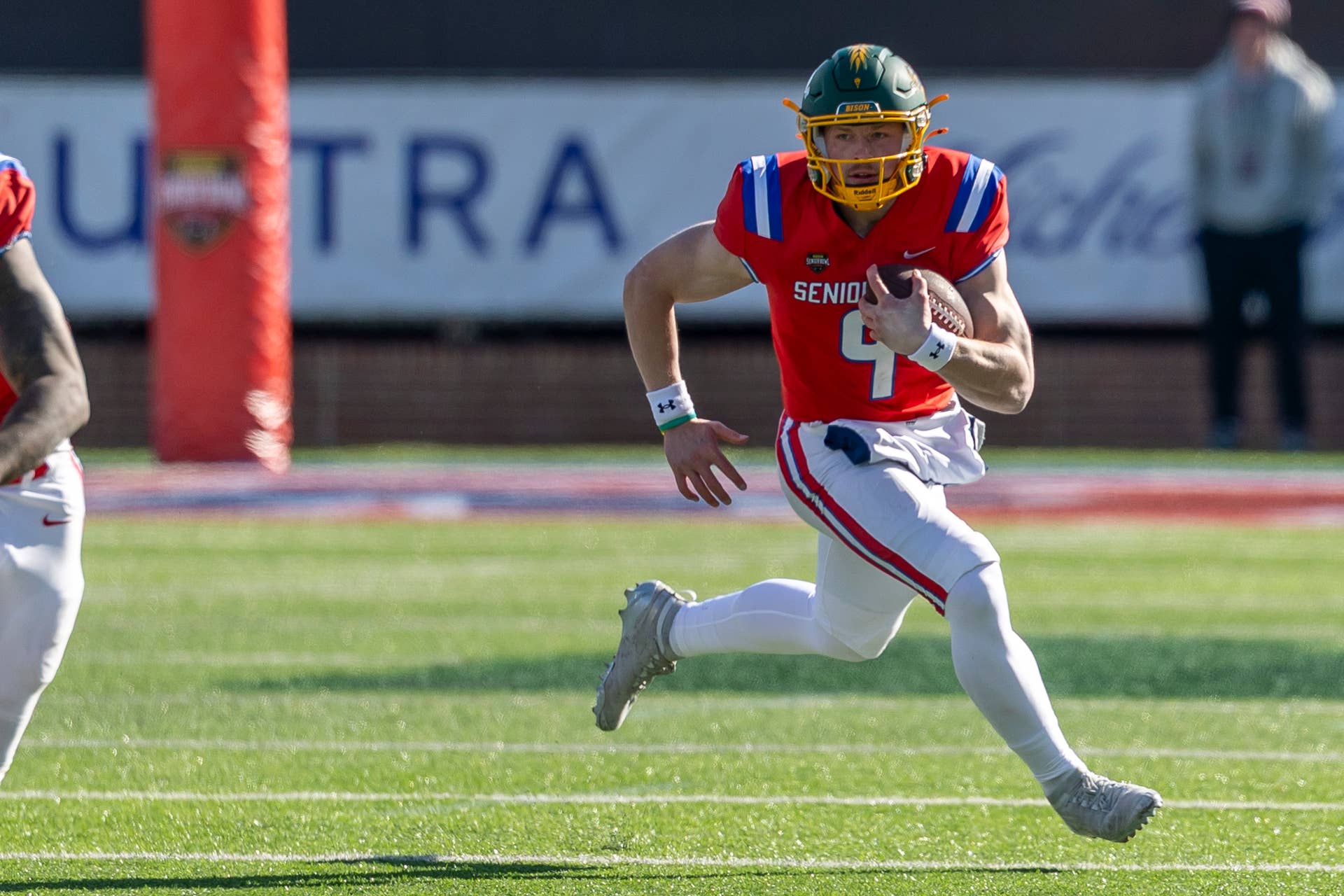
After four seasons as a backup with the Bison, Payton finally got his shot as a starter in the 2025 season, and he made the most of it. As a passer, he completed 161 of 226 (71.2%) for 2,719 yards (12.0 yards per attempt), 16 touchdowns, four interceptions, and a passer rating of 127.8. There are plenty of examples of Payton throwing downfield with velocity and anticipation into tight windows, and he should nail the throwing drills in Indianapolis.
Payton was actually at his best as a deep thrower in 2025, completing 35 of 56 passes of 20 or more air yards for 1,247 yards, eight touchdowns, one interception, and a passer rating of 138.4. To put that in perspective, Fernando Mendoza had a deep passer rating of 130.1, Diego Pavia's was 102.2, and Ty Simpson's was 101.2.
But really, it's as a runner where Payton could make his bones at the combine. At 6-foot-3 and 233 pounds, he has been compared at times to a version of Tim Tebow who could actually read defenses and make all the throws, which is a bit hilarious, because Tebow ran more like a fullback, while Payton has legitimate open-field speed. He ran 120 times last season for 894 yards (7.5 yards per attempt), 13 touchdowns, 408 yards after contact, 39 forced missed tackles, and seven runs of 15 or more yards.
When you put it all together, Cole Payton should be must-see TV during his combine drills.
Robert Henry Jr., RB, UTSA
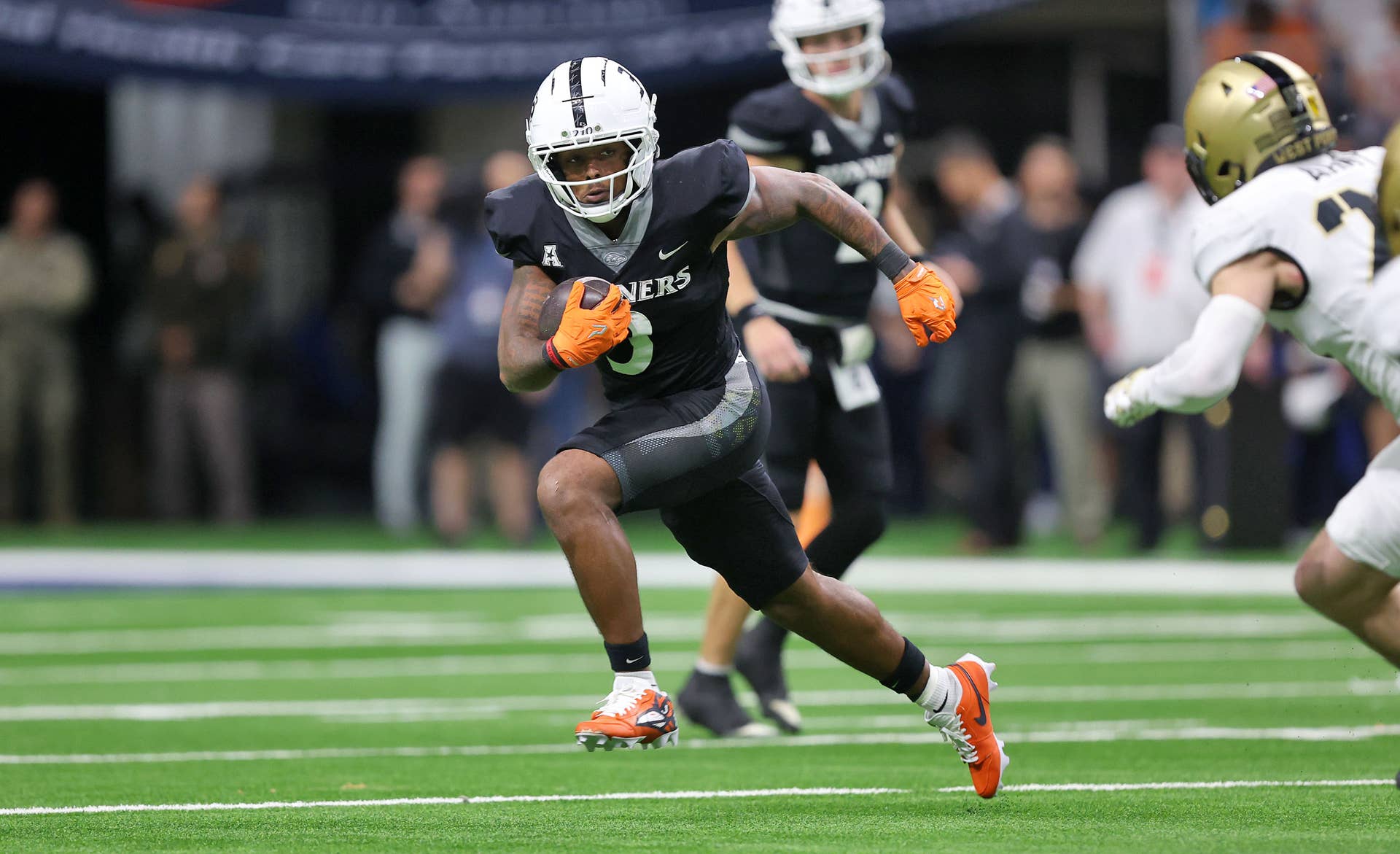
UTSA's nickname is the Roadrunners, and you could be forgiven for thinking that the program named itself after running back Robert Henry Jr., because this dude can scoot at a "Meep-Meep" level. Last season, he ran 153 times for 1,051 yards (6.9 yards per carry), nine touchdowns, 33 forced missed tackles, and 16 runs of 15 or more yards. No back preparing for the combine had more high-speed runs than Henry, who regularly topped 20 miles per hour in the open field.
The 5-foot-9, 205-pound Henry brings two current NFL backs to mind with his speedy, pinballing style — Kimani Vidal of the Los Angeles Chargers, and Devon Achane of the Miami Dolphins. Were Henry to match Achane's 4.32-second 40-yard dash in 2023, nobody should be surprised at all.
Bryce Lance, WR, North Dakota State
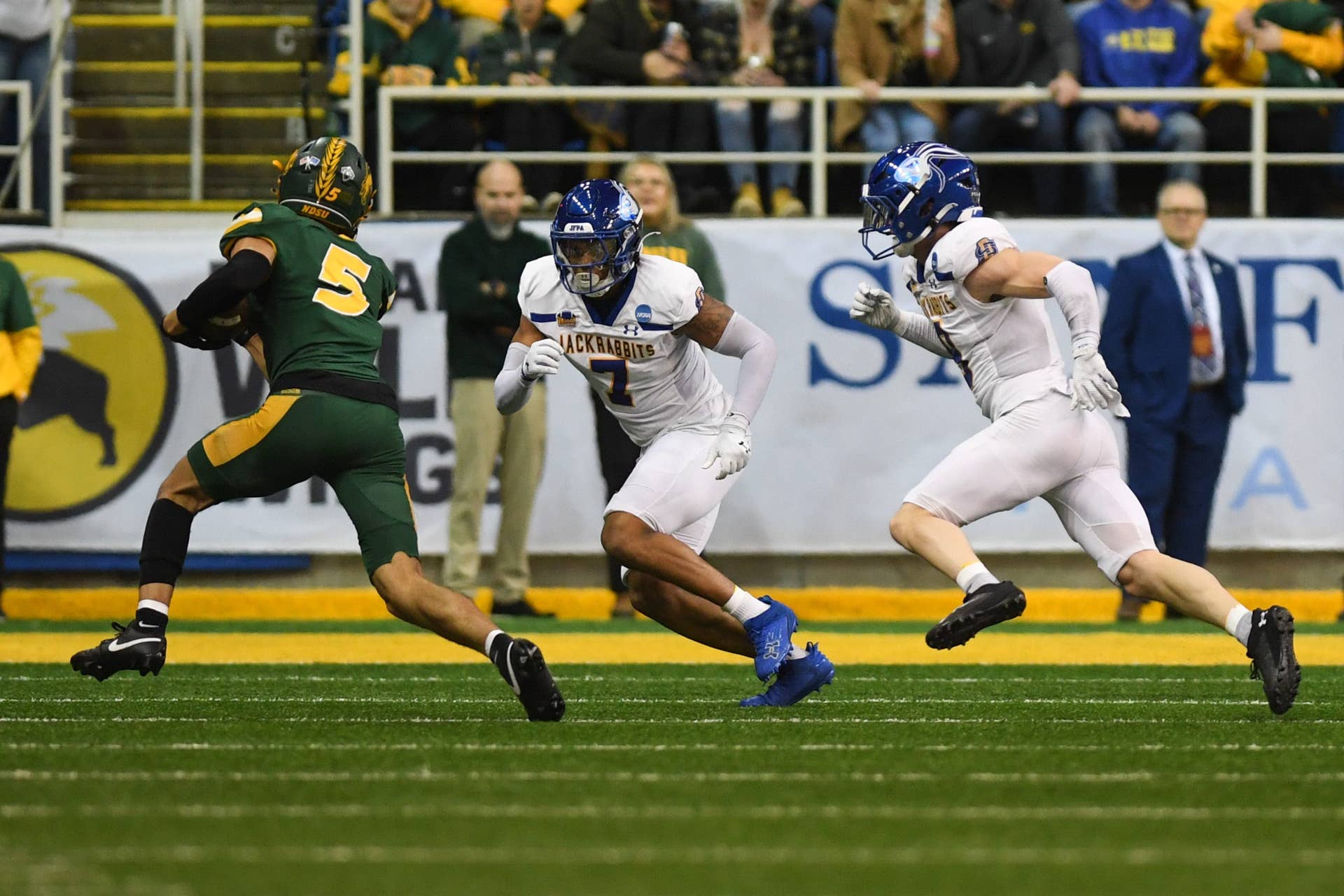
The younger brother of former North Dakota State star quarterback (and unfortunate NFL disappointment to date) Trey Lance, Bryce Lance shouldn't have too many transition issues when he hits the professional ranks. The younger Lance caught 51 passes on 69 targets for 1,079 yards (21.2 yards per catch), and eight touchdowns. That's a year after he bagged 75 receptions on 99 targets for 1,069 yards (14.3 yards per catch), and 17 touchdowns.
Cole Payton's ascent meant that Lance had more deep passes to chase, and he proved to do that extremely well. In 2025, he caught 16 of 21 attempts of 20 or more air yards for 641 yards and three touchdowns — remarkable efficiency for what are normally high-risk throws. Moreover, Lance was able to exceed 20 miles per hour in open space on the regular, and if he's able to run below 4.4 seconds in the 40-yard dash at 6-foot-3 and 209 pounds, Bryce Lance will be discussed as far more than just Trey Lance's brother in NFL circles.
Jalen Walthall, WR, Incarnate Word
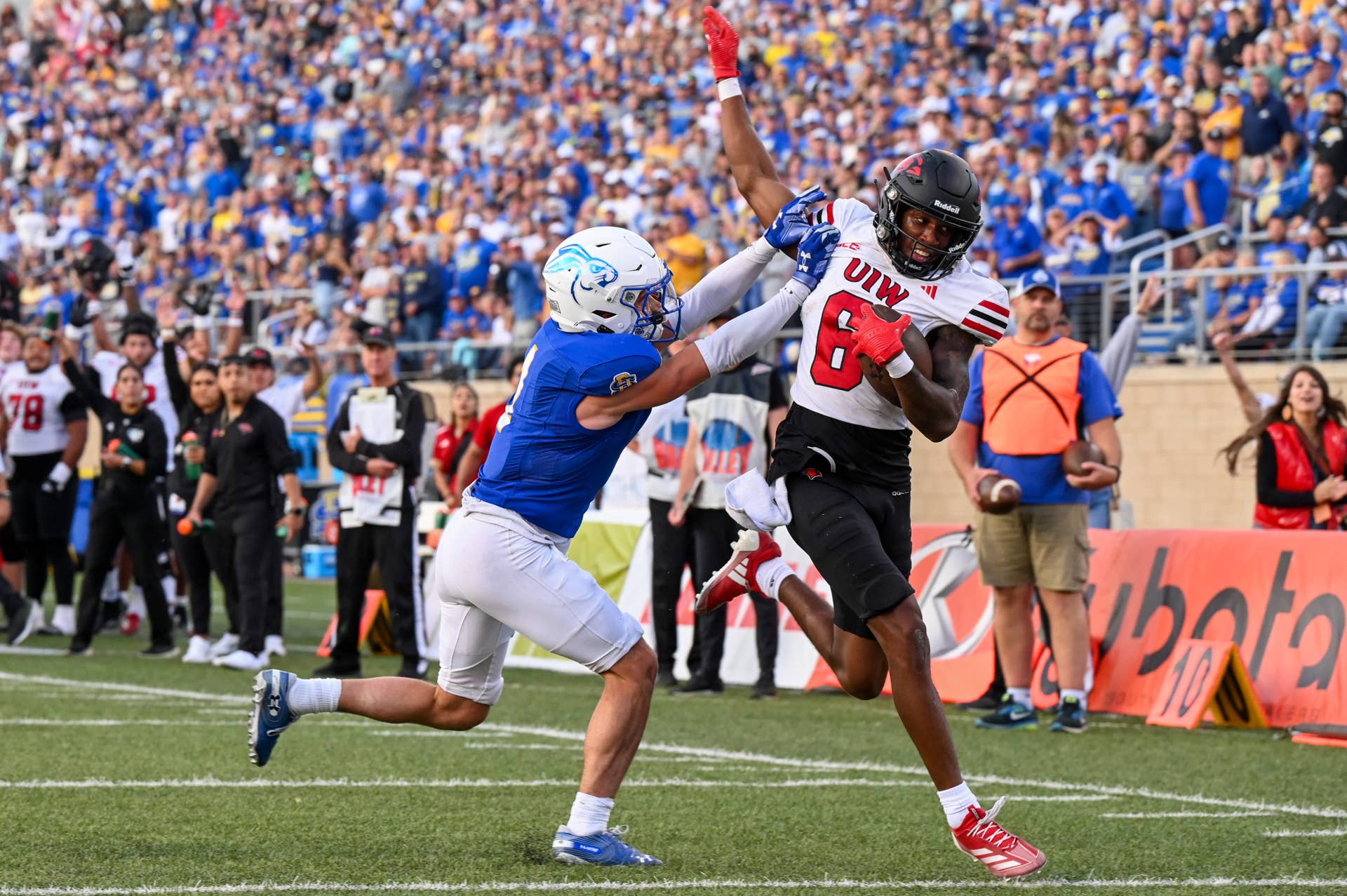
After two relatively undistinguished seasons at Hawaii, Jalen Walthall transferred to Incarnate Word for the 2024 season, and over the last two years, has developed into perhaps the NCAA's best true small-school receiver. In 2025, he caught 70 passes on 106 targets for 850 yards (12.1 yards per catch), and eight touchdowns. As a deep receiver, he caught just nine passes of 20 or more air yards on 29 targets for 375 yards and a touchdown, but that generally had a lot more to do with where the football was going (or not going) as opposed to what Walthall was doing (or not doing) when and if it eventually arrived.
When he hits the field at Lucas Oil Stadium for the drills, NFL shot-callers will see raw speed that generally averages about 20 miles per hour, and a more evolved route tree than you might imagine. Walthall is just as conversant with corner routes and digs as he is with the go, over, and post routes you expect from bigger, faster receivers.
Kaleb Proctor, DI, Southeastern Louisiana
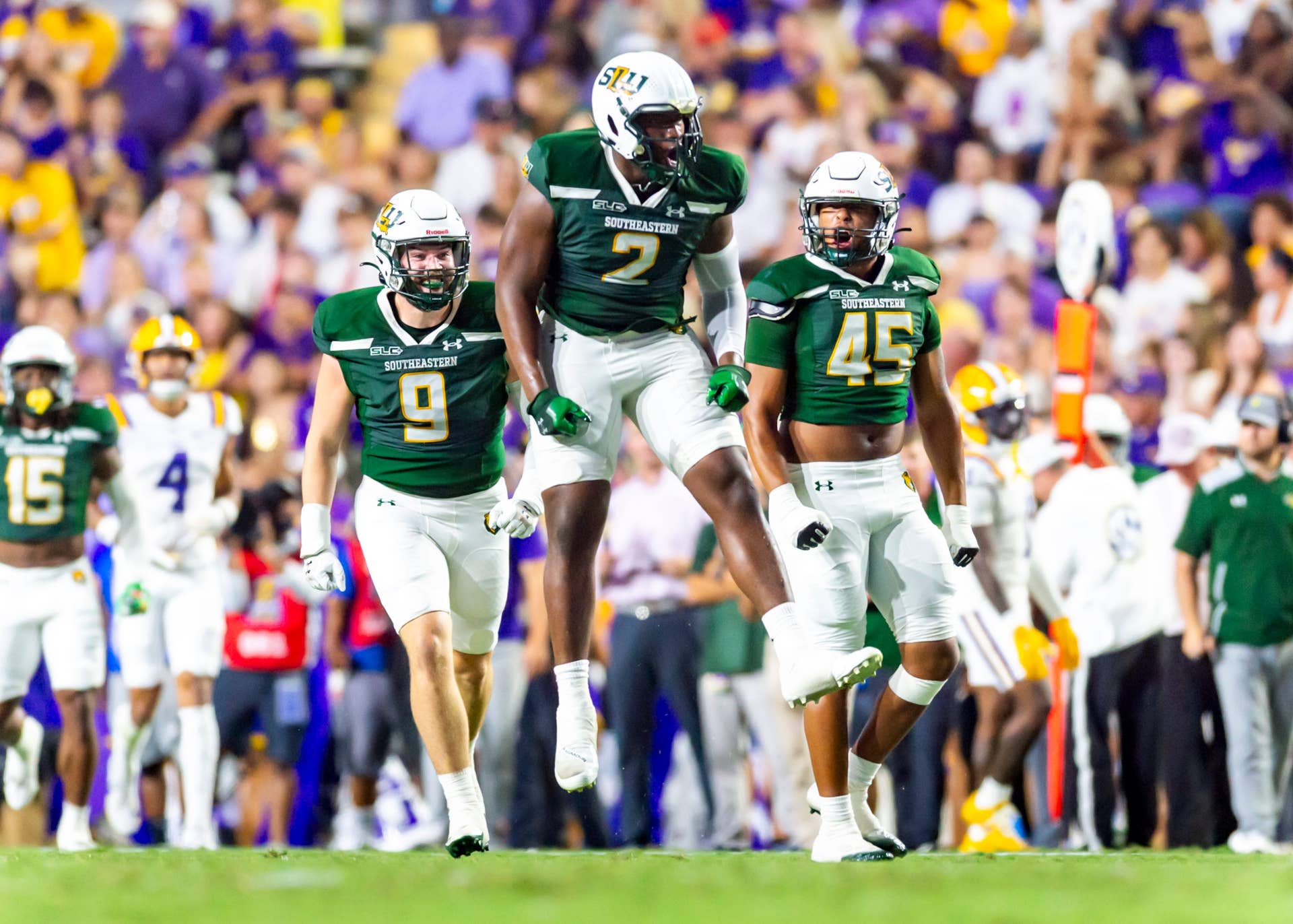
At 6-foot-3 and 280 pounds, Proctor has the short-area speed and agility to make the most of the track drills among interior defensive linemen, and he's got enough straight-line speed to be more than credible with his 10- and 20-yard splits, as well as his 40-yard dash. But based on his gap-jumping, violent play style, it's in the bag drills and other estimations of disruptive value where Proctor could really set himself apart.
Last season for the Lions, Proctor totaled nine sacks, 39 total pressures, 18 solo tackles, 22 stops, and two tackles for loss. He did so by at times looking like a giant tarantula, jumping from one side of a blocker to the other before the blocker had time to adequately respond. He's going to be one of the most fun players to watch from a stylistic perspective.
Malachi Lawrence, EDGE, UCF
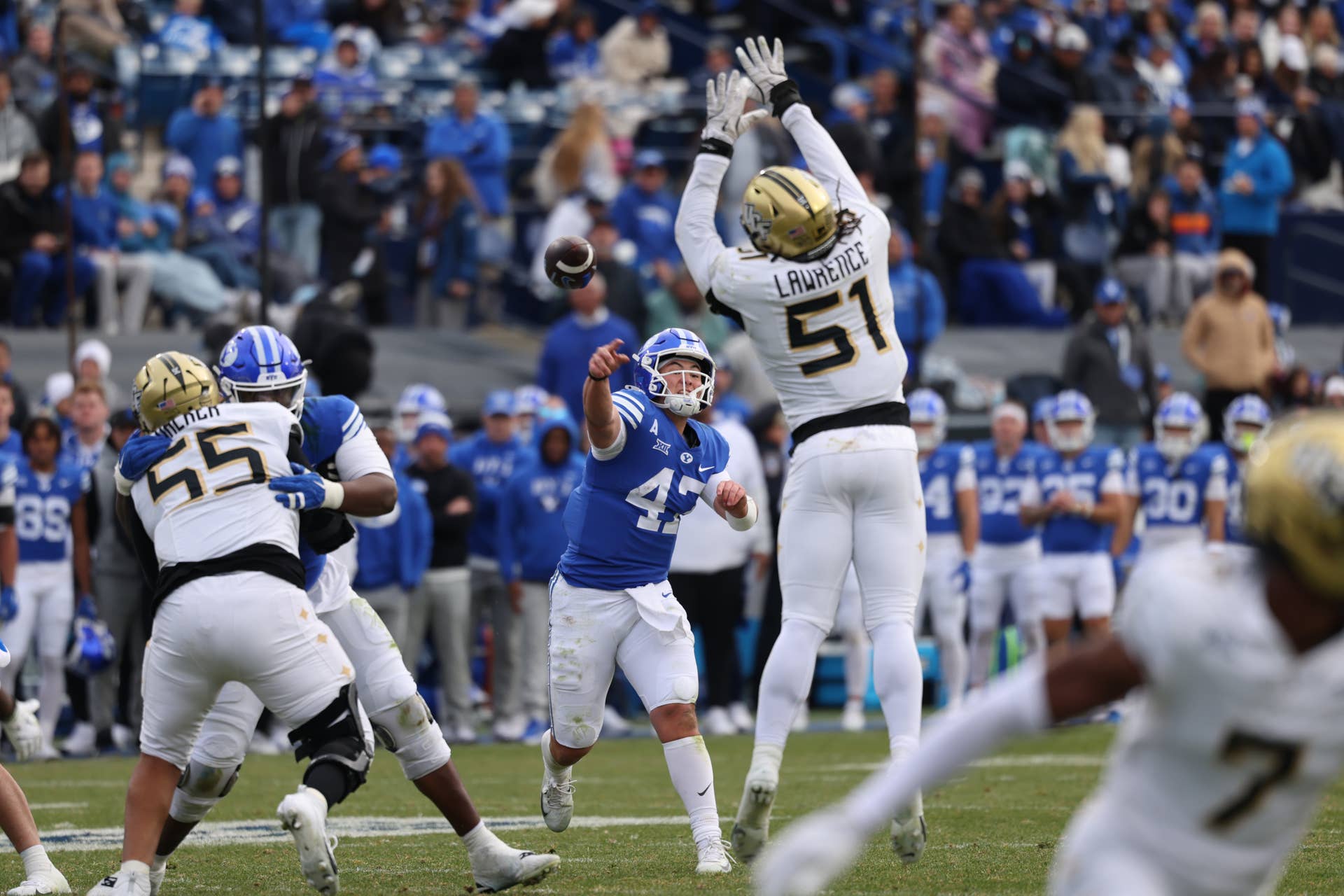
Lawrence is another guy who should obliterate the bag drills and any test of agility, because he combines straight-line inside counter speed with very good lean around the edge to get to the quarterback. In 2025, the 6-foot-4, 250-pound Lawrence had seven sacks, 40 total pressures, 19 tackles, 18 stops, four tackles for loss, and two forced fumbles. Lawrence's ability to use his strength and leverage to displace, and then to use that quickness and agility to travel at high speed to the ballcarrier, should transfer very well to the drills.
Nadame Tucker, EDGE, Western Michigan
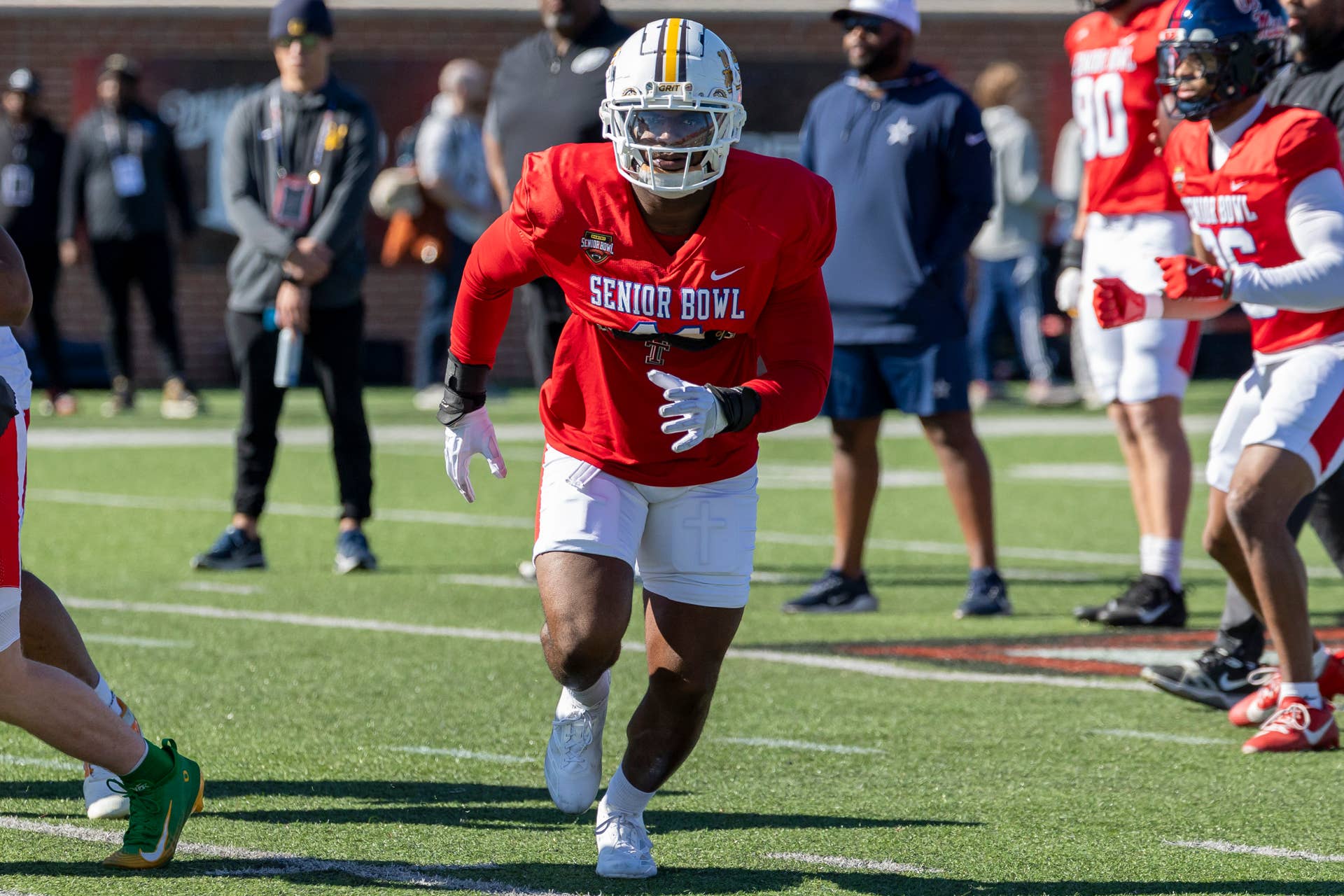
Tucker transferred to Western Michigan for the 2025 season after three years as a relative afterthought in Houston, and it all came together once he became a Bronco. Last season, he tied for the FBS's second-most sacks with Minnesota's Anthony Smith behind only Texas Tech's David Bailey (15) with 14. Tucker also had 61 total pressures, 31 tackles, 37 stops, six tackles for loss, and four forced fumbles.
When you watch the 6-foot-3, 250-pound Tucker move like a shot out of his stance, and you see how quickly he's able to move to the ball, it's not a stretch to think that he'll excel in everything from the straight-line stuff to agility contests to beating the crap out of the bags.
By the way, Tucker's three best games in 2025 came against Michigan State, Toledo, and Miami of Ohio, so he wasn't just beating up on inferior opponents.
Jake Golday, LB, Cincinnati
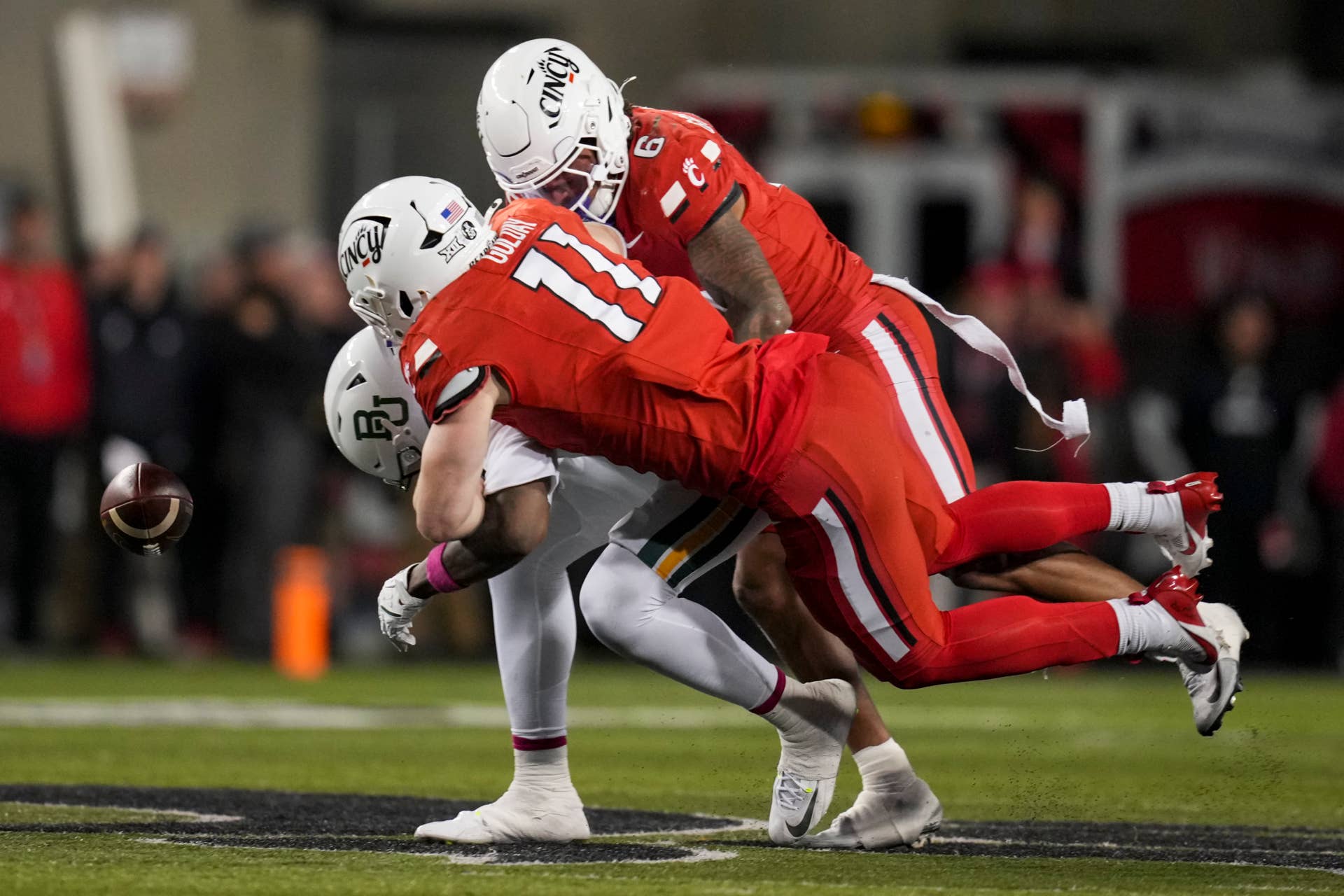
Ohio State's Arvell Reese has both edge and off-ball ability, and he's put enough of it on tape at a high enough level to be a lead-pipe lock as a top-five pick. But if you want that two-level defender later in the first round, or early in the second round if you're lucky, take a good look at Cincinnati's Jake Golday.
Last season, Golday played 49% of his snaps on the edge, 30% as a box player, and the rest of the time as a rover everywhere from the slot to overhang. He totaled four sacks and 18 total pressures, 70 solo tackles, 43 stops, four tackles for loss, a forced fumble, and in coverage, he allowed 25 catches on 35 targets for 217 yards, 121 yards after the catch, two touchdowns, no interceptions, three pass breakups, and an opponent passer rating of 106.5.
Golday has more than his share of high-speed reps in open space, and that will certainly show up in the drills — not only in a straight line, but when it's time for the coverage simulations, and he needs to run up the pipe to cover a virtual tight end, he'll have that stuff on lock.
Charles Demmings, CB, Stephen F. Austin
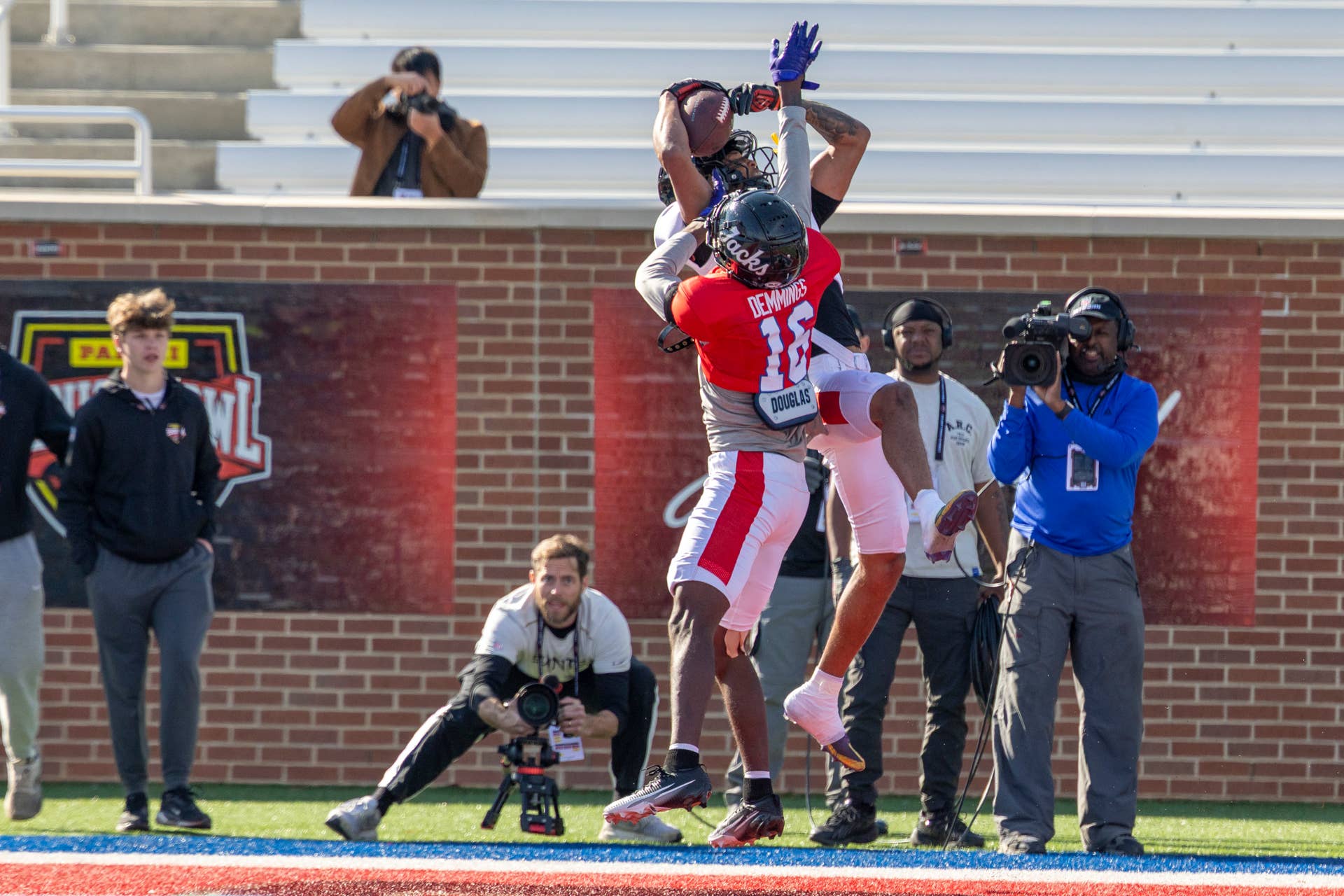
If your team's defense plays a lot of aggressive man/match coverage, and you're looking to fill out your cornerback room, you probably want Charles Demmings on that wall. Last season for the Lumberjacks, Demmings allowed 18 catches on 37 targets for 246 yards, 83 yards after the catch, one touchdown, four interceptions, six pass breakups, and an opponent passer rating of 39.8.
Strength of competition will be an obvious question for Demmings throughout the pre-draft process, but there's nothing he can do about that now beyond his East-West Shrine Bowl and Senior Bowl invites — all he can do is to take the combine opportunity he's been given, and show what he's capable of. From straight-line speed, to excellent agility in short spaces, to the kind of hops at 6-foot-1 and 190 pounds to preclude impressive showings when it's time to jump high and far, Demmings has all the tools.
Andre Fuller, CB, Toledo
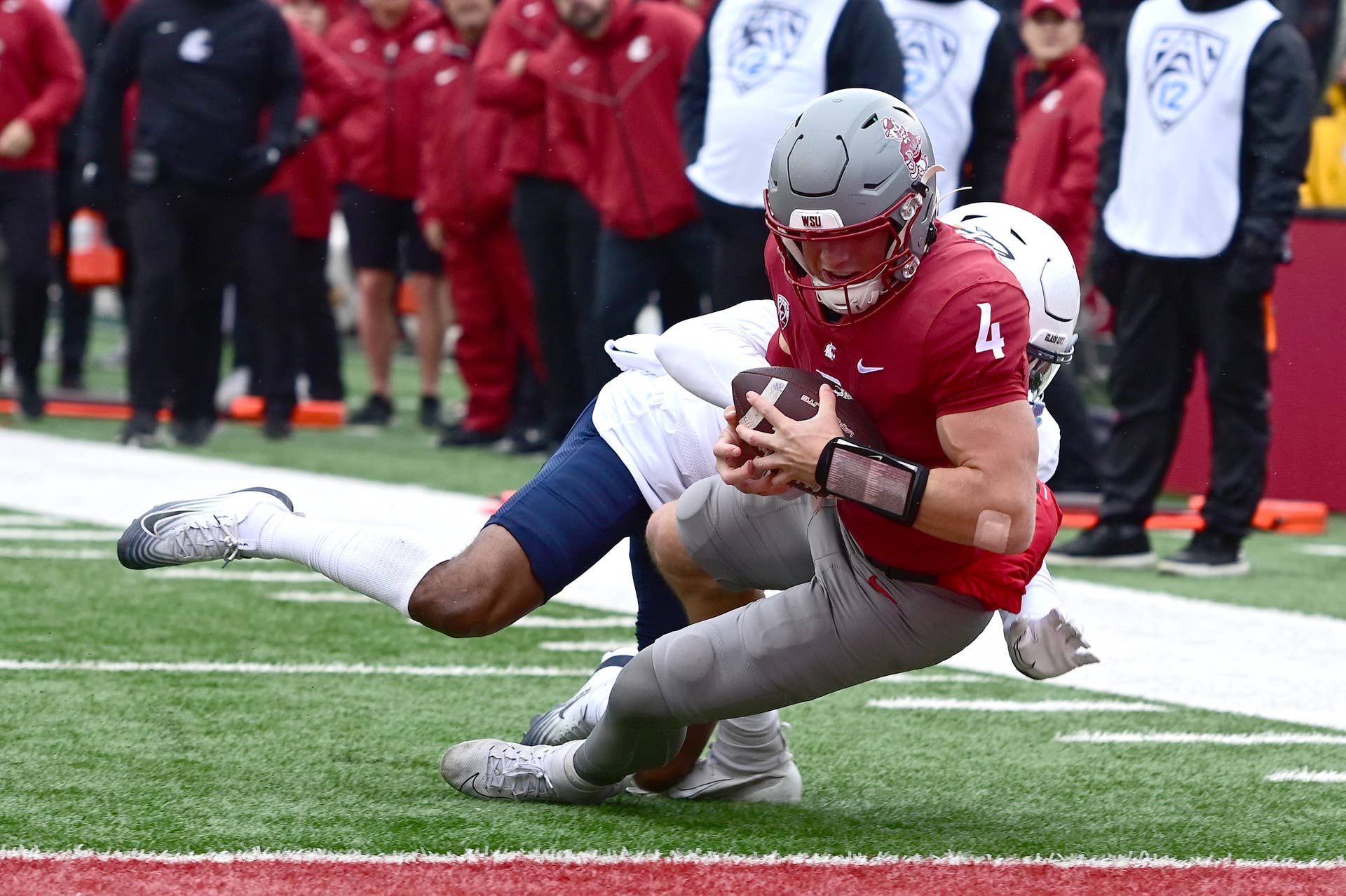
You're going to hear a lot about Toledo safety Emmanuel McNeil-Warren at the combine, and deservedly so, but McNeil-Warren isn't the only Rockets defensive back who could put on a show at this combine. There's also cornerback Andre Fuller, the 6-foot-2, 202-pound enforcer who is especially adept when in press coverage. Last season when in press, he allowed just six catches on 23 targets for 2.0 yards per catch, no explosive plays, no touchdowns, two interceptions, and four pass breakups.
Fuller's tape could have him with an early second-day grade when all is said and done, and he has the match coverage speed to all areas of the field to really shine when it's time for all the drills. Fuller is one to watch.
Chris Johnson, CB, San Diego State
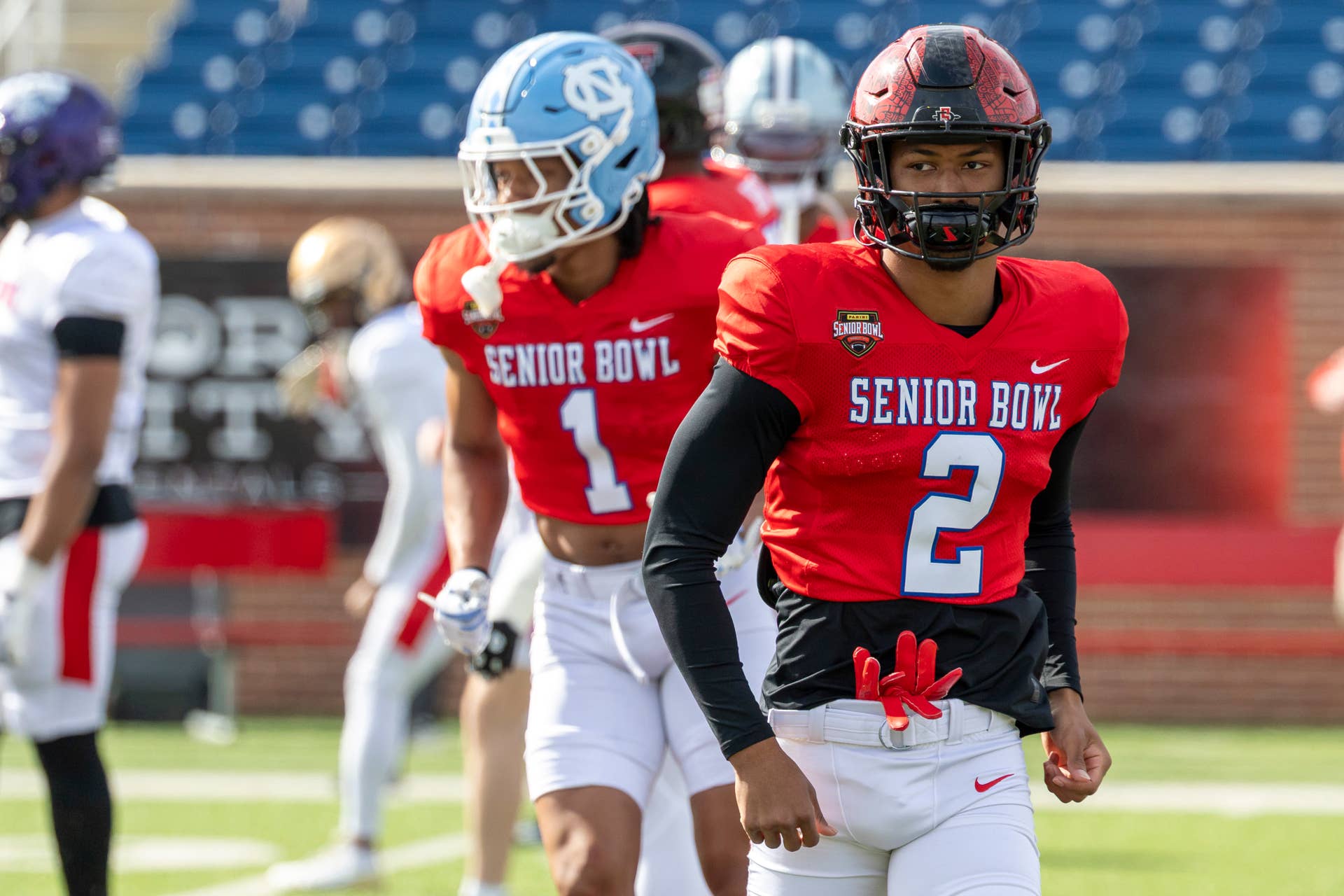
One of the most underrated players in this class regardless of position, Johnson has the skill set to be a legitimate NFL starter sooner than later in the right system. In 2025, his fourth season with the Aztecs, Johnson allowed 18 catches on 43 targets for 185 yards, 79 yards after the catch, no touchdowns, four interceptions, five pass breakups, and an opponent passer rating of 16.1, which means that opposing quarterbacks had a better time throwing the ball away than throwing it anywhere near Mr. Johnson.
At 6-foot-0 and 195 pounds, Johnson has more than enough high-speed reps on the field to align with the idea that he'll excel in all the drills, and his chase-down work against running backs and receivers trying to ply their trade to the opposite side of the field shows this particularly well. The combine stuff should just be the icing on the cake with Johnson because his tape is so good, but it's appealing frosting nonetheless.
Emmanuel McNeil-Warren, DB, Toledo
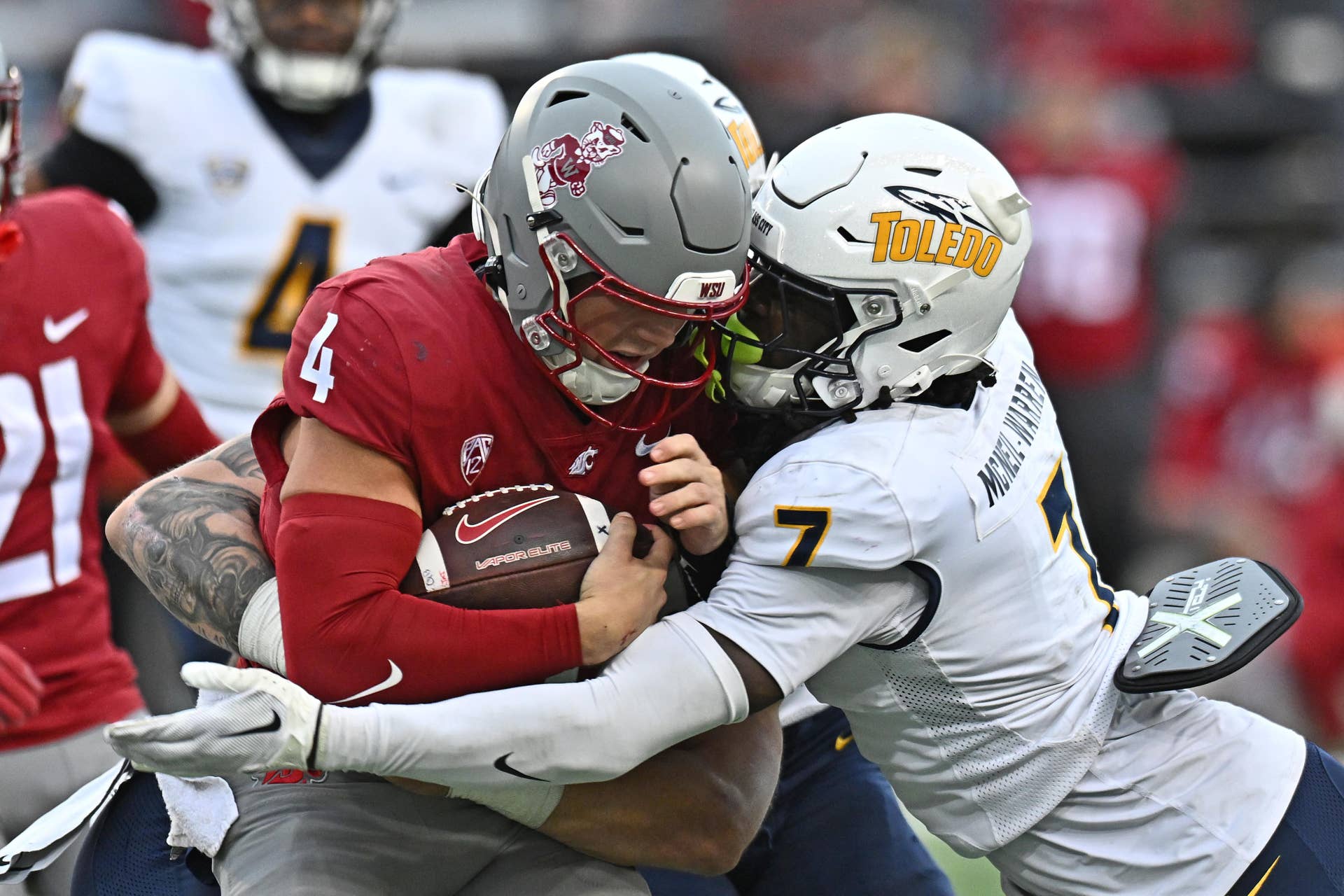
Now, we're getting somewhere. Everyone in the NFL who doesn't have that do-it-all safety in the Derwin James/Kyle Hamilton/Nick Emmanwori mold wants one, because the addition of such a player allows you to do so many different things with your defense. Of the three who are obvious prospects in this draft class — Ohio State's Caleb Downs, Oregon's Dillon Thieneman, and Toledo's Emmanuel McNeil-Warren — it's McNeil-Warren who may be the most athletically dynamic of the group.
Not that it makes him automatically the best player at the next level, but the tape is more than good enough to have a lot of people thinking that McNeil-Warren could be gone in the first 20 picks of the draft, which would make him the third Rockets alum to be selected in any first round, along with defensive lineman Dan Williams (Denver Broncos, 11th overall, 1993), and cornerback Quinyon Mitchell (Philadelphia Eagles, 22nd overall, 2024).
Whether he's playing box, slot, single-high safety, or patrolling in a two-deep structure, the 6-foot-2, 202-pound McNeil-Warren can take care of business in any capacity, and the athleticism that allowed him to give up six catches on 15 targets for 116 yards, 50 yards after the catch, one touchdown, two interceptions, five pass breakups, and an opponent passer rating of 50.3 (not to mention one sack, five pressures, 43 solo tackles, 18 stops, four tackles for loss, and two forced fumbles) will serve him very well in Indianapolis.